
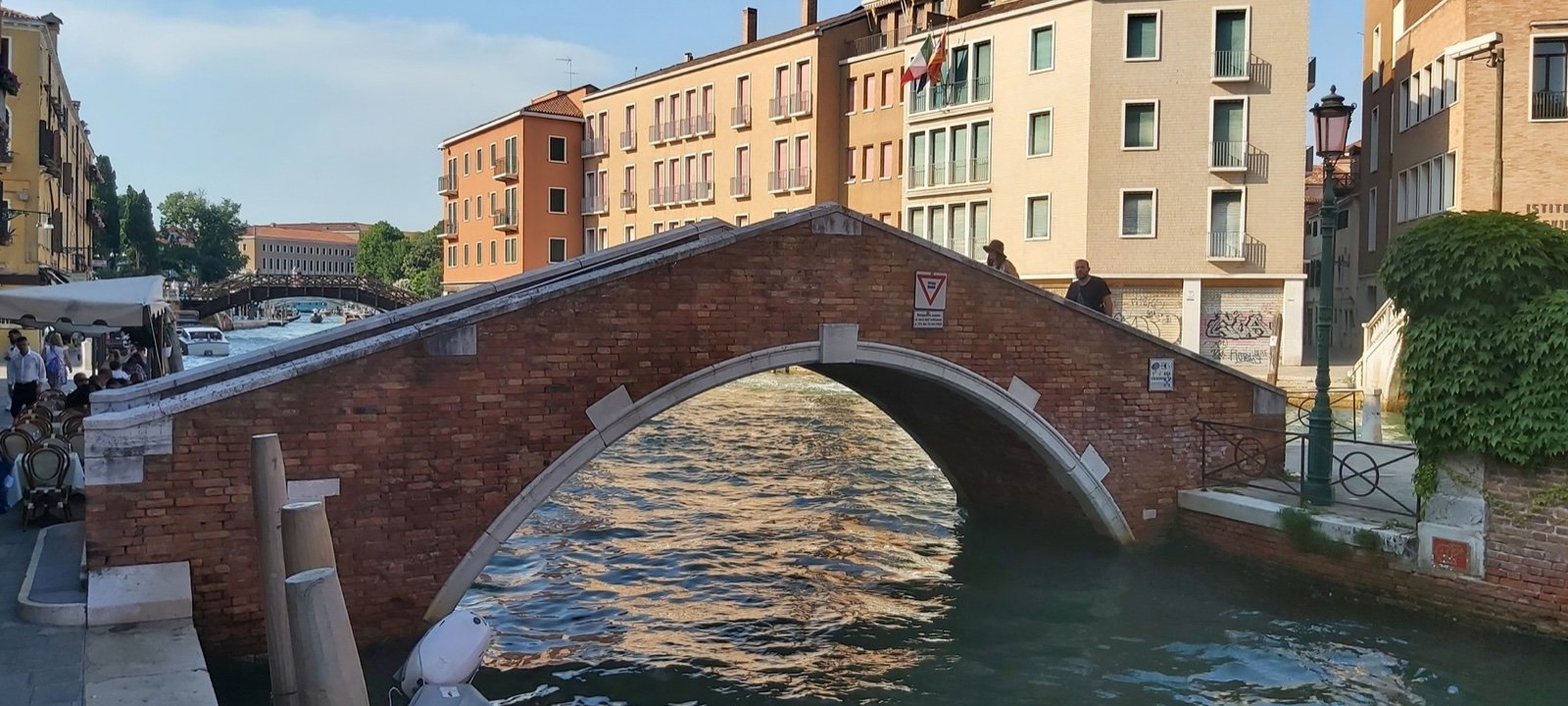
Ponte del Pagan — a 1933 Bridge on Venice's Rio Novo
Venice (1933): a brick bridge built for the opening of the Rio Novo, the fast new canal Eugenio Miozzi cut from Piazzale Roma toward the Grand Canal.
At a glance
The Ponte del Pagan is one of the bridges Venice built in 1933 when it opened the Rio Novo, a brand-new canal cut to move boats quickly from Piazzale Roma toward the Grand Canal. Where most of Venice’s bridges are older than the buildings around them, this one is a piece of interwar infrastructure: a single brick arch banded with Istrian stone, springing straight from the fondamenta.
Key facts
- Built: 1933, for the opening of the Rio Novo
- Context: Eugenio Miozzi’s Rio Novo operation (1931–1933)
- Structure: brick single arch with brick and Istrian-stone bands
- Spans: between the Rio Novo and the Rio dei Tre Ponti
- Detail: an Istrian-stone relief of a saint, probably salvaged from a demolished palace
- Location: Dorsoduro / Santa Croce, near Piazzale Roma
History
By 1930 Piazzale Roma had become the car and coach terminus of Venice, and the slow water route into the city through the Grand Canal was a bottleneck. The answer was radical: excavate a new canal straight through the built fabric of Santa Croce and Dorsoduro. The Rio Novo was dug between 1931 and 1933 under Eugenio Miozzi, the city’s chief engineer and the designer of the Accademia and Scalzi bridges, cutting through gardens and demolished houses to shorten the run from Piazzale Roma toward Ca’ Foscari.
New water meant new crossings. A short series of bridges went up in 1933 to knit the severed streets back together, and the Ponte del Pagan is one of them — an unshowy working bridge, built for a modern purpose in a fabric a thousand years older.
What you see
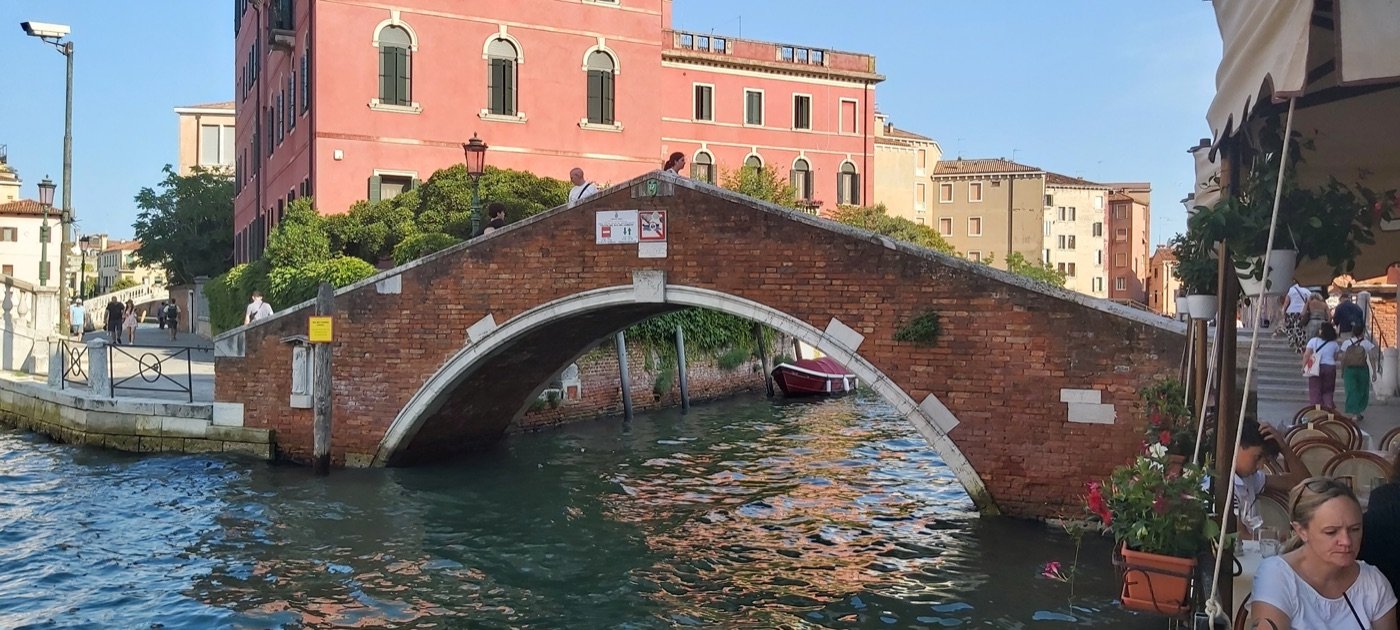
The bridge is a low brick arch, its ring and bands laid in warm red brick with Istrian stone marking the springing and the crown. It sits close to the water, wide enough for the foot traffic between the two fondamente it joins. Set into the stonework is a small relief of a saint carved in Istrian stone — older than the bridge itself, and most likely rescued from one of the palaces demolished to open the canal, reused here as spolia.
The name
The bridge takes its name from the Pagan family, recorded in the parish of Santa Croce as far back as the twelfth century. An earlier bridge carried the name before a nearby canal, the Rio dei Pensieri, was filled in; when the Rio Novo works reshaped this corner the name stayed with the fondamenta and passed to the new crossing.
Getting there
The bridge lies a few minutes on foot from Piazzale Roma and the People Mover, in the tangle of fondamente along the Rio Novo. It is a public crossing, open at all times.
Sources
- Conoscere Venezia — Ponte del Pagan tra il Rio Novo e il Rio dei Tre Ponti (dating, material, name, salvaged relief).
- Wikipedia — Rio Novo (Venezia) (excavation and purpose of the canal).
- Literature on Eugenio Miozzi and the Rio Novo bridges (1931–1933).
Gallery
Another view — photograph by Stefano Vigolo, 2026.
Find it on the map
See this place and what’s around it →📷 Diventa un fotografo di Cultural Heritage Online
Condividi le tue foto dei luoghi: restano pubblicate con la tua firma come autore. Più vengono viste, più ti fai conoscere — e presto un concorso premierà le foto più apprezzate.
Accedi o registrati gratis per aggiungere una foto