
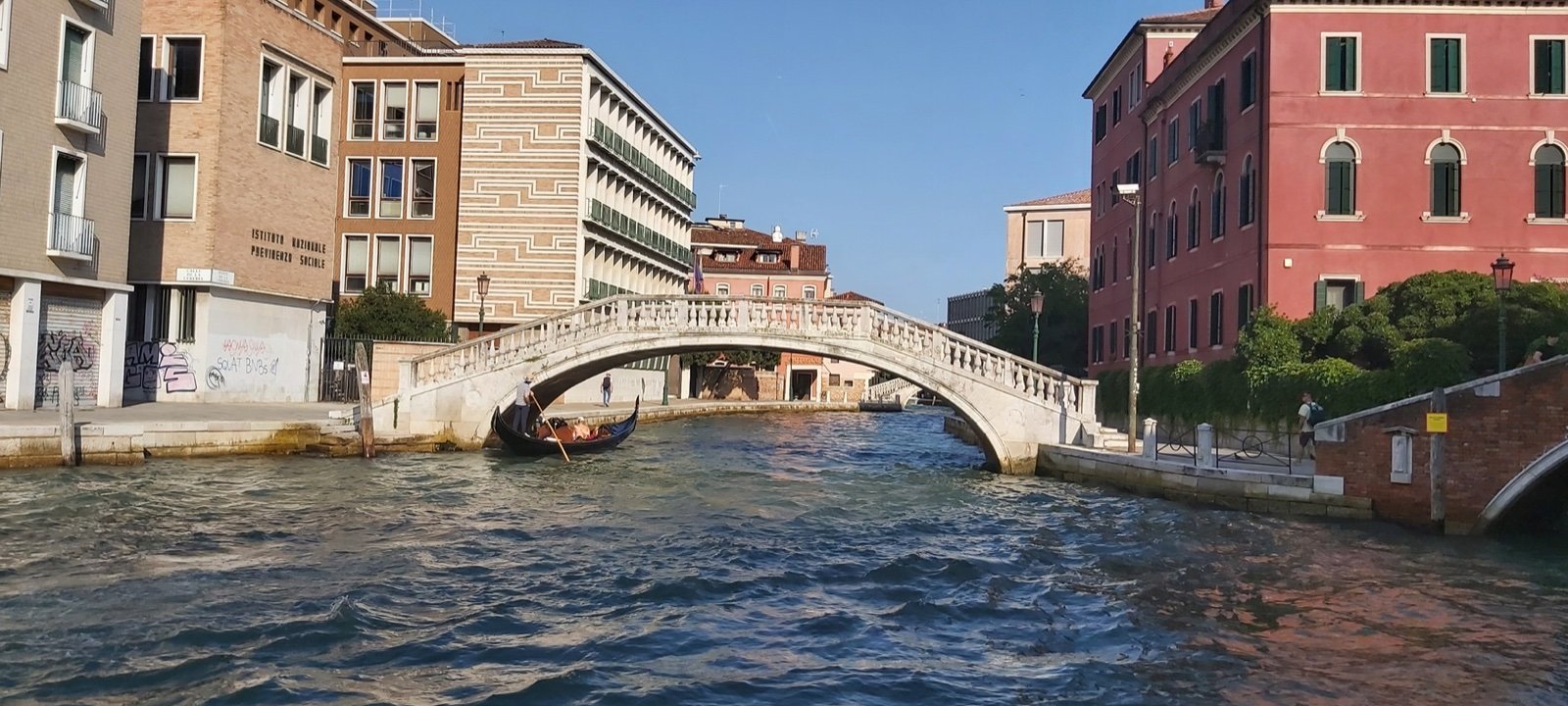
Venice (1933): the stone bridge Eugenio Miozzi set over his new Rio Novo canal, named for the candle-makers who once worked this corner of the city.
At a glance
The Ponte de la Cereria crosses the Rio Novo a few steps from the Ponte del Pagan, and it belongs to the same year and the same project: 1933, and the opening of Eugenio Miozzi’s new canal. Where its neighbour is brick, the Cereria is a pale, low arch of brick and stone banded with Istrian stone and finished with a balustrade — the more formal of the two crossings, and the one Miozzi directed himself.
Key facts
- Built: 1933, for the opening of the Rio Novo
- Designer: Eugenio Miozzi, who directed the Rio Novo project from October 1930
- Structure: stone arch with brick-and-stone core and Istrian-stone bands
- Spans: between Fondamenta de la Cereria and Fondamenta del Passamonte, Dorsoduro
- Name: from the cereria, the candle-makers’ trade once based here
- Location: Dorsoduro, on the Rio Novo near Piazzale Roma
History
The Rio Novo was Venice’s most ambitious interwar public work: a new canal, dug between 1931 and 1933 through demolished houses and part of the Papadopoli gardens, to give Piazzale Roma a fast water route toward the Grand Canal. Its engineer was Eugenio Miozzi, the man behind the Accademia and Scalzi bridges and, in the same decade, the road causeway that first linked Venice to the mainland.
Miozzi bridged his new canal with a short family of crossings, and the Ponte de la Cereria — built under his direction — is the dressed-stone member of that family. It reads as the deliberate, permanent gesture of a chief engineer signing his own canal.
What you see
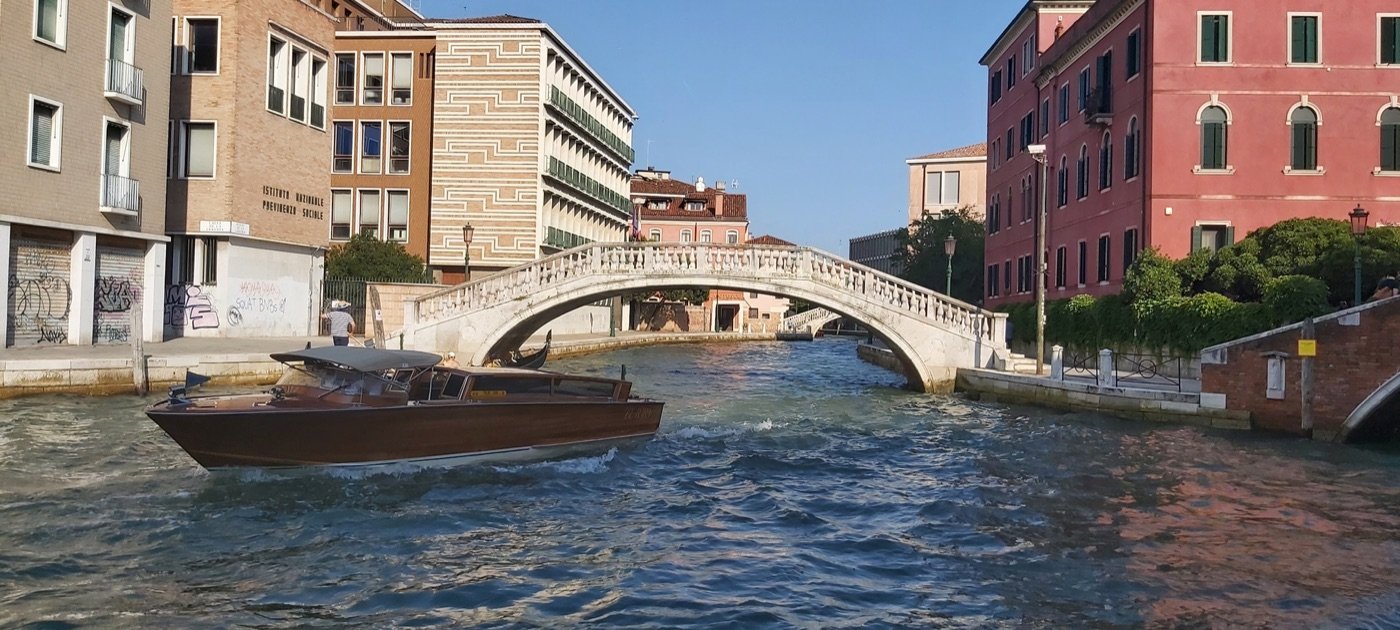
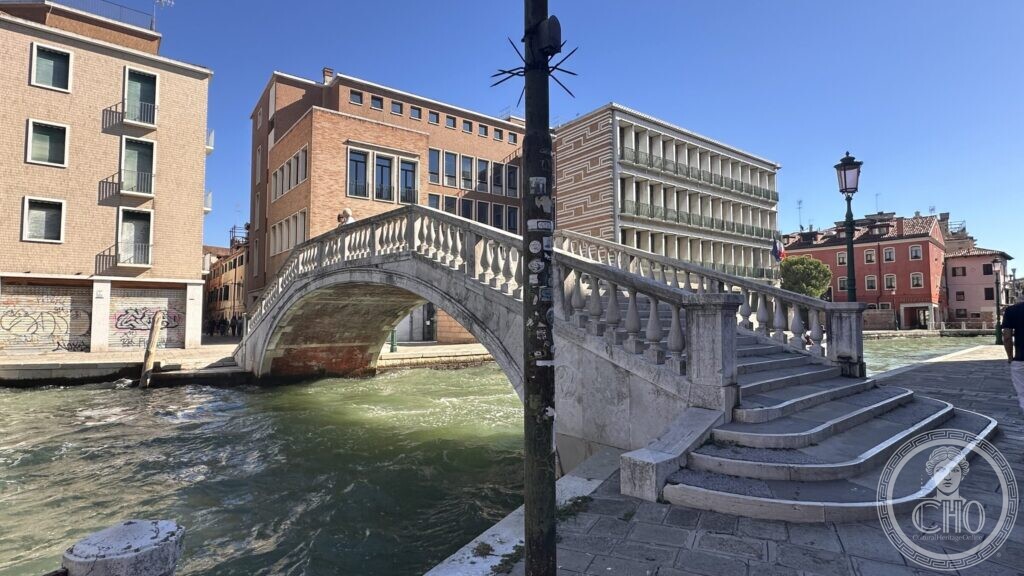
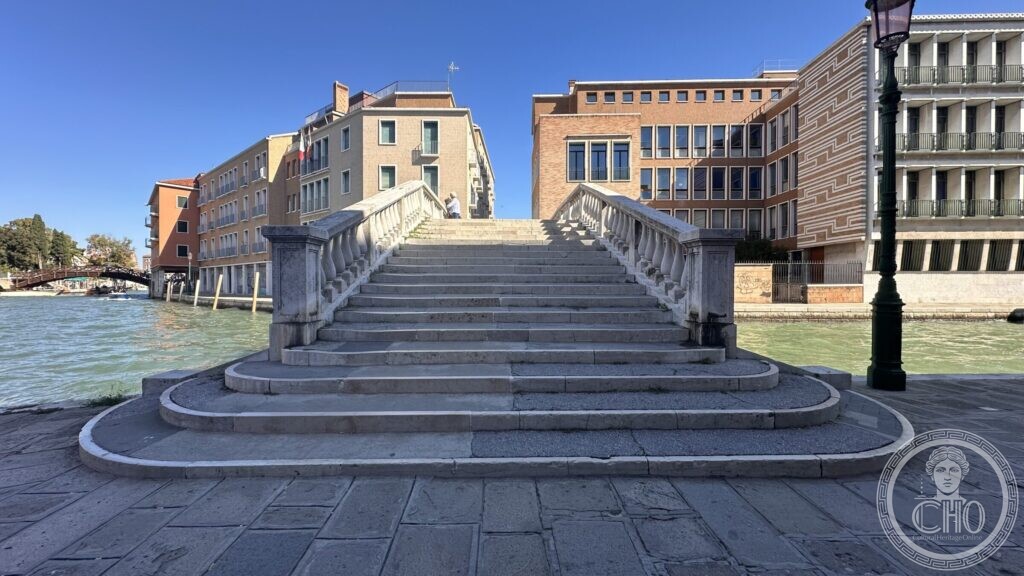
The bridge is a wide, shallow arch of brick and stone, banded and dressed in Istrian stone and finished with a low stone balustrade along both parapets. Its geometry is calm and horizontal, sitting the crossing gently over a broad reach of the canal. Against the brick Ponte del Pagan just upstream, the Cereria’s white stone reads as the more civic and finished of the pair.
The name
A cereria is a candle works. Venice once obtained raw wax from the Levant, Moldavia and Wallachia, and at its height the city counted around two dozen candle factories, their output feeding both export and the constant demand of the churches. The trade faded from the seventeenth century onward under competition from Trieste, but its name survived in this fondamenta and passed to the 1933 bridge.
Getting there
The bridge is a few minutes on foot from Piazzale Roma, alongside the Ponte del Pagan on the Rio Novo. It is a public crossing, open at all times.
Sources
- Conoscere Venezia — Ponte de la Cereria sul Rio Novo (erected 1933; brick and stone with Istrian-stone bands; spans Fondamenta de la Cereria and Fondamenta del Passamonte; the candle-makers’ trade and the name).
- Riccardo Segradin, Le origini del progetto di Rio Nuovo a Venezia. Dal dibattito ottocentesco all’incarico a Eugenio Miozzi, doctoral thesis, Università Iuav di Venezia, 2023 (Miozzi in charge of the project from October 1930; he inherited an approved scheme and gave it the form still visible today).
- G. P. Meneghin, Ponti di Venezia — Ponte de la Cereria, citing Giuseppe Tassini, Curiosità veneziane (1887), on the guild of the cereri; Rio Novo opened 1932–33.
- OpenStreetMap — Ponte de la Cereria (position, and sestiere: Dorsoduro).
Gallery
Another view — photograph by Stefano Vigolo, 2026.
On the Heritage Days walk
Photographed on 26 and 27 September 2026, on the free walk led by Andrea Manzo for the Associazione Beni Culturali Online APS, during the European Heritage Days.
Find it on the map
See this place and what’s around it →Record researched and written by Stefano Vigolo for Cultural Heritage Online, 2026.
📷 Become a Cultural Heritage Online photographer
Share your photos of places: they stay published under your name as the author. The more they're seen, the more you get noticed — and soon a contest will reward the most appreciated photos.
Log in or sign up free to add a photoRequest to use these images
Each photograph is by the person named on it. Cultural Heritage Online is the seller: it runs the payment, handles tax and delivers the file, and the photographer receives 70% of the price net of tax. Buying gives you the right to use the image in your own project — a website, an article, a presentation — with the file and a written licence. Read the Terms of Sale.
What you receive. The file as it is held in our archive: the photographer's own original, without the Cultural Heritage Online watermark, unretouched and not enlarged. This is a working archive built over many years by many people, so the files differ — some were taken recently, others years ago with the equipment of their time. Older pictures are usually smaller: a camera from fifteen or twenty years ago simply recorded fewer pixels than a phone does today, so the resolution is lower and the print comes out smaller. We say so rather than hide it. The size, weight, format and year of each one are printed below it, and the print size is given at 300 dpi. Nothing is upscaled to make a number look better. Where the picture on this page has been cropped for the layout, the file you receive is the full frame, which may be wider or taller than what you see here.
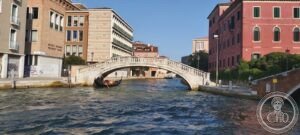
The Istrian-stone Ponte de la Cereria, built in 1933 on the Rio Novo. Photo: Stefano Vigolo, 2026.
Photo: Stefano Vigolo
€3.00
2322 × 1046 px · JPG · 1.1 MB
prints 20 × 9 cm at 300 dpi · taken 2026
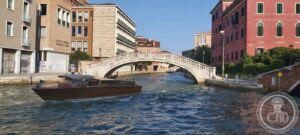
Ponte de la Cereria — Miozzi’s Rio Novo, 1933 — The Istrian-stone Ponte de la Cereria, with the Previdenza Sociale building beyond.
Photo: Stefano Vigolo
€3.00
2324 × 1047 px · JPG · 1.1 MB
prints 20 × 9 cm at 300 dpi · taken 2026