
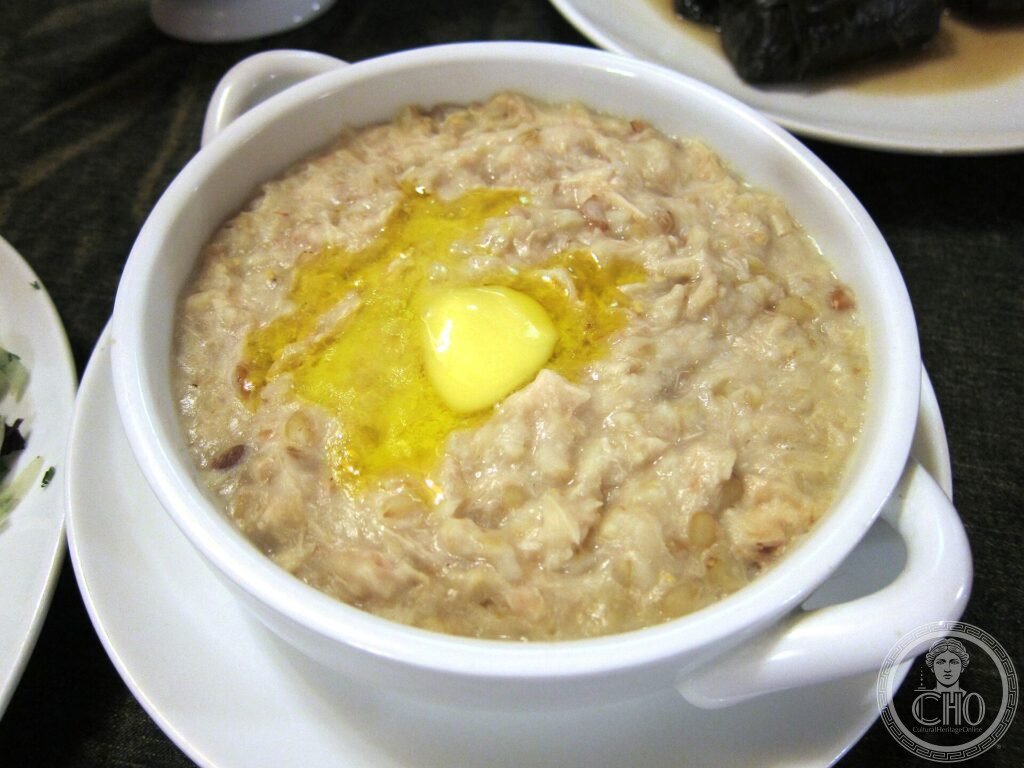
A slow-cooked wheat porridge enriched with meat and spices, harees carries centuries of culinary tradition across the Gulf and Levantine regions. Prepared with patience and ritual, it marks sacred moments—Easter tables in Armenia, Ramadan nights, and the solemn observances of Ashura.
At a glance
Harees is a thick, grain-based dish made from boiled, cracked, or coarsely ground wheat or bulgur, blended with meat, spices, and butter until it reaches a consistency between porridge and gruel. Known by various names across cultures—haresa, arizah, and jarish in Arabic; korkot in Armenian—this humble preparation has anchored festive and religious meals for generations.
Origins & history
Harees appears across a vast geography, from Armenia to the Arab states of the Persian Gulf. Its roots run deep in communities where wheat has long been a dietary staple and meat a precious ingredient reserved for celebration. The dish reflects the convergence of culinary practices across the Eastern Mediterranean and Arabian Peninsula.
The practice
Making harees is labor-intensive, demanding hours of stirring and tending. Cooks combine cracked wheat or bulgur with meat—often lamb or chicken—then blend in ghee or butter and a warm blend of spices. The mixture transforms gradually into a velvety, uniform mass that clings to the spoon. The cook’s hands and a wooden paddle work the pot continuously, a rhythmic motion that aerates the dish and prevents sticking. Salt seasons to taste; sometimes cardamom or cinnamon adds warmth. The result is neither soup nor starch, but something between—sustaining, aromatic, and best eaten warm, often from a communal dish.
Cultural significance
Harees marks moments of spiritual and communal importance. In Armenia, it graces Easter tables as a symbol of abundance and renewal. Across the Gulf and Levant, it appears during Ramadan, when its warmth and nourishment break the day’s fast. For Shia Muslims in Iraq, Lebanon, and Bahrain, harees is prepared during Ashura, transforming private kitchens and community gatherings into spaces of shared mourning and remembrance. The dish embodies hospitality, resilience, and the binding power of shared meals.
Key facts
- Practiced in United Arab Emirates, Oman, and Saudi Arabia
- Anchor heartland: Abu Dhabi, United Arab Emirates
- UNESCO Intangible Cultural Heritage (reference 01744)
- Served during Easter (Armenian tradition), Ramadan (Gulf and Levantine communities), and Ashura (Shia Muslim observance)
Where to experience it
Abu Dhabi and the wider United Arab Emirates remain the heartland of active harees preparation and consumption. During Ramadan, the dish appears in homes and community kitchens throughout the Emirates, often prepared in large batches for family gatherings and iftars. Local markets and family-run restaurants may feature it, particularly during the holy month and at celebrations tied to regional and religious calendars.
Sources & resources
Find it on the map
See this place and what’s around it →📷 Become a Cultural Heritage Online photographer
Share your photos of places: they stay published under your name as the author. The more they're seen, the more you get noticed — and soon a contest will reward the most appreciated photos.
Log in or sign up free to add a photo