
India’s second-oldest museum holds one of Asia’s largest collections of ancient bronze idols alongside rare European and Asian paintings, Roman coins, and a celebrated museum theatre.
At a glance
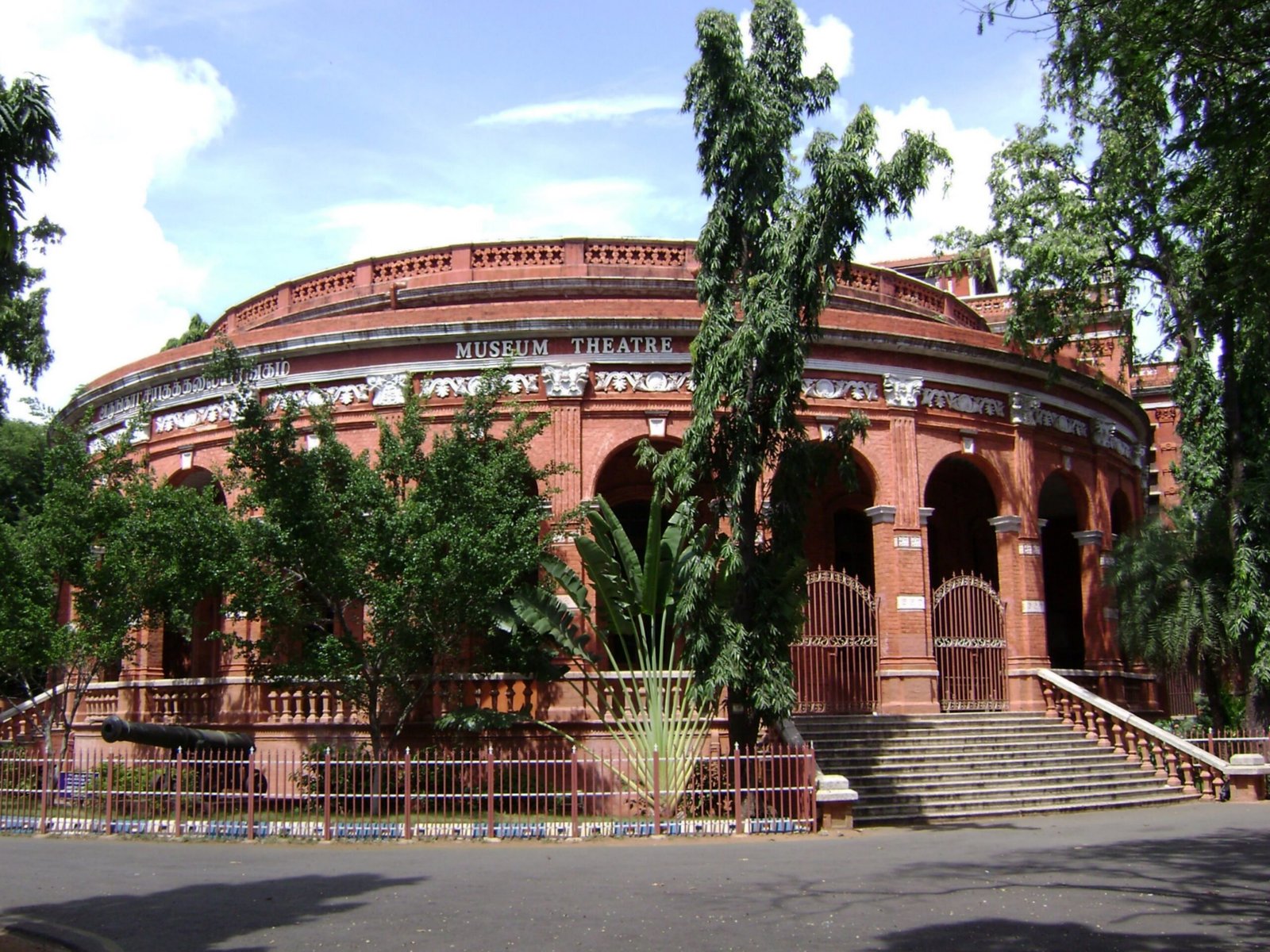
The Government Museum in Egmore ranks among India’s foremost institutions for human history and culture. Founded in 1851, only the Indian Museum in Kolkata predates it. The complex includes the Indo-Saracenic National Art Gallery and the architecturally significant Museum Theatre, a central landmark. It attracted over 600,000 visitors in 2018.
History
Established in 1851 during the British Raj, the Government Museum (also known as the Madras Museum) emerged as a repository of knowledge and artistic heritage. Its founding reflected Victorian-era enthusiasm for cataloguing and displaying colonial-region antiquities. The institution has evolved over nearly two centuries into one of South Asia’s most significant cultural repositories.
What you see
The National Art Gallery stands as the architectural centrepiece, designed in Indo-Saracenic style—a colonial-era fusion of Islamic and Hindu architectural vocabularies. The Museum Theatre commands attention as a notable landmark within the premises. The collection spans centuries and continents: some 500 bronze idols date to 1000 BCE, representing one of Asia’s largest assemblages of such works. European and Asian paintings by renowned artists, including Raja Ravi Varma, fill the galleries.
Cultural significance
The museum stands as a bridge between colonial collecting practices and modern Indian cultural stewardship. Its numismatic collection—among the world’s largest assemblies of Roman currency outside Europe—illuminates ancient trade networks. The bronze idols preserve crucial evidence of South Indian religious and artistic traditions spanning millennia. Raja Ravi Varma’s paintings document nineteenth-century Indian modernism.
Key facts
- Country: India
- City: Chennai (Madras)
- Founded: 1851
- Status: Second-oldest museum in India
- Coordinates: 13.0711°N, 80.2569°E
- Notable collection: 500 bronze idols dating to circa 1000 BCE
- 2018 visitor count: 600,000
Practical information & getting there
The museum occupies the Government Museum Complex in the Egmore neighbourhood of Chennai. Consult the official website or contact the institution directly for current opening hours, admission fees, and any restrictions on photography or access to specific galleries.
Sources & resources
Find it on the map
See this place and what’s around it →📷 Become a Cultural Heritage Online photographer
Share your photos of places: they stay published under your name as the author. The more they're seen, the more you get noticed — and soon a contest will reward the most appreciated photos.
Log in or sign up free to add a photoDo you manage this place?
This page is read by travellers and heritage enthusiasts who find it on Google. Keep it accurate — and make it work for you. Free for non-profit heritage institutions.