
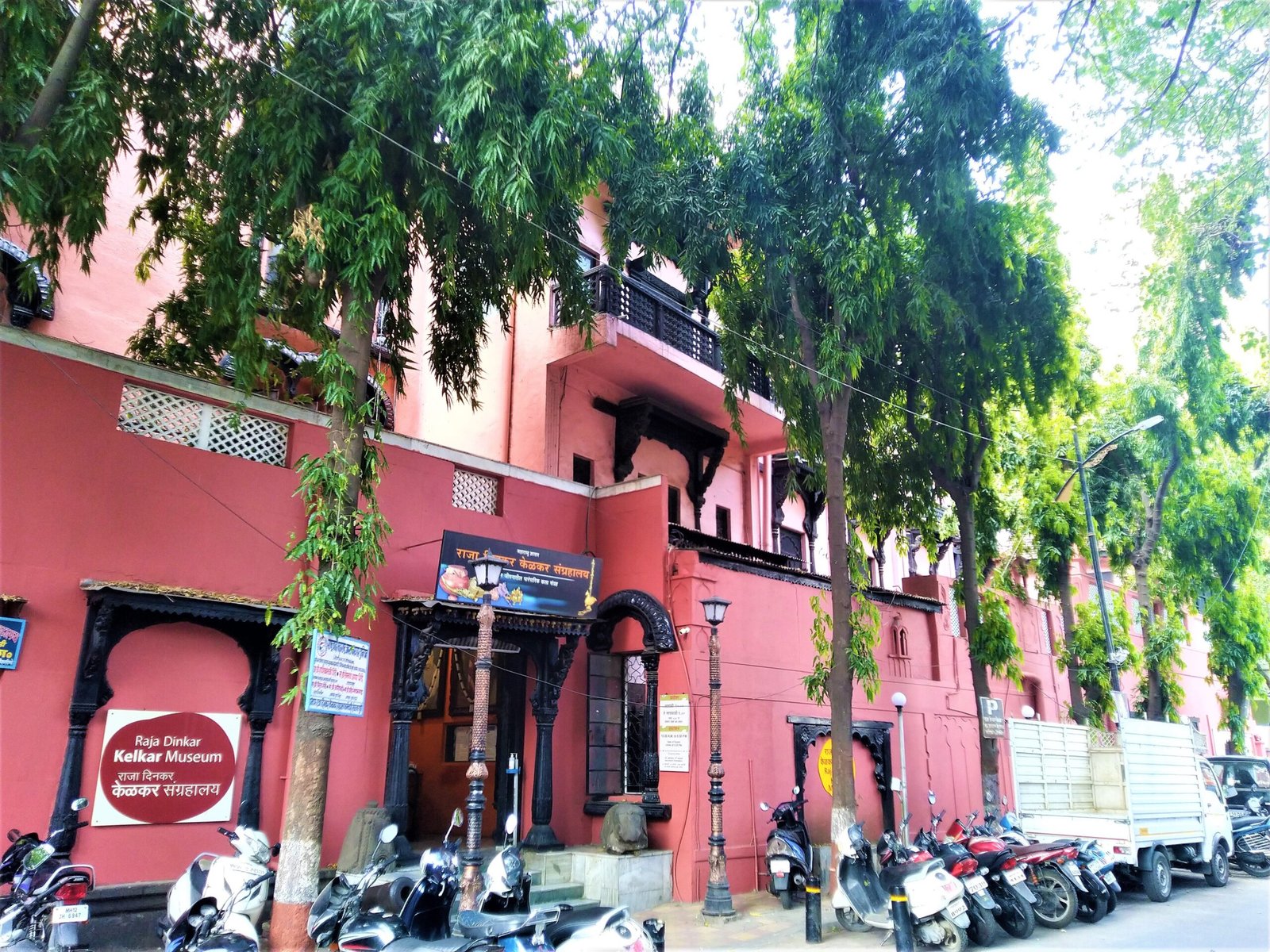
A personal collection spanning seven centuries of Indian art and craft, housed in a colonial-era building in Pune’s old city.
At a glance
Dr. Dinkar G. Kelkar assembled one of India’s most eclectic private collections, now displayed across three storeys. The museum honors his son, Raja, and preserves objects ranging from 14th-century sculpture to delicate ivory work, weaponry, and musical instruments.
History
Dr. Dinkar G. Kelkar (1896–1990) devoted decades to collecting artifacts that illuminate Indian material culture. After his death, his collection was preserved and opened to the public as a memorial to his son, creating an intimate portrait of a scholar’s passion for preserving the past.
What you see
The three-storey building itself reflects the architectural tastes of Pune’s 19th-century civic life. Inside, sculptures dating to the 14th century share space with ornaments crafted in ivory, silver, and gold. The museum’s musical instrument collection is particularly renowned, complemented by war weapons and vessels that document trade, ritual, and daily life across regions and periods.
Cultural significance
Rather than imposing a single narrative, the museum presents objects as a collector encountered them—juxtaposing fine art with functional ware, sacred with secular. This approach reveals how material culture tells interconnected stories of craft mastery, cultural exchange, and historical continuity in India.
Key facts
- Location: Pune, Maharashtra, India
- Coordinates: 18.51°N, 73.85°E
- Founder: Dr. Dinkar G. Kelkar (1896–1990)
- Collection range: 14th century to modern era
- Building: Three storeys
Practical information & getting there
The museum is located in Pune’s Sadashiv Peth neighbourhood. It remains an active cultural institution; contact ahead for current opening hours and admission details. Nearby attractions include other heritage sites in the old city, accessible by local transport.
Sources & resources
Find it on the map
See this place and what’s around it →📷 Become a Cultural Heritage Online photographer
Share your photos of places: they stay published under your name as the author. The more they're seen, the more you get noticed — and soon a contest will reward the most appreciated photos.
Log in or sign up free to add a photoIs this page about you?
This page is read by travellers and heritage enthusiasts who find it on Google. Tell us how you are connected to this place and we will take it from there.