
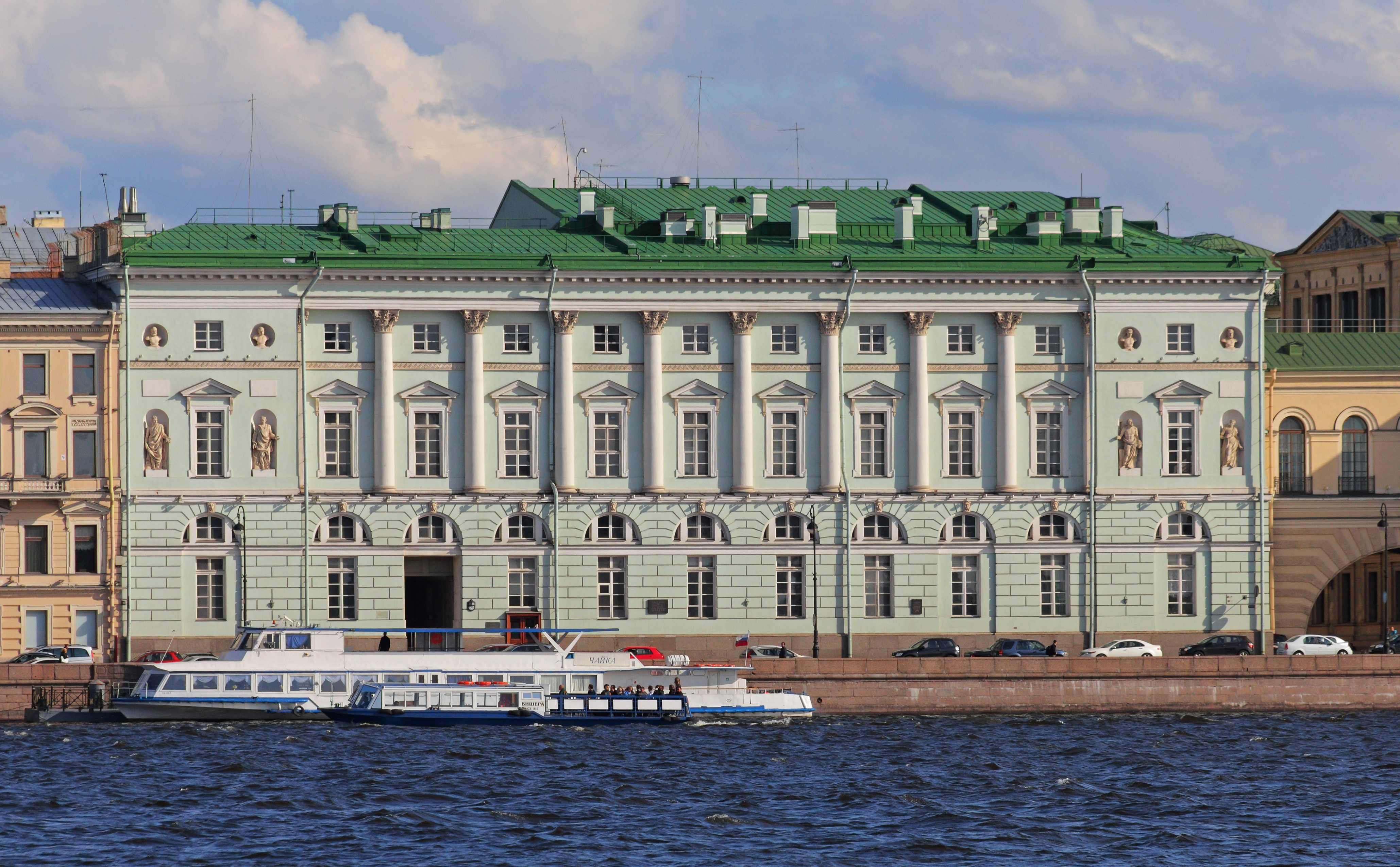
A semicircular jewel box on the Palace Embankment, built for Catherine the Great and never substantially altered since.
At a glance
The Hermitage Theatre is one of five linked buildings forming the Hermitage complex along the Neva River. Designed by Giacomo Quarenghi in a restrained Palladian classicism, it seats only about 250 people. Its interior survives largely as built, an unusual case among imperial Russian theatres.
History
Catherine the Great commissioned the theatre to replace an earlier Russian Imperial Theater that had served the Winter Palace since 1764. Construction ran from 1783 to 1787. Quarenghi’s design required demolishing the crumbling Third Winter Palace of Peter the Great, though old foundations remain visible on the ground floor. The building opened ceremonially on 22 November 1785. Quarenghi’s engraved plans, published in 1787, spread his reputation across Europe. Catherine herself invited the small aristocratic audiences, reserving a loge for the architect and his family as a mark of gratitude. Domenico Cimarosa’s operas, set to her own librettos, premiered here. In the 19th century diplomats joined the guest list. Later, Mathilde Kschessinska, Anna Pavlova and Fyodor Chaliapin performed for the last tsar, and Marius Petipa’s Harlequinade premiered on this stage in 1900. The Bolsheviks closed the theatre and repurposed the building for administration. Performances resumed only in 1991.
What you see
The auditorium is semicircular, faced in colored marble. Ten niches hold statues of Apollo and the muses. The original stage machinery still operates in situ. It is rare survival. What is missing are the elaborate painted sets by Pietro Gonzaga, an Italian artist admired in his time, lost during the Soviet decades of neglect. Costumes for early productions were drawn from a personal wardrobe of some 15,000 dresses left by the late Empress Elizabeth.
Cultural significance
The theatre stands as a rare physical trace of Catherine the Great’s personal artistic tastes. Few imperial spaces retain their original fabric so completely. Its intimate scale, never designed for mass audiences, distinguishes it from grander Russian theatres built later. The building bridges two eras: the court entertainments of the 18th century and the concert stage that reopened after 1991, hosting figures such as Svyatoslav Richter, Mstislav Rostropovich and Yelena Obraztsova.
Key facts
- Architect: Giacomo Quarenghi
- Built: 1783–1787; opened 22 November 1785
- Style: Neoclassical / Palladian classicism
- Capacity: approximately 250 spectators
- Location: Palace Embankment, Saint Petersburg, part of the Hermitage complex
- Heritage status: protected heritage site
Practical information & getting there
The theatre sits among the Hermitage buildings on the Palace Embankment, easily reached on foot from Palace Square. You can check current performance schedules and ticketing through the Hermitage Museum’s official channels before visiting, since the space still functions as a working stage rather than a fixed museum room.
Sources & resources
Find it on the map
See this place and what’s around it →📷 Become a Cultural Heritage Online photographer
Share your photos of places: they stay published under your name as the author. The more they're seen, the more you get noticed — and soon a contest will reward the most appreciated photos.
Log in or sign up free to add a photoIs this page about you?
This page is read by travellers and heritage enthusiasts who find it on Google. Tell us how you are connected to this place and we will take it from there.