
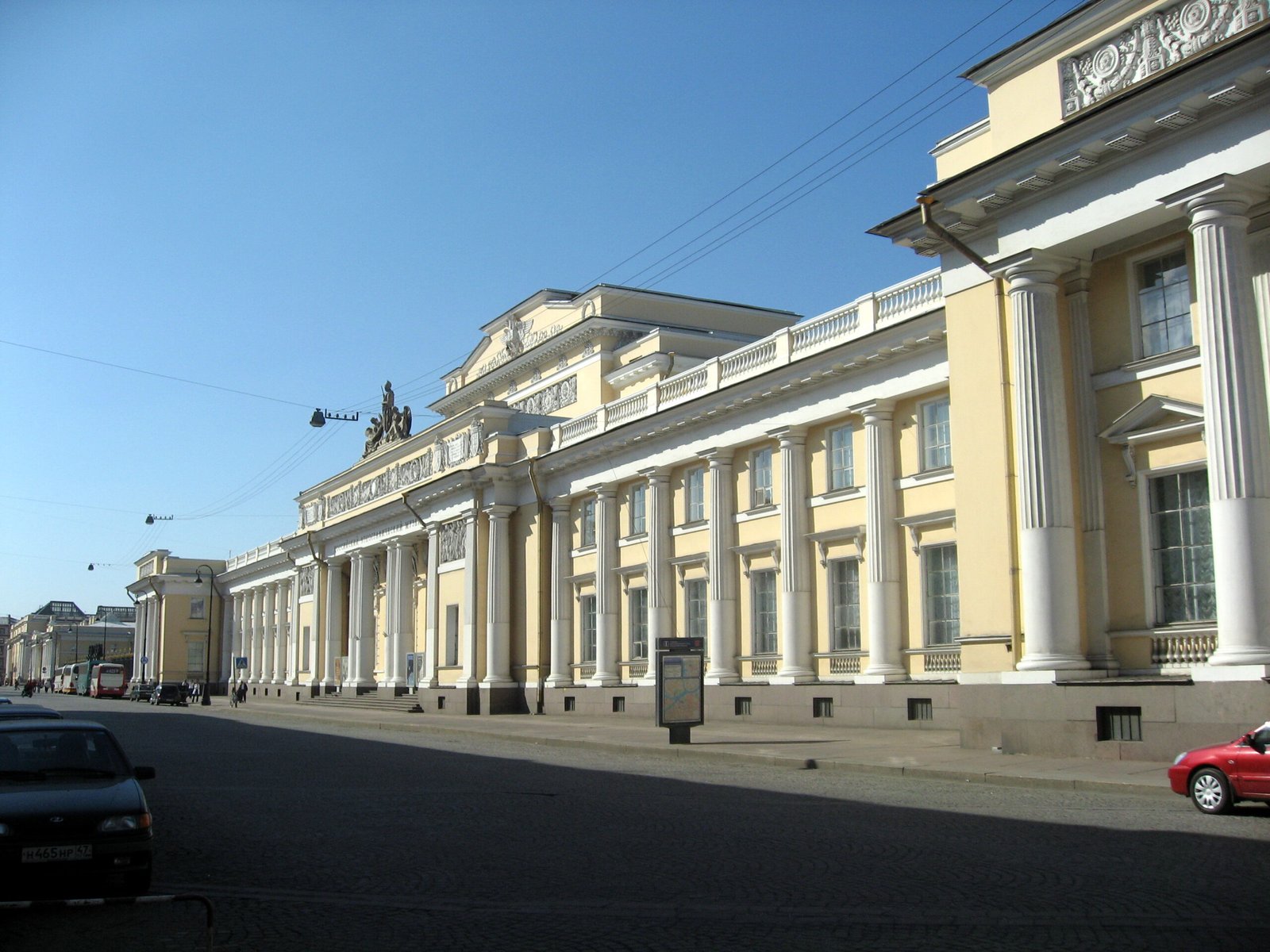
A vast repository of everyday life across the former Russian Empire, holding roughly 500,000 objects gathered from tsarist expeditions, private donors and Soviet-era acquisitions.
At a glance
The Russian Museum of Ethnography traces its origins to 1895, when an ethnographic department formed within the Russian Museum under Samuil Dudin. It became independent in 1934. Wikidata records its formal inception in 1902, the year systematic collecting expeditions gained momentum. Today it stands as one of the world’s largest ethnographic collections, organized by region rather than by object type.
History
Nicholas II signed the decree establishing the Russian Museum in memory of his father, Alexander III, and the ethnographic collection grew inside its walls. Early gifts came from tsars themselves. Expeditions from 1901 onward filled gaps left by thin state funding. Prince Esper Ukhtomsky supplied Buddhist religious objects. Prince Tenishev donated decades of peasant-life documentation from his private bureau. The public could not see any of this until 1923. Separation from the Russian Museum followed in 1934. In 1948, when Moscow’s Museum of the Peoples of the USSR closed, its holdings moved to Leningrad, swelling the collection further.
What you see
Visitors move through departments devoted to distinct regions and peoples: Russians, Belarusians, Ukrainians, Moldovans, the peoples of the North-West and Baltic, the Caucasus, Central Asia, Kazakhstan, the Volga-Urals region, and Siberia with the Far East. A Children’s Ethnographic Center rounds out the offering. The Central Asian holdings, expanded through Dudin’s 1901-1902 journey from the Caspian Sea to Kashgar, include more than two thousand items of Uzbek daily culture alongside his own photographs. Silk-processing tools, nomadic Kyrgyz gear, Turkmen textiles and Karakalpak household objects sit within this section, each traceable to a named collector and a specific decade of fieldwork.
Cultural significance
The museum functions as an archive of vanished and changing ways of life across a vast imperial and Soviet territory. Its Central Asian department alone reflects contributions from academicians, engineers, artists and correspondents working between the 1900s and the 1930s. A 2007 exhibition on Bukharian Jewish culture and a 2016 book-and-film project on Uzbekistan’s heritage show the collection still generating new scholarship. It is not the Kunstkamera, an older institution sometimes confused with it, but a separate and younger endeavor with its own distinct founding story.
Key facts
- Location: St. Petersburg, Russia
- Founding department established: 1895, under Samuil Dudin
- Formal inception (Wikidata): 1902
- Separated from the Russian Museum: 1934
- Opened to the public: 1923
- Collection size: approximately 500,000 items
- Absorbed the Museum of the Peoples of the USSR collections in 1948
Practical information & getting there
The museum sits in central St. Petersburg. Check the official website for current hours, ticketing and any temporary exhibition schedules before you go. Public transport within the city center reaches the surrounding district easily, and the museum’s departmental layout rewards a slow walk rather than a rushed pass-through.
Sources & resources
Find it on the map
See this place and what’s around it →📷 Become a Cultural Heritage Online photographer
Share your photos of places: they stay published under your name as the author. The more they're seen, the more you get noticed — and soon a contest will reward the most appreciated photos.
Log in or sign up free to add a photoIs this page about you?
This page is read by travellers and heritage enthusiasts who find it on Google. Tell us how you are connected to this place and we will take it from there.