

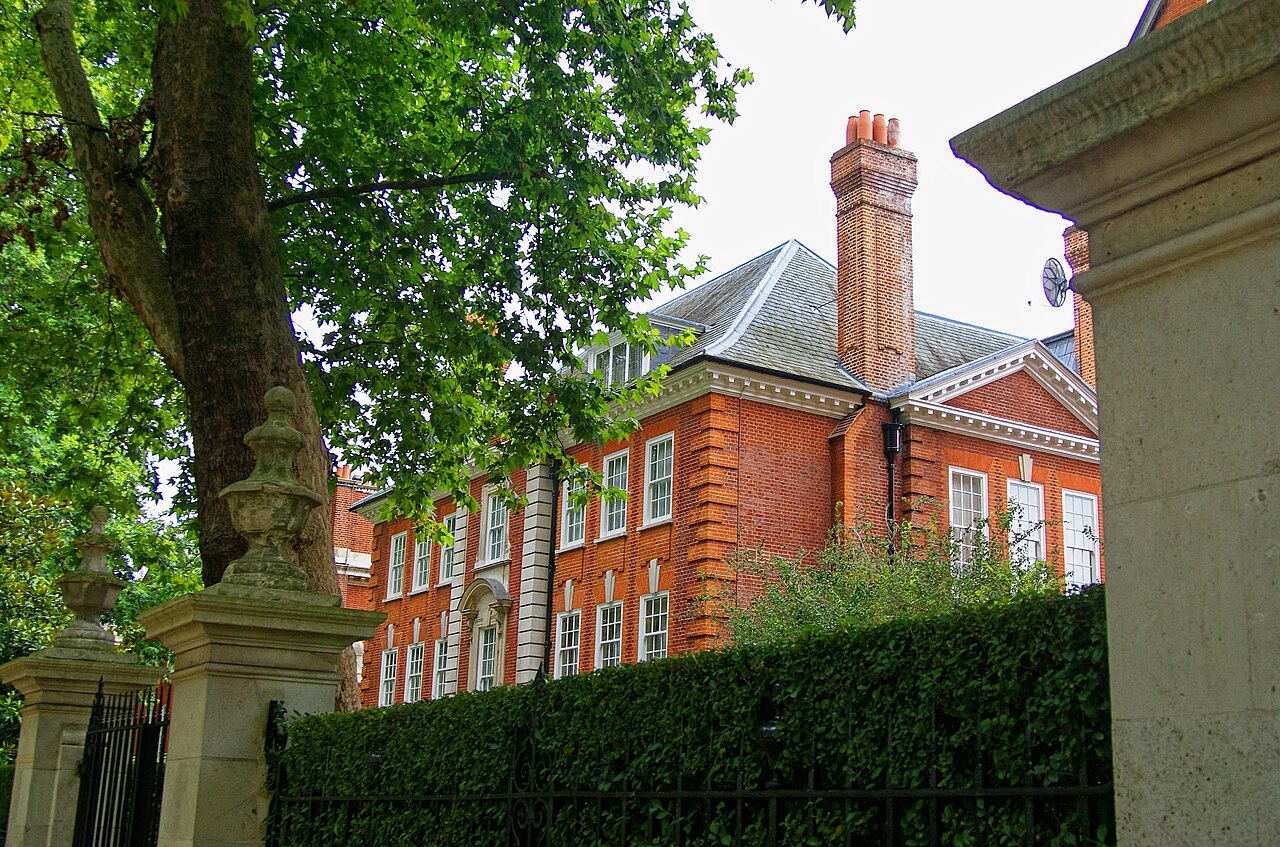
Kensington Palace is a working royal residence and historic state apartment complex on the western edge of Kensington Gardens in London, first acquired by the Crown in 1689 for William III. Transformed by Christopher Wren and later remodelled by William Kent under George I, the palace served as the primary London residence of British monarchs from 1689 to 1760 and remains a home to members of the Royal Family today, including the Prince and Princess of Wales.
At a glance
- Type
- Royal palace and museum
- Period
- Originally built c. 1605; acquired and enlarged by the Crown from 1689
- Style
- English Baroque; later Palladian state rooms
- Location
- Kensington Gardens, London W8, England
- Coordinates
- 51.5049° N, 0.1899° W
Overview
Kensington Palace began as Nottingham House, a Jacobean mansion purchased by William III and Mary II in 1689 from the Earl of Nottingham because its location away from the Thames offered relief from William’s asthma. Sir Christopher Wren oversaw its initial expansion into a royal residence. Today the palace houses Historic Royal Palaces, which manages public access to the elaborately decorated State Apartments and the permanent Fashion Rules and Sovereign display galleries.
History
William III and Mary II commissioned Wren to expand the house rapidly so it could serve as the primary London court from 1689. Queen Anne further enlarged the palace and added the Orangery, designed by Hawksmoor and Vanbrugh in 1704–1705. Under George I, William Kent painted the spectacular trompe-l’oeil King’s Staircase and the series of rooms known as the King’s State Apartments. The palace’s association with modernity intensified after 1981 when it became the home of Diana, Princess of Wales, and it remains the site of public memorial and royal ceremony.
What you see
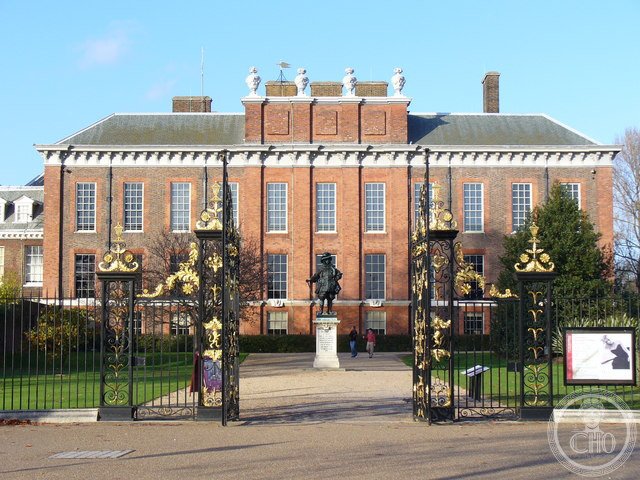
Visitors enter the publicly accessible State Apartments, which include the King’s Gallery with its painted ceiling, the Cupola Room where Queen Victoria was baptised, and the King’s Staircase — one of the finest examples of trompe-l’oeil architectural painting in England. The Queen’s State Apartments on the north range retain their quieter 17th-century atmosphere. Outside, the sunken Sunken Garden and the Cradle Walk of pleached lime trees frame the south facade, while a statue of Queen Victoria by her daughter Princess Louise stands before the east front.
Cultural significance
Kensington Palace sits at the intersection of British royal history and modern popular culture: it was the birthplace of Queen Victoria in 1819 and a principal home of Diana, Princess of Wales, whose death in 1997 prompted unprecedented public mourning at its gates. The palace’s fashion and royal dress collections constitute one of the most significant archives of ceremonial costume in the world.
Practical information
- Address
- Kensington Gardens, London W8 4PX, United Kingdom
- Admission
- Charged; Historic Royal Palaces members free. Check official website for current prices.
- Website
- hrp.org.uk/kensington-palace
Getting there
The nearest Underground stations are High Street Kensington (District and Circle lines) and Queensway (Central line), each approximately 10 minutes on foot through Kensington Gardens. Bus routes 9, 10, 49, 52, 70, and 452 serve the area. The palace is not accessible by car for general visitors; the nearest public parking is in the vicinity of Hyde Park.
Sources & resources
Gallery
Find it on the map
See this place and what’s around it →Events here — now on & upcoming
- Anniversary: Victoria Learns She Is Queen — June 20, 183720 Jun 2027See the event →
📷 Become a Cultural Heritage Online photographer
Share your photos of places: they stay published under your name as the author. The more they're seen, the more you get noticed — and soon a contest will reward the most appreciated photos.
Log in or sign up free to add a photoIs this page about you?
This page is read by travellers and heritage enthusiasts who find it on Google. Tell us how you are connected to this place and we will take it from there.