
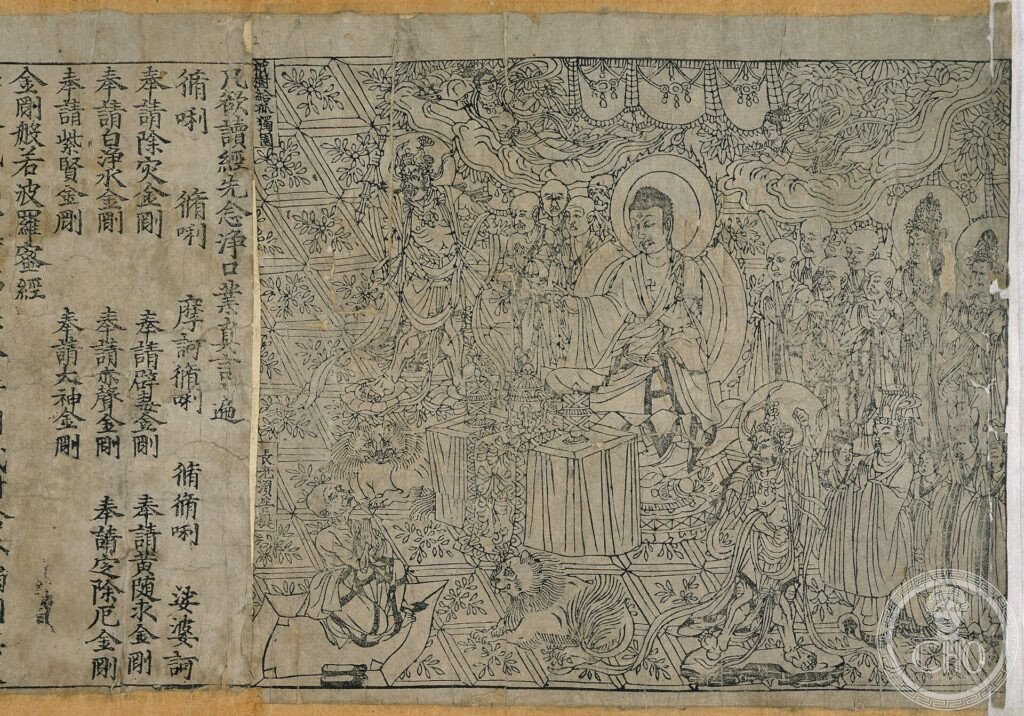
A centuries-old relief printing technique in which artisans carve wooden blocks to create impressions of text, images and patterns—a laborious craft that enabled the mass reproduction of books, art and sacred texts across East Asia.
At a glance
Chinese engraved block printing is a relief printing method where carvers remove wood from blocks, leaving raised lines and surfaces to be inked and pressed onto paper or cloth. The technique allows a single carved block to yield numerous impressions, making it a practical technology for distributing texts and images before the modern printing age.
Origins & history
The earliest surviving examples of woodblock printing on cloth in China date to before 220 AD. By the Tang dynasty in the 7th century, the technique had become established and would remain the dominant method of printing books, texts and images throughout East Asia until the 19th century. The practice shaped the production and dissemination of knowledge, literature and art across the region for over a millennium.
The practice
A carver begins with a wooden block, carefully removing portions of the surface to create a mirror image of the intended design—whether calligraphy, illustrations or decorative patterns. Only the raised areas receive ink; when pressed against paper or fabric, they transfer the image. The work demands precision, knowledge of wood properties and an understanding of how ink and pressure transfer images.
Master carvers must anticipate how their cuts will appear in reverse when printed. A single block, once carved, can produce many impressions, each one a direct result of the original craftsperson’s hand and tool marks. The technique works equally well for sacred texts, literary works, popular prints and textile designs.
Cultural significance
Engraved block printing represents a fundamental technology in East Asian intellectual and artistic history. It democratized access to texts—religious, philosophical and literary—and enabled the circulation of knowledge before industrialized printing. The technique also reflects deep connections between calligraphy, painting and reproduction, uniting the skills of the carver with the aesthetics of the original designer or author. In its materials, labour and output, it embodies the value placed on craftsmanship and the word in East Asian cultures.
Key facts
- Anchor community: Yangzhou, China (32.39499°N, 119.41824°E)
- Countries: China
- UNESCO ICH inscription: 2009 (reference 00229)
- Classification: Relief printing technique using carved wooden blocks
- Earliest documented use: cloth printing before 220 AD
- Peak period: Tang dynasty (7th century) through 19th century
Where to experience it
Yangzhou, in eastern China’s Jiangsu Province, remains the heartland of this tradition. The city has long been known for its master carvers and printing workshops. Visitors interested in seeing the craft practised can seek out active artisans and cultural institutions dedicated to preserving the technique, though specific workshop hours and locations are best confirmed locally.
Sources & resources
- Woodblock printing – Wikipedia
- China Engraved Block Printing Technique – UNESCO Intangible Cultural Heritage
- Cultural Heritage Online
Find it on the map
See this place and what’s around it →📷 Become a Cultural Heritage Online photographer
Share your photos of places: they stay published under your name as the author. The more they're seen, the more you get noticed — and soon a contest will reward the most appreciated photos.
Log in or sign up free to add a photo