
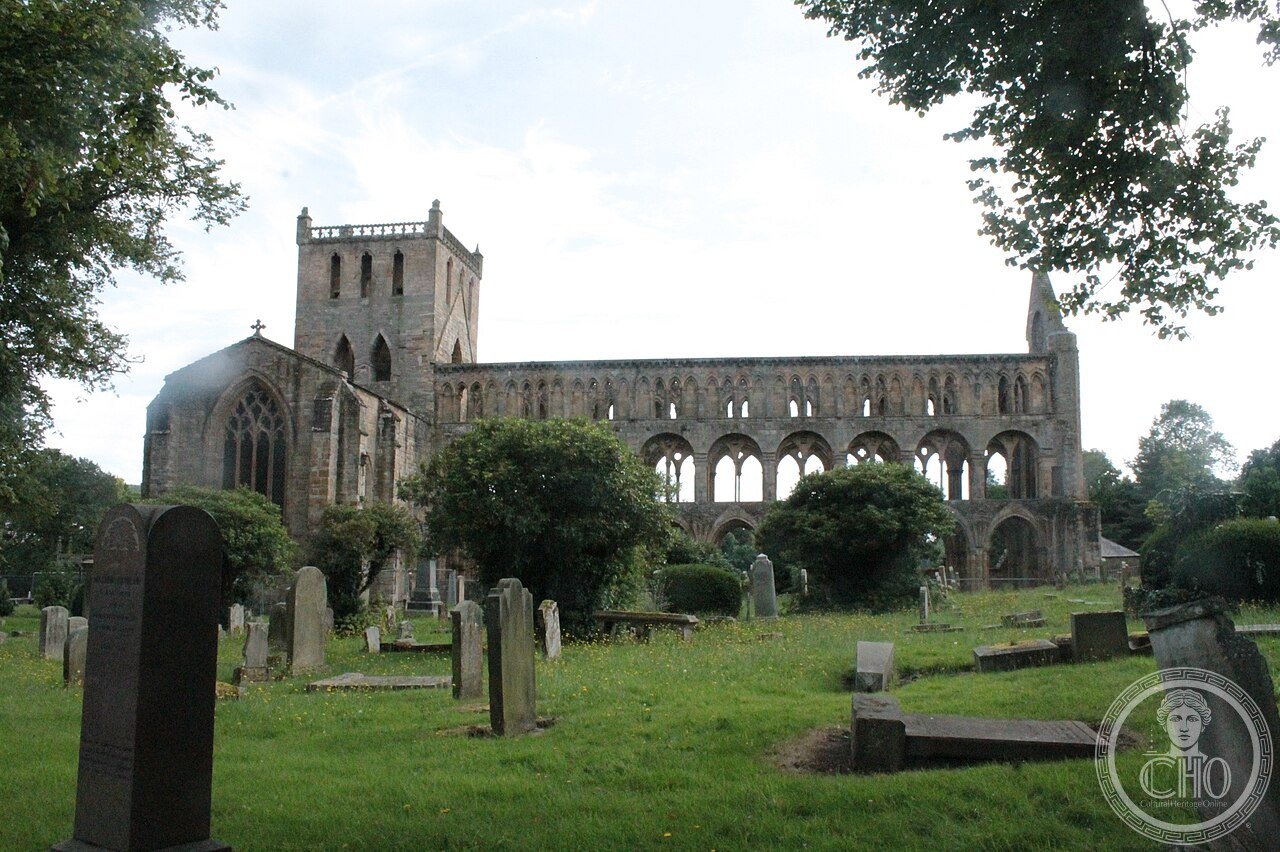
Founded in 1138 by David I of Scotland as an Augustinian priory and raised to an abbey in 1154, Jedburgh stood right on the contested border between Scotland and England: it was sacked during the Scottish Wars of Independence, stripped of its roof lead by Edward I in 1305, and devastated again in the 1540s during Henry VIII’s “Rough Wooing”, his attempt to force a marriage between his son and Mary Stuart. Monastic life died out for good with the Scottish Reformation of 1560.
About Jedburgh Abbey
David I, King of Scotland, founded a priory at Jedburgh in 1138, raising it to full abbey status in 1154; the founding community of Augustinian canons is believed to have come from St Quentin Abbey near Beauvais in France. As Augustinians, the canons combined a contemplative religious life with active pastoral ministry to the surrounding population, distinguishing their community from more strictly enclosed monastic orders. Jedburgh’s location directly on the contested Anglo-Scottish border repeatedly drew the abbey into the region’s centuries of military conflict: it was fought over during the Wars of Scottish Independence between 1296 and 1356, and King Edward I of England had lead stripped from the abbey roof in 1305 as an act of deliberate despoliation. Further waves of destruction followed from the 1520s through the 1540s, as English and Franco-Scottish armies repeatedly contested control of both the town and its abbey. The most severe damage came during the period known as the “Rough Wooing,” when Henry VIII of England sought to force a marriage between his son and the infant Mary, Queen of Scots; the Scots’ refusal to agree brought English armies north in both 1544 and 1545, inflicting extensive damage on Jedburgh and throughout the Scottish Borders. Mary, Queen of Scots herself later stayed in Jedburgh in October 1566, in a house on Queen Street that survives today as a museum housing relics connected to her visit. The abbey’s monastic community, by then embattled and diminished, finally came to an end with the Scottish Reformation of 1560, which brought four centuries of religious life at Jedburgh to a permanent close.
Key facts
- 1138: priory founded by David I of Scotland
- 1154: raised to full abbey status
- 1296-1356: repeatedly damaged during the Wars of Scottish Independence
- 1305: Edward I strips lead from the abbey roof
- 1544-1545: severely damaged during Henry VIII’s “Rough Wooing” campaign
- October 1566: Mary, Queen of Scots stays nearby in Jedburgh
- 1560: monastic life ends with the Scottish Reformation
History
Jedburgh Abbey’s centuries-long exposure to border warfare, from the Wars of Scottish Independence through the mid-16th-century “Rough Wooing,” makes it a particularly vivid physical record of the sustained military conflict that defined the Anglo-Scottish frontier for over three centuries — few religious institutions anywhere in Britain suffered such a sustained pattern of repeated destruction and rebuilding. The abbey’s proximity to Mary, Queen of Scots’s 1566 stay in the town situates Jedburgh within the wider political drama of 16th-century Scotland, even as the abbey’s own monastic community was already in irreversible decline toward its dissolution at the Reformation four years later.
As one of the four great Border Abbeys of southern Scotland, alongside Melrose, Dryburgh, and Kelso, Jedburgh forms part of a distinctive regional cluster of medieval monastic foundations whose shared history of border violence and eventual Reformation-era dissolution reflects the particular vulnerabilities of religious institutions situated directly on a contested national frontier.
What you see
The abbey’s substantial ruins preserve much of its Romanesque and Gothic architectural fabric, including a largely intact west front and rose window, giving visitors an unusually complete sense of the medieval church’s original scale despite centuries of border warfare damage. The surrounding abbey precinct and graveyard preserve further traces of the monastic complex that once stood at the heart of Jedburgh’s religious and civic life.
Practical information
- Opening hours: generally open daily with seasonal variation; check current hours before visiting; admission fee applies
- Address: The Rampart, Jedburgh, Scottish Borders TD8 6BE, United Kingdom
Getting there
Jedburgh Abbey is located in the centre of the town of Jedburgh, in the Scottish Borders, easily reachable on foot. GPS: 55.4766° N, -2.5547° E.
Nearby
- Mary, Queen of Scots House — the museum in the house where she stayed in 1566
- Jedburgh Castle Jail — a nearby historic site
- Melrose Abbey and Dryburgh Abbey — two of the other Border Abbeys, within the same region
Sources
- Historic Environment Scotland — “Jedburgh Abbey: History” (historicenvironment.scot)
- Wikipedia — “Jedburgh Abbey” (en.wikipedia.org)
- Britannica — “Jedburgh” (britannica.com)
Find it on the map
See this place and what’s around it →📷 Become a Cultural Heritage Online photographer
Share your photos of places: they stay published under your name as the author. The more they're seen, the more you get noticed — and soon a contest will reward the most appreciated photos.
Log in or sign up free to add a photo