

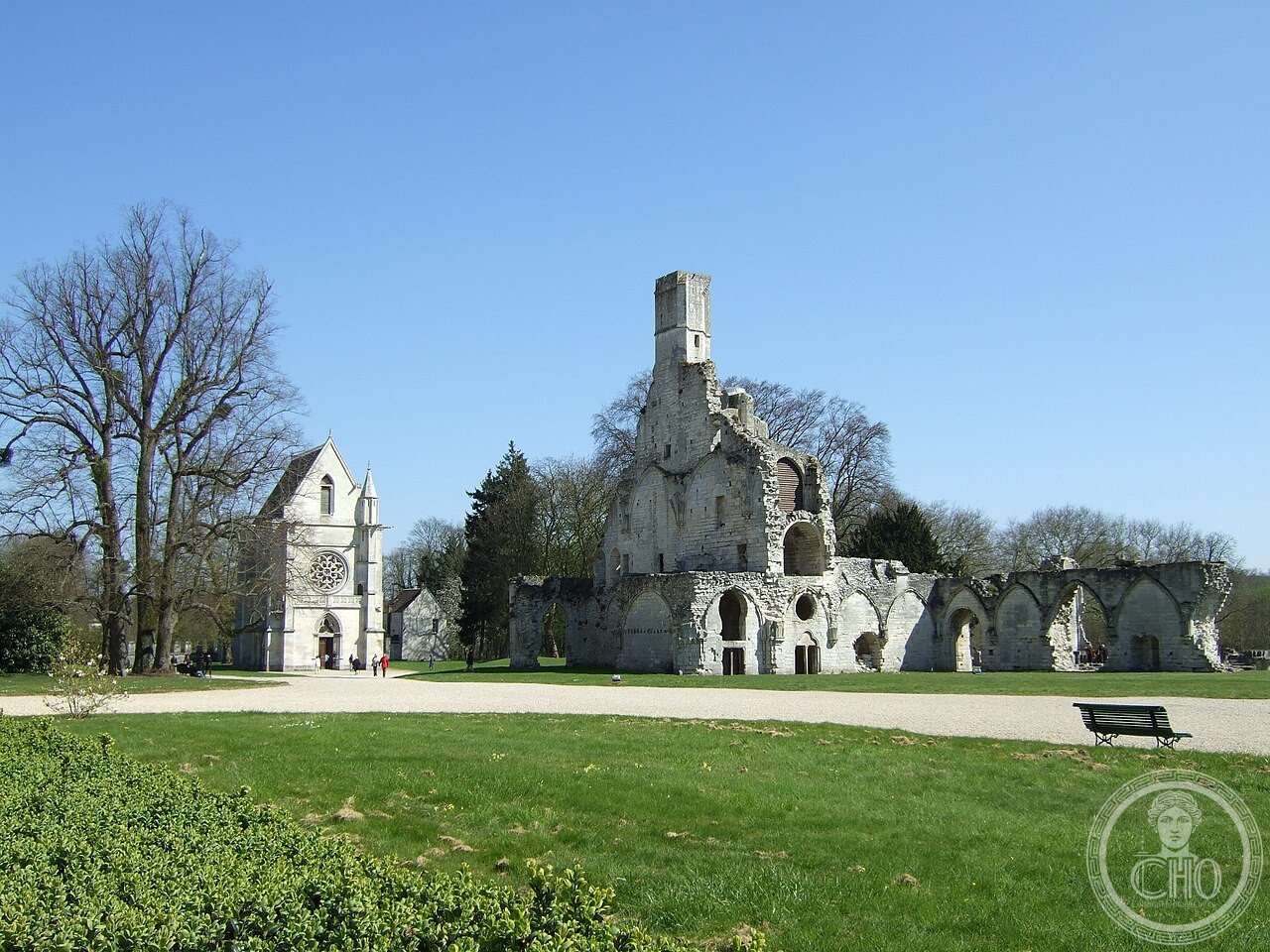
Louis VI of France, known as the Fat, founded the abbey in 1137 in memory of his cousin Charles the Good, Count of Flanders, murdered ten years earlier. In 1902 the property passed to Nélie Jacquemart-André, widow of a wealthy banker, who gathered there almost six thousand works of art, among them works by Giotto, Houdon and Boucher, leaving everything to the Institut de France on her death in 1912.
About Chaalis Abbey
The Abbaye de Chaalis was founded in 1137 by Louis VI of France, known as “the Fat,” to commemorate his cousin Charles the Good, Count of Flanders, who had been assassinated in 1127; the abbey was placed under Cistercian auspices. Of this former royal abbey, what survives today includes the ruins of the Gothic church and cloister, a chapel with an exceptional decorative programme of Renaissance frescoes, and an imposing 18th-century convent building. The estate’s modern history was transformed in 1902, when it became the property of Nélie Jacquemart-André, widow of a wealthy banker; following her husband’s death, she devoted his fortune and the remaining years of her own life to assembling a collection of nearly 6,000 works of art. When she died in 1912, she bequeathed both Chaalis and her Parisian townhouse to the Institut de France, which has since worked to preserve and restore this exceptional heritage. The museum housed within the abbey today displays over 6,000 pieces of art, furniture, and manuscripts, including works by Giotto, Houdon, and Boucher. The estate’s celebrated rose garden was originally commissioned in the 1920s by Louis Gillet, curator of the on-site Musée Jacquemart-André, and was subsequently reimagined by garden designer André Gamard in 2000; the roses are grouped by hue along paths covering some 3,500 square metres.
Key facts
- Foundation: 1137, by Louis VI of France, in memory of his assassinated cousin Charles the Good, Count of Flanders (d. 1127)
- Surviving structures: Gothic church and cloister ruins, a chapel with Renaissance fresco decoration, an 18th-century convent building
- 1902: estate purchased by Nélie Jacquemart-André
- 1912: bequeathed, along with her Paris townhouse, to the Institut de France
- Museum collection: nearly 6,000 works of art, including pieces by Giotto, Houdon, and Boucher
- Rose garden: commissioned 1920s by Louis Gillet, redesigned 2000 by André Gamard; c. 3,500 m² of roses grouped by colour
History
Louis VI’s decision to found Chaalis specifically as a memorial to his assassinated cousin Charles the Good situates the abbey within a broader medieval pattern of monastic foundations serving as durable, prayer-generating memorials to specific deceased individuals, translating personal or dynastic grief into a lasting institutional structure whose monks would perpetually pray for the commemorated person’s soul — a considerably more permanent form of memorial than any single monument or tomb alone could provide. Charles the Good’s own 1127 assassination, occurring amid the complex succession politics of medieval Flanders, gave his memory particular political as well as personal significance for the wider Capetian royal family.
Nélie Jacquemart-André’s early-20th-century transformation of the ruined abbey into a major private art collection, and her subsequent bequest to the Institut de France, exemplifies a broader pattern of wealthy art-collecting individuals in this period using historic French properties both as suitable settings for major art collections and as a means of ensuring institutional, rather than purely private-family, long-term preservation and public access — her parallel bequest of her Parisian townhouse (itself now the separate Musée Jacquemart-André) reflects a deliberate, coordinated strategy of dual-site cultural philanthropy rather than a single isolated gift.
What you see
The Gothic church and cloister ruins, alongside the chapel’s Renaissance fresco decoration, give visitors direct access to the medieval abbey’s surviving architectural fabric. The museum, housing nearly 6,000 works including pieces by Giotto, Houdon, and Boucher, offers an art-historical destination independent of the site’s religious origins. The rose garden, spanning some 3,500 square metres and organised by colour, rewards a seasonal visit alongside the abbey’s architectural and museum attractions.
Practical information
- Opening hours: generally open daily during the visitor season, check current hours before visiting; admission fee for the museum
- Address: Fontaine-Chaalis, 60300 Senlis, France
Getting there
Chaalis Abbey is reachable by car from Senlis (approximately 15 minutes) and Paris (approximately 1 hour) in the Oise department, Hauts-de-France. GPS: 49.1487° N, 2.6860° E.
Nearby
- Senlis — approximately 15 minutes away; a historic town with its own significant Gothic cathedral
- Chantilly — within reach; a major château with famous gardens and horse racing
- Ermenonville — a nearby park associated with Jean-Jacques Rousseau
Sources
- Wikipedia — “Chaalis Abbey” (en.wikipedia.org)
- Chantilly Senlis Tourisme — “The Domain of Chaalis” (chantilly-senlis-tourisme.com)
- France Voyage — “The Royal Abbey of Chaalis” (france-voyage.com)
Find it on the map
See this place and what’s around it →📷 Become a Cultural Heritage Online photographer
Share your photos of places: they stay published under your name as the author. The more they're seen, the more you get noticed — and soon a contest will reward the most appreciated photos.
Log in or sign up free to add a photo