
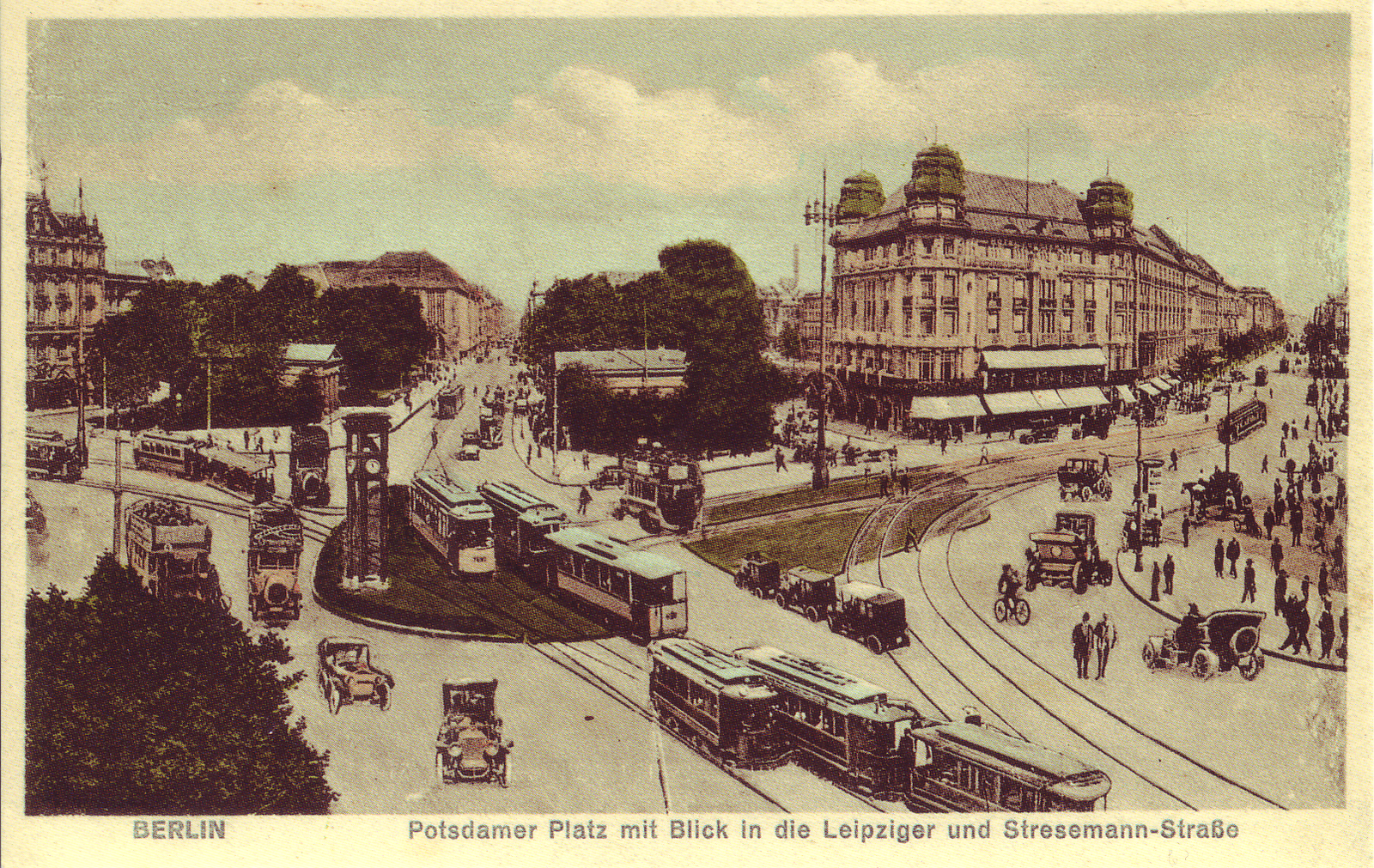
A Berliner luxury hotel that bridged Neoclassicism and Modernism before its destruction in World War II.
At a glance
Hotel Fürstenhof occupied a prestigious corner facing both Leipziger Platz and Potsdamer Platz in central Berlin. Designed by Richard Bielenberg and Josef Moser, it opened in 1907 as one of the city’s most distinguished accommodations. The building survived until November 1943, when it was destroyed during an air raid; demolition of the ruins followed in the 1950s.
History
The hotel was originally constructed in the Neoclassical style during the second half of the 19th century. A comprehensive renovation and enlargement preceded its grand reopening in 1907, reflecting the ambitious modernization of Berlin’s architectural landscape. The structure stood for over three decades before Nazi bombing reduced it to ruins on 22 November 1943. Complete demolition occurred during the postwar reconstruction period.
What you see
The renovated 1907 building synthesized three aesthetic currents: lingering Neoclassical restraint, the organic curves of Art Nouveau, and early Modernist simplification alongside Neo-Baroque flourishes. Interior spaces received elaborate decoration, including a fountain executed by Ludwig Mayer and carved ornaments by Richard Kuhn. The dual plaza frontage created an imposing urban presence.
Cultural significance
Hotel Fürstenhof exemplified the Belle Époque luxury hotel at the threshold of modernism, representing Berlin’s transformation into a European capital of commerce and culture. Its destruction remains emblematic of the city’s wartime losses and the architectural erasure that required postwar rebuilding from fragmentary records.
Key facts
- Location: Leipziger Platz and Potsdamer Platz, Bezirk Mitte, Berlin
- Country: Germany
- Coordinates: 52.5086°N, 13.3769°E
- Architects: Richard Bielenberg and Josef Moser
- Opened: 1907
- Destroyed: 22 November 1943 (air raid)
- Demolished: 1950s
Practical information & getting there
No structure remains on the site today. The location is accessible via public transport in central Berlin; the nearby Potsdamer Platz area contains museums and memorials documenting the city’s architectural heritage and wartime history.
Sources & resources
Find it on the map
See this place and what’s around it →📷 Become a Cultural Heritage Online photographer
Share your photos of places: they stay published under your name as the author. The more they're seen, the more you get noticed — and soon a contest will reward the most appreciated photos.
Log in or sign up free to add a photoIs this page about you?
This page is read by travellers and heritage enthusiasts who find it on Google. Tell us how you are connected to this place and we will take it from there.