
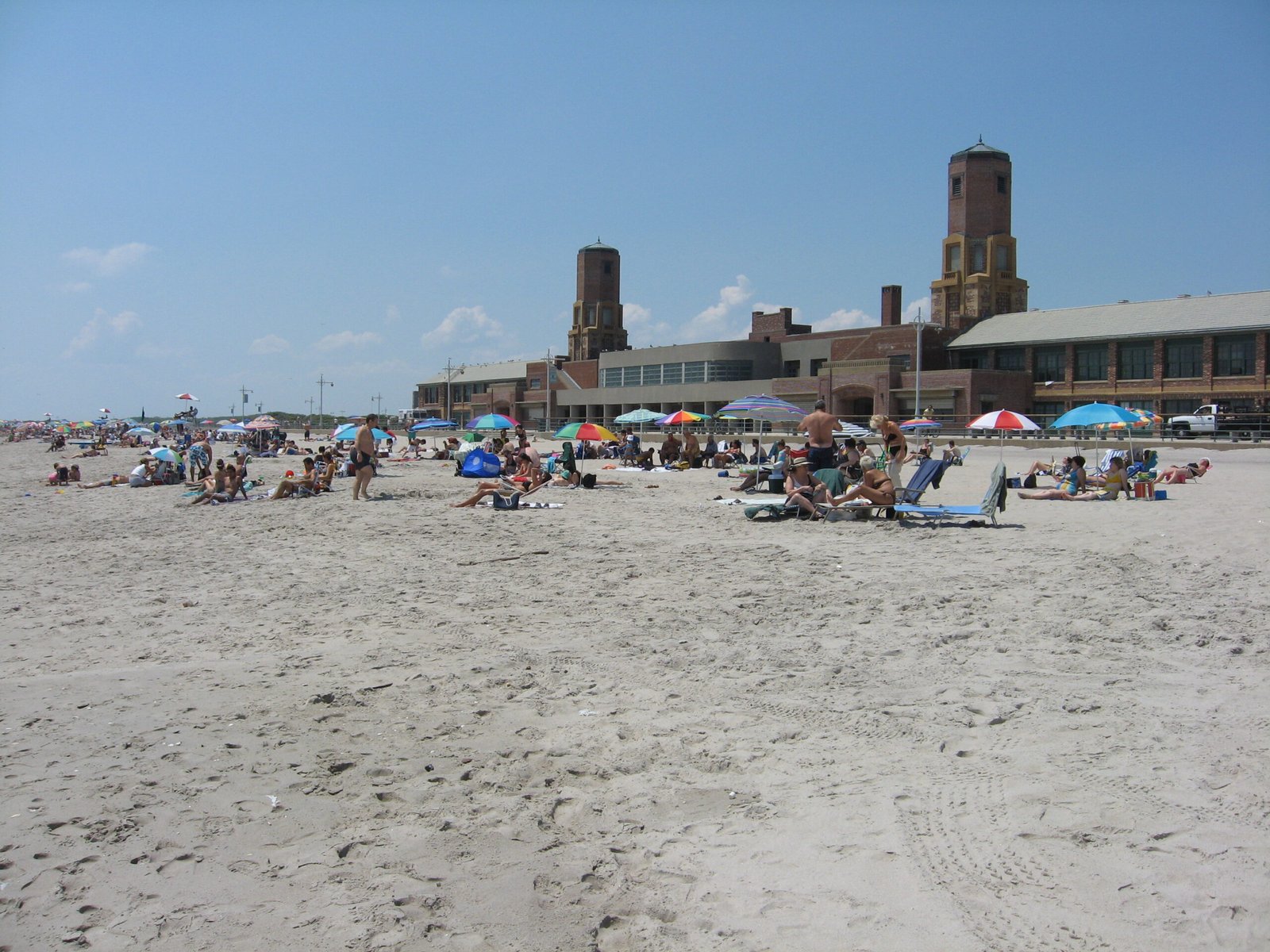
A seaside escape on the Rockaway Peninsula shaped by visionary planning, Art Deco architecture, and a legacy rooted in progressive reform—where New York City meets the Atlantic.
At a glance
Jacob Riis Park sprawls across the southwestern Rockaway Peninsula in Queens, anchored by an iconic Art Deco bathhouse and framed by 15 Atlantic-facing bays. Named for social journalist Jacob Riis, the park was transformed by Robert Moses into a democratic leisure destination for city residents. Today, managed by the National Park Service as part of Gateway National Recreation Area, it remains a working landscape of beaches, sports fields, and historic structures.
History
The city acquired the land in 1912 at Riis’s urging, initially naming it Seaside Park, then Telawana Park. In 1914 it was renamed in honor of Riis himself. During World War I, the site became Rockaway Naval Air Station—one of America’s earliest naval air facilities and the 1919 launchpoint for the first transatlantic flight.
Robert Moses redesigned the park between 1936 and 1937 as a complement to Jones Beach, coordinating construction with the Marine Parkway Bridge and Belt Parkway to ensure public access. The Art Deco bathhouse, completed in 1932, remains the architectural centerpiece. After decades of decline, the National Park Service assumed management in 1974. The Jacob Riis Park Historic District earned National Register listing in 1981.
What you see
The 1932 bathhouse epitomizes Art Deco streamlining and serves as the visual heart of the park. Moses’s 1936–37 infrastructure includes a north–south central mall, a boardwalk parallel to the shore, extensive parking, an 18-hole golf course, and multiple sporting fields. The configuration prioritizes pedestrian movement and democratic access—a hallmark of Moses’s public works vision.
Cultural significance
Jacob Riis Park embodies American ideals of public leisure and progressive reform. Named for a pioneering social documentarian who exposed tenement conditions, the park itself represents the countermovement—a belief that all New Yorkers deserved seaside recreation. Its design by Moses, whatever his later controversies, created an accessible escape that continues to serve its original purpose.
Key facts
- Location: Southwestern Rockaway Peninsula, Queens, New York
- Coordinates: 40.5675°N, 73.8733°W
- Year established: 1912 (land acquired); renamed 1914
- Historic designation: National Register of Historic Places (1981)
- Management: National Park Service (Jamaica Bay Unit, Gateway National Recreation Area)
- Signature structure: Art Deco bathhouse (1932)
Practical information & getting there
Jacob Riis Park is accessible via the Marine Parkway–Gil Hodges Memorial Bridge from Brooklyn or via local roads from neighboring Rockaway Beach. The park offers beaches, picnicking, golf, and athletic facilities. For current hours, amenities, and seasonal conditions, consult the Gateway National Recreation Area website or the National Park Service.
Sources & resources
Find it on the map
See this place and what’s around it →📷 Become a Cultural Heritage Online photographer
Share your photos of places: they stay published under your name as the author. The more they're seen, the more you get noticed — and soon a contest will reward the most appreciated photos.
Log in or sign up free to add a photoIs this page about you?
This page is read by travellers and heritage enthusiasts who find it on Google. Tell us how you are connected to this place and we will take it from there.