
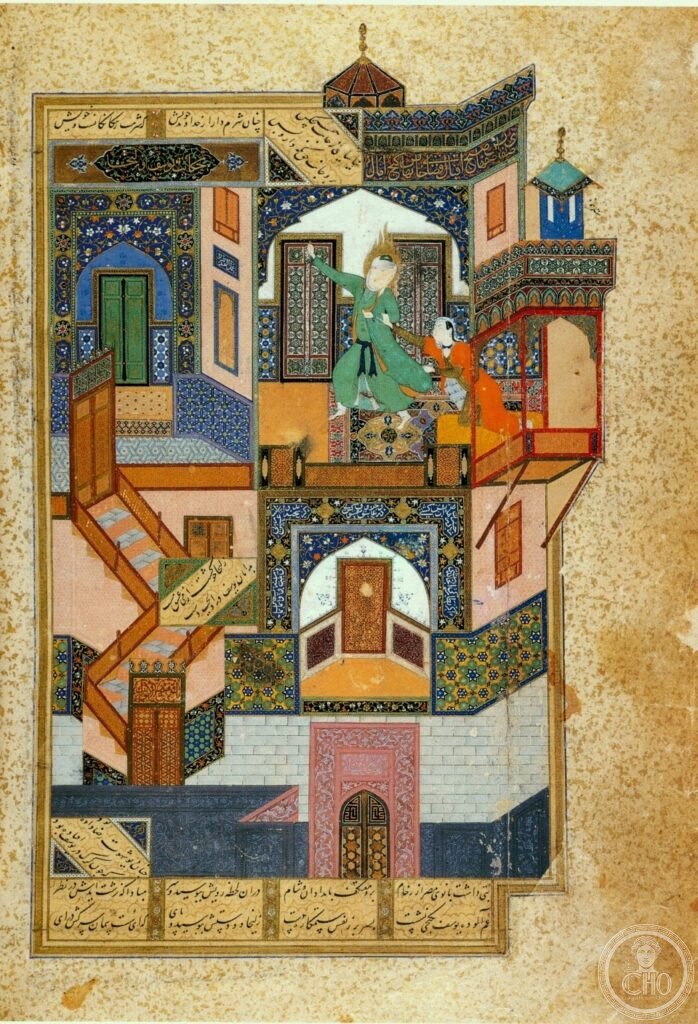
Behzad Miniature Painting
A tradition of intricate painting on paper—book illustrations and album works—that shaped Islamic art across three continents and remains a living craft in Herat.
At a glance
Behzad miniature painting is the art of creating small, detailed works on paper, executed either as illustrations within manuscripts or as independent pieces collected in albums called muraqqa. The tradition is distinguished by figurative scenes—often depicting multiple human figures—rendered with exceptional precision and color. Painters work with brushes, pigments, and paper, frequently adding non-figurative ornamental borders and illuminated decoration inspired by contemporary carpet designs and book-covers.
Origins & history
Persian miniature painting emerged as a significant genre in the 13th century, absorbing Chinese influences following the Mongol conquests. The tradition reached its zenith in the 15th and 16th centuries—the era of the master Behzad, whose name now defines the style. From Herat, the practice radiated outward, becoming the dominant influence on Ottoman miniatures in Turkey and Mughal miniatures in the Indian subcontinent. It has continued to evolve under Western influence and maintains active practitioners today.
The practice
A miniaturist works at intimate scale, typically on bound paper or album pages, using fine brushes to apply mineral and plant-based pigments. The composition centers on human figures—their garments, gestures, and interactions rendered with meticulous detail. Scenes often depict court life, literary narratives, or historical events, with faces and anatomy drawn according to Persian aesthetic conventions. The painter surrounds figurative work with ornamental borders, geometric patterns, and illuminated panels that echo designs found in Persian carpets. Because miniatures are private works—kept in books or albums shown only to chosen viewers—artists enjoyed greater freedom to depict human subjects than they would in public wall paintings, allowing for rich narrative complexity.
Cultural significance
Behzad miniature painting preserved knowledge and story across centuries when oral tradition alone could not reach distant communities. The practice offered non-royal collectors access to art: by the later medieval period, independent miniatures could be assembled into affordable albums representing diverse styles and periods. The tradition’s emphasis on the human figure—historically uncommon in Islamic visual culture—reflected a sophisticated understanding of how private, portable works could navigate religious and social boundaries. Its influence shaped artistic practice from the Ottoman Empire to the Mughal courts, making it a cornerstone of Islamic visual heritage.
Key facts
- Anchor community: Herat, Afghanistan
- Countries: Afghanistan
- UNESCO Intangible Cultural Heritage, 2010 (reference 02267)
- Practiced since the 13th century; peak tradition in 15th–16th centuries
- Media: pigments, brushes, paper
Where to experience it
Herat remains the heartland of Behzad miniature painting tradition. Modern practitioners continue the craft in the city’s workshops and studios. Many historical examples are held in museums in the West, Turkey, and Afghanistan, though the living practice—the transmission of technique, the creation of new works, and the training of apprentices—takes place in Herat itself.
Sources & resources
- Persian miniature — Wikipedia
- Behzad’s style of miniature art — UNESCO Intangible Cultural Heritage
- Cultural Heritage Online
Find it on the map
See this place and what’s around it →📷 Diventa un fotografo di Cultural Heritage Online
Condividi le tue foto dei luoghi: restano pubblicate con la tua firma come autore. Più vengono viste, più ti fai conoscere — e presto un concorso premierà le foto più apprezzate.
Accedi o registrati gratis per aggiungere una foto