
Mystic minstrels of Bengal blend Sufi and Vaishnava traditions in ecstatic song, weaving spiritual philosophy into music that has shaped Bengali culture for centuries.
In UNESCO’s words
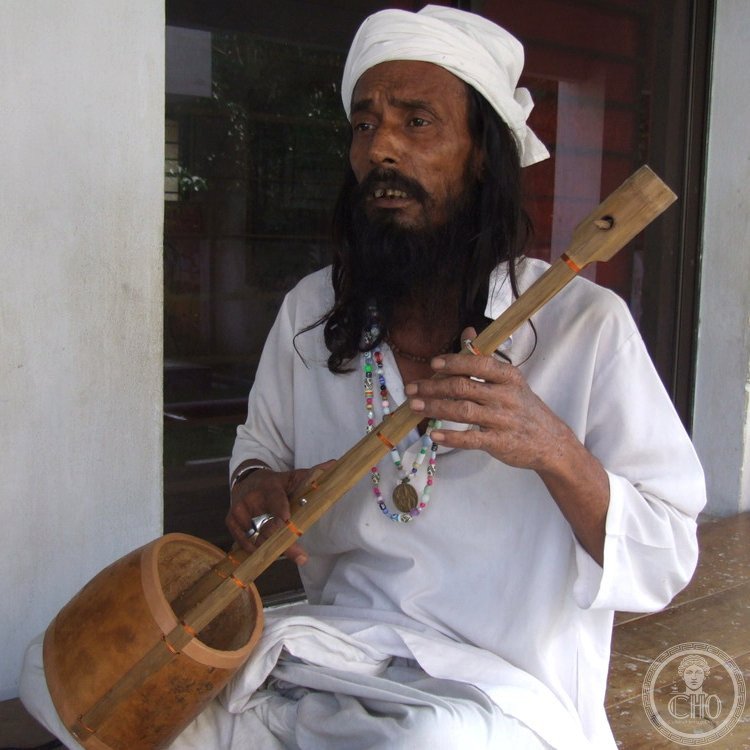
The Bauls are mystic minstrels living in rural Bangladesh and West Bengal, India. The Baul movement, at its peak in the nineteenth and early twentieth centuries, has now regained popularity among the rural population of Bangladesh. Their music and way of life have influenced a large segment of Bengali culture, and particularly the compositions of Nobel Prize laureate Rabindranath Tagore. Bauls live either near a village or travel from place to place and earn their living from singing to the accompaniment of the ektara, the lute dotara, a simple one-stringed instrument, and a drum called dubki. Bauls belong to an unorthodox devotional tradition, influenced by Hinduism, Buddhism, Bengali, Vasinavism and Sufi Islam, yet distinctly different from them. Bauls neither identify with any organized religion nor with the caste system, special deities, temples or sacred places. Their emphasis lies on the importance of a person’s physical body as the place where God resides. Bauls are admired for this freedom from convention as well as their music and poetry. Baul poetry, music, song and dance are devoted to finding humankind’s relationship to God, and to achieving spiritual liberation. Their devotional songs can be traced back to the fifteenth century when they first appeared in Bengali literature. Baul music represents a particular type of folk song, carrying influences of Hindu bhakti movements as well as the shuphi, a form of Sufi song. Songs are also used by the spiritual leader to instruct disciples in Baul philosophy, and are transmitted orally. The language of the songs is continuously modernized thus endowing it with contemporary relevance. The preservation of the Baul songs and the general context in which they are performed depend mainly on the social and economic situation of their practitioners, the Bauls, who have always been a relatively marginalized group. Moreover, their situation has worsened in recent decades due to the general impoverishment of rural Bangladesh.
Official description, UNESCO Intangible Cultural Heritage List — Baul songs
At a glance
Bauls are mystic minstrels living in rural Bangladesh and West Bengal who combine music, poetry, and spiritual devotion. They belong to an unorthodox tradition influenced by Hinduism, Buddhism, Vaisnavism, and Sufi Islam, yet remain distinct from all of them. Bauls reject organized religion, the caste system, and the worship of particular deities or sacred places, instead believing that God resides within the human body itself.
Origins & history
Baul devotional songs can be traced back to the fifteenth century, when they first appeared in Bengali literature. The movement reached its peak during the nineteenth and early twentieth centuries. In recent times, the tradition has regained popularity among rural populations in Bangladesh. Baul music and way of life have deeply influenced Bengali culture, notably shaping the compositions of Nobel Prize laureate Rabindranath Tagore.
The practice
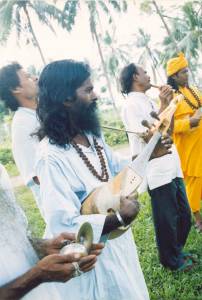
Bauls live near villages or travel from place to place, earning their living by singing. They accompany their voices with the ektara, a simple one-stringed instrument, the dotara lute, and a drum called the dubki. Baul music represents a particular type of folk song carrying influences from Hindu bhakti movements and shuphi, a form of Sufi song. Spiritual leaders use songs to instruct disciples in Baul philosophy, transmitting knowledge orally, and the language of songs is continuously modernized for contemporary relevance.
Cultural significance
Bauls are admired for their freedom from convention as well as their music and poetry. Their devotional expression focuses on finding humankind's relationship to God and achieving spiritual liberation. The preservation of Baul songs depends mainly on the social and economic situation of the Bauls themselves, who have always been a marginalized group. Their situation has worsened in recent decades due to the general impoverishment of rural Bangladesh.
Key facts
- Country: Bangladesh
- Inscribed: 2008
- UNESCO list: Representative List of the Intangible Cultural Heritage of Humanity
- UNESCO reference: 00107
- UNESCO vocabulary: Instrumental music; Vocal music
- Map: not shown — UNESCO’s official description of this element names no locality, and a living tradition is practised across a community, not at one address.
Where to experience it
Baul singers live in rural communities across Bangladesh and West Bengal, India, where they continue to perform and transmit their devotional songs through oral tradition. Visitors may encounter Bauls singing and playing their traditional instruments—the ektara, dotara, and dubki—in villages and at gatherings where they share their spiritual teachings through music and poetry. The tradition remains woven into the everyday life of rural populations, particularly in Bangladesh, where it has regained popularity among communities that sustain this unorthodox devotional practice.
Sources & resources
- UNESCO — official element page: Baul songs
- UNESCO — open data record: Intangible Heritage List, reference 00107
- UNESCO — official video: UNESCO film on this element — embedded on this page
- UNESCO — official photograph: Photograph of this element — Bangladesh National Commission for UNESCO
- Reference — Wikipedia (secondary): Baul — consulted as a secondary reference, not as confirmation
- Cultural Heritage Online: Our archive and city guides
Sources
- S1 — Openshaw, Jeanne. Seeking Bauls of Bengal. Cambridge University Press, 2002. ISBN 978-0-521-81125-5.
- S2 — Dimock, Edward C. The Place of the Hidden Moon: Erotic Mysticism in the Vaisnava-sahajiya Cult of Bengal. University of Chicago Press, 1966. ISBN 978-0-226-15237-0.
Spotted an error? Write to editorial@culturalheritageonline.com and we correct it the same day.