
A handmade textile tradition spanning generations, Azerbaijani carpet weaving transforms wool and natural dyes into dense, patterned rugs through exclusively women’s labour and family knowledge.
In UNESCO’s words
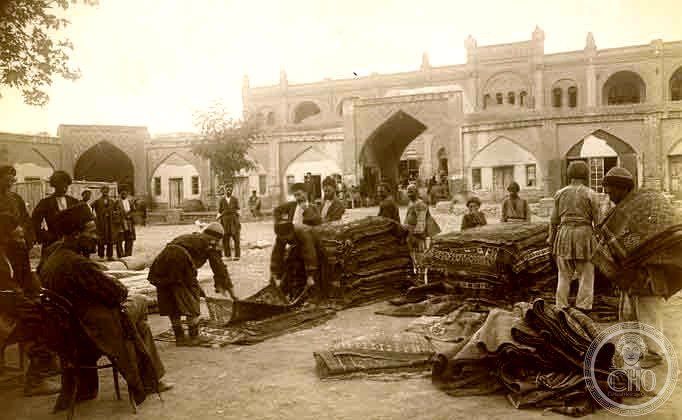
The Azerbaijani carpet is a traditional handmade textile of various sizes, with dense texture and a pile or pile-less surface, whose patterns are characteristic of Azerbaijan’s many carpet-making regions. Carpet making is a family tradition transferred orally and through practice. Men shear sheep in spring and autumn, while women collect dyestuffs and spin and dye yarn in the spring, summer and autumn. The weaving is undertaken during winter by the female members of the extended family, girls learning from their mothers and grandmothers and wives assisting their mothers-in-law. The carpet is made on horizontal or vertical looms using multi-coloured wool, cotton or silk yarn coloured with natural dyes. Applying special techniques to create pile carpets, weavers knot the pile yarn around threads of the warp; pile-less carpets are variously made with interlacing structural warps, wefts, and patterning wefts. The cutting of a finished carpet from the loom is an unusually solemn celebration. Carpet weaving is closely connected with the daily life and customs of the communities involved, its role reflected in the meaning of the designs and their applications. Thus, girls seated on carpets tell fortunes and sing traditional songs at Novruz (the regional New Year). The carpet is widely used for home furniture and decoration, and special carpets are woven for medical treatment, for wedding ceremonies, the birth of a child, mourning rituals and prayer.
Official description, UNESCO Intangible Cultural Heritage List — Traditional art of Azerbaijani carpet weaving in the Republic of Azerbaijan
At a glance
Azerbaijani carpet weaving is a handmade textile craft producing carpets of various sizes with dense textures and distinctive regional patterns. Carpets have either a knotted pile surface or a smooth pile-less surface. The tradition is passed orally and through practice within families, with knowledge transferred from mothers and grandmothers to daughters and young brides.
Origins & history
Carpet weaving has been a family tradition in Azerbaijan for generations, with knowledge transmitted through practice and oral instruction. The craft is closely connected to the daily life and customs of the communities that practice it, reflected in the patterns and their uses.
The practice
The craft follows a seasonal and gendered division of labour. Men shear sheep in spring and autumn. Women collect dyestuffs, spin yarn and dye it during spring, summer and autumn, preparing materials for weaving. Weaving itself takes place in winter, undertaken by female members of the extended family on horizontal or vertical looms using multi-coloured wool, cotton or silk yarn. Weavers create pile carpets by knotting pile yarn around warp threads, or make pile-less carpets through interlacing structural warps, wefts and patterning wefts. The removal of a finished carpet from the loom is marked by an unusually solemn celebration.
Cultural significance
Carpets hold deep meaning in Azerbaijani community life and ritual. Special carpets are woven for medical treatment, wedding ceremonies, the birth of a child, mourning rituals and prayer. Girls sit on carpets to tell fortunes and sing traditional songs at Novruz, the regional New Year. The craft is essential to home furnishing and decoration, and remains closely connected to the daily customs and identity of the communities who practice it.
Key facts
- Country: Azerbaijan
- Inscribed: 2010
- UNESCO list: Representative List of the Intangible Cultural Heritage of Humanity
- UNESCO reference: 00389
- UNESCO vocabulary: Carpets; Decorative arts; Weaving
- Map: not shown — UNESCO’s official description of this element names no locality, and a living tradition is practised across a community, not at one address.
Where to experience it
Azerbaijani carpet weaving remains a living tradition across the communities where it is practiced, passed down through families from mothers and grandmothers to daughters and daughters-in-law. Visitors can encounter the craft through weaving demonstrations, workshops, and exhibitions that showcase both the techniques and the cultural significance of carpets in daily life and ceremonies. The tradition's connection to seasonal rhythms and life events—from Novruz celebrations to weddings and births—makes it integral to regional culture. Specific locations and hours of demonstrations are best confirmed locally, as weaving continues primarily during winter months in family settings.
Sources & resources
- UNESCO — official element page: Traditional art of Azerbaijani carpet weaving in the Republic of Azerbaijan
- UNESCO — open data record: Intangible Heritage List, reference 00389
- UNESCO — official video: UNESCO film on this element — embedded on this page
- UNESCO — official photograph: A herd of sheep — Roya Taghiyeva — R Taghiyeva/Ministry of Culture and Tourism of Azerbaijan, 2005
- Reference — Wikipedia (secondary): Azerbaijani carpet — consulted as a secondary reference, not as confirmation
- Cultural Heritage Online: Our archive and city guides

Sources
- S1 — Kerimov, Latif. Rugs and Carpets of the Caucasus: The Russian Collections. Allen & Unwin, 1984. ISBN 978-0-04-746014-2.
- S2 — Altstadt, Audrey L. The Azerbaijani Turks: Power and Identity Under Russian Rule. Hoover Institution Press, 1992. ISBN 978-0-8179-9182-1.
Spotted an error? Write to editorial@culturalheritageonline.com and we correct it the same day.