
An oral epic of heroic deeds, sung across Central and South Asia by bards who have kept alive one of the world’s longest and richest narrative traditions for over a millennium.
In UNESCO’s words
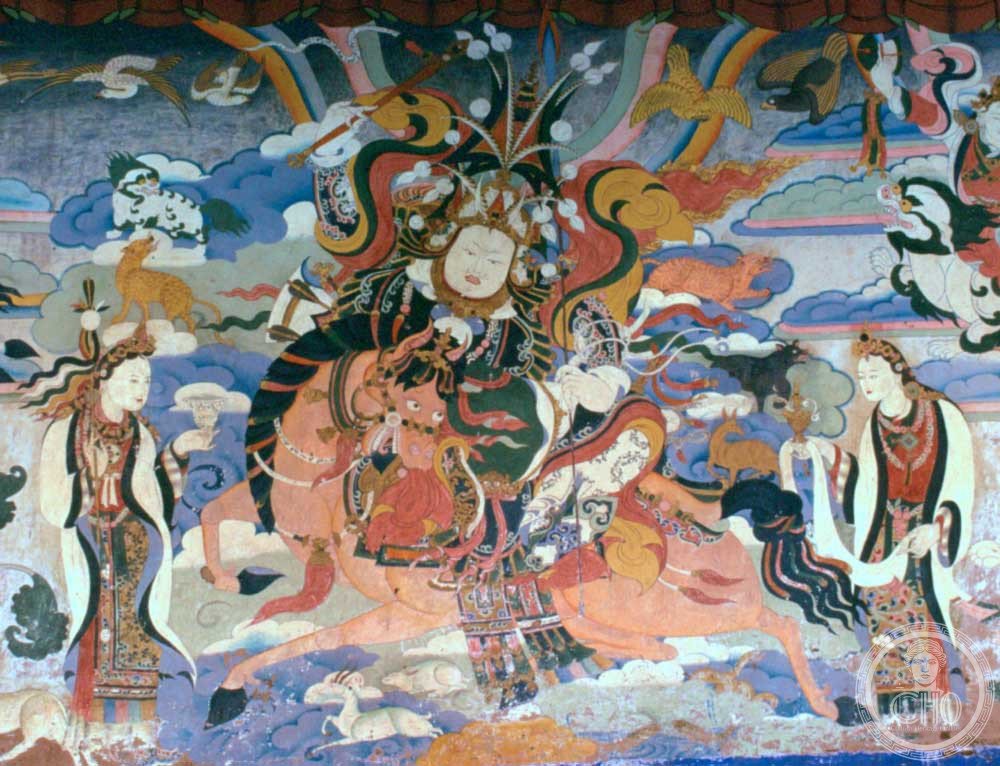
The ethnic Tibetan, Mongolian and Tu communities in western and northern China share the story of the ancient hero King Gesar, sent to heaven to vanquish monsters, depose the powerful, and aid the weak while unifying disparate tribes. The singers and storytellers who preserve the Gesar epic tradition perform episodes of the vast oral narrative (known as ‘beads on a string’) in alternating passages of prose and verse with numerous regional differences. Tibetan masters carry bronze mirrors and use facial expressions, sound effects and gestures to enhance their singing, while Mongolian performers are accompanied by fiddles and intersperse improvised, melodic singing with musical storytelling and oral narrative. Epic performances, often accompanied by rituals such as offerings and meditation, are embedded in the religious and daily lives of the community. For example, when a child is born, passages about King Gesar’s descent into the world are sung. The hundreds of myths, folktales, ballads and proverbs handed down as part of the tradition not only serve as a form of major entertainment in rural communities but also educate listeners in history, religion, custom, morality and science. A continuing inspiration for ''thangka'' painting, Tibetan opera and other art forms, the Gesar epic imbues audiences both young and old with a sense of cultural identity and historical continuity.
Official description, UNESCO Intangible Cultural Heritage List — Gesar epic tradition
At a glance
The Gesar epic is an ancient oral narrative shared by Tibetan, Mongolian and Tu communities in western and northern China. The story tells of King Gesar, a hero sent to heaven to defeat monsters, remove the powerful from their thrones, help the weak and unite different tribes. Singers and storytellers perform episodes of this vast epic in alternating passages of prose and verse, with regional variations in how they tell it.
Origins & history
The epic originates from Tibet and Central Asia, with roots in antiquity. Over centuries, folk storytellers expanded and refined the narrative through oral transmission. The tradition crystallized into a classical form that continues to be performed by different communities, each with their own versions and variants.
The practice
Performers preserve the Gesar epic through alternating prose and verse. Tibetan masters carry bronze mirrors and use facial expressions, sound effects and gestures to enhance their singing. Mongolian performers are accompanied by fiddles and combine improvised melodic singing with musical storytelling and oral narrative. Epic performances often include rituals such as offerings and meditation, and are woven into the community's religious and daily life—for instance, passages about King Gesar's descent are sung when a child is born.
Cultural significance
The epic educates listeners in history, religion, custom, morality and science while serving as major entertainment. It inspires other art forms including thangka painting and Tibetan opera. The tradition gives audiences of all ages a sense of cultural identity and historical continuity. However, the practice faces the challenge of being maintained in the modern world, depending on the commitment of singers and storytellers to pass it on to future generations.
Key facts
- Country: China
- Inscribed: 2009
- UNESCO list: Representative List of the Intangible Cultural Heritage of Humanity
- UNESCO reference: 00204
- UNESCO vocabulary: Bard; Epic poetry; Story telling; Vocal music
- Map: not shown — UNESCO’s official description of this element names no locality, and a living tradition is practised across a community, not at one address.
- Related World Heritage site: Qinghai Hoh Xil (a different UNESCO designation, not the place of the tradition)
Where to experience it
The Gesar epic tradition thrives among ethnic Tibetan, Mongolian and Tu communities across western and northern China, where singers and storytellers perform episodes during festivals, gatherings, and ceremonial occasions. Performances remain woven into daily and religious life—passages about King Gesar are sung when children are born, and epic recitations often accompany rituals of offerings and meditation. Audiences of all ages encounter the tradition in rural communities, where these vast oral narratives serve as major entertainment while transmitting history, religion, custom, morality and science across generations.
Sources & resources
- UNESCO — official element page: Gesar epic tradition
- UNESCO — open data record: Intangible Heritage List, reference 00204
- UNESCO — official video: UNESCO film on this element — embedded on this page
- UNESCO — official photograph: Photograph of this element — Yang Enhong — IEL of CASS, 2008
- Reference — Wikipedia (secondary): Epic of King Gesar — consulted as a secondary reference, not as confirmation
- Cultural Heritage Online: Our archive and city guides

Sources
- S1 — Samuel, Geoffrey. Civilized Shamans: Buddhism in Tibetan Societies. Smithsonian Institution Press, 1993. ISBN 978-1-56098-231-9.
- S2 — Stein, R. A. Tibetan Civilization. Stanford University Press, 1972. ISBN 978-0-8047-0901-9.
Spotted an error? Write to editorial@culturalheritageonline.com and we correct it the same day.