
Each July, Kyoto transforms for one of Japan’s largest festivals, anchored by two grand processions of decorated floats that move through the streets in ceremonies rooted in Shinto purification traditions spanning centuries.
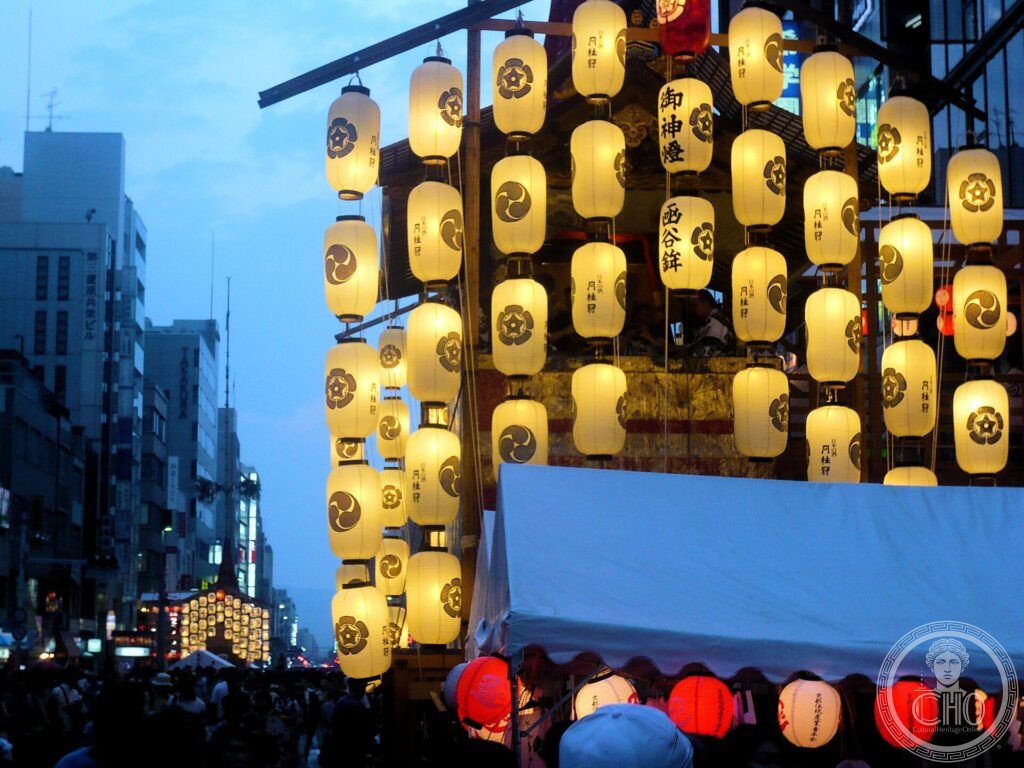
In UNESCO’s words
Yama, Hoko and Yatai float festivals are held annually in various regions to pray to the gods for peace and protection from natural disasters. A traditional practice that showcases the diversity of local cultures, the festivals involve the collaborative efforts of the practising communities and are a key aspect of their cultural identity. People of all ages and genders share responsibility for the organization and running of the festivals. This includes every step, from the design and construction of the floats to the overall event coordination. Men and women of all ages decorate the float, and the float handlers and spectators then come together to celebrate the festival with prayers for peace in the community. Tasks are adapted to the age and experience of the participants, with older bearers transmitting the knowledge and skills to those less experienced, including through formal classes. Teamwork is encouraged among the communities to share and exchange specialized technical skills and knowledge to craft and repair floats. Yama, Hoko and Yatai float festivals play a key role in community-building. The broad engagement required to prepare the festivals also promotes cooperation and social cohesion.
Official description, UNESCO Intangible Cultural Heritage List — Yama, Hoko, Yatai, float festivals in Japan
At a glance
Yama, Hoko and Yatai float festivals are annual celebrations held across various regions to seek divine blessing for peace and protection from natural disasters. These festivals showcase local cultural diversity through the creation and procession of decorated floats. They bring entire communities together, with people of all ages and genders participating in every aspect—from designing and building the floats to coordinating the event itself.
Origins & history
The festival carries Shinto purification traditions whose precise origins remain embedded in local memory rather than written record. What began as ritual appeasement has evolved into an annual July event, with the procession structure becoming central to how the community marks sacred time and maintains continuity with ancestors.
The practice
During festival preparation and celebration, community members work together to design, construct, and decorate the floats. Participants of all ages take on different tasks suited to their experience level. Experienced practitioners teach younger or less-experienced members through formal classes and hands-on collaboration. When the festival occurs, float handlers and spectators gather to process the decorated floats and offer prayers for community peace and protection.
Cultural significance
These festivals strengthen community bonds by requiring broad participation and cooperation across all ages and genders. The shared work of building floats, organizing events, and exchanging specialized technical knowledge promotes social cohesion and collective identity. The festivals represent a living cultural tradition that connects communities to their values and to one another.
Key facts
- Country: Japan
- Inscribed: 2025
- UNESCO list: Representative List of the Intangible Cultural Heritage of Humanity
- UNESCO reference: 02292
- UNESCO vocabulary: Festivals; Float; Procession
- Map: not shown — UNESCO’s official description of this element names no locality, and a living tradition is practised across a community, not at one address.
Where to experience it
Yama, Hoko and Yatai float festivals are celebrated annually in communities throughout Japan that have maintained these traditions. Visitors can experience the festivals during their designated seasons, witnessing the collaborative preparations and processions that bring entire communities together. The festivals offer opportunities to observe float construction and decoration, attend prayers and celebrations, and see participants of all ages working side by side. Many communities also offer formal classes and workshops where visitors can learn about the specialized technical skills passed down through generations, from float crafting to ceremonial practices that honour local cultural identity.
Sources & resources
- UNESCO — official element page: Yama, Hoko, Yatai, float festivals in Japan
- UNESCO — open data record: Intangible Heritage List, reference 02292
- UNESCO — official video: UNESCO film on this element — embedded on this page
- UNESCO — official photograph: Women decorate the puppets used in a festival — Agency for Cultural Affairs, 2024
- Reference — Wikipedia (secondary): Gion Matsuri — consulted as a secondary reference, not as confirmation
- Cultural Heritage Online: Our archive and city guides

Sources
- S1 — Plutschow, Herbert. Matsuri: The Festivals of Japan. Japan Library, 1996. ISBN 978-1-873410-63-9.
- S2 — Schnell, Scott. The Rousing Drum: Ritual Practice in a Japanese Community. University of Hawaii Press, 1999. ISBN 978-0-8248-2141-8.
Spotted an error? Write to editorial@culturalheritageonline.com and we correct it the same day.