
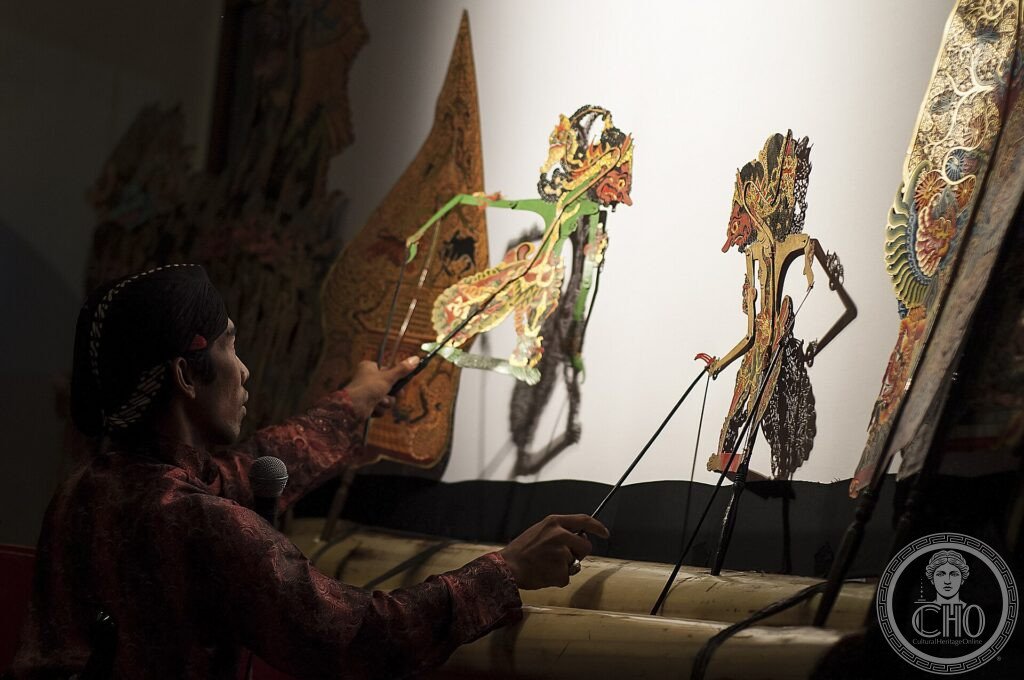
An ancient art form in which skilled puppeteers manipulate flat, articulated cut-out figures between light and translucent screen, creating silhouettes that appear to walk, dance, fight, and laugh.
In UNESCO’s words
Chinese shadow puppetry is a form of theatre acted by colourful silhouette figures made from leather or paper, accompanied by music and singing. Manipulated by puppeteers using rods, the figures create the illusion of moving images on a translucent cloth screen illuminated from behind. Many elder shadow puppetry artists can perform dozens of traditional plays, which are orally transmitted or found in written form. They master special techniques such as improvisational singing, falsetto, simultaneous manipulation of several puppets, and the ability to play various musical instruments. Many puppeteers also carve the puppets, which can have between twelve and twenty-four moveable joints. Shadow plays are performed by large troupes with seven to nine performers and smaller troupes of only two to five, primarily for entertainment or religious rituals, weddings and funerals and other special occasions. Some puppeteers are professional, while others are amateurs performing during slack farming seasons. The relevant skills are handed down in families, in troupes, and from master to pupil. Chinese shadow puppetry also passes on information such as cultural history, social beliefs, oral traditions and local customs. It spreads knowledge, promotes cultural values and entertains the community, especially the youth.
Official description, UNESCO Intangible Cultural Heritage List — Chinese shadow puppetry
At a glance
Chinese shadow puppetry is theatre performed with colourful silhouette figures made from leather or paper. Puppeteers manipulate these figures using rods to create moving images on a translucent screen lit from behind, accompanied by music and singing. The figures can have between twelve and twenty-four moveable joints, often carved by the puppeteers themselves.
Origins & history
Shadow play is an ancient art with deep roots in China, where it has flourished as both a formal and folk tradition. The practice shares historical and cultural connections with shadow puppet traditions across Asia, including long-established forms in Indonesia, Malaysia, Thailand, and Cambodia, as well as in India, Iran, and Nepal.
The practice
Shadow plays are performed by troupes ranging from two to nine performers. Puppeteers master techniques including improvisational singing, falsetto, simultaneous manipulation of several puppets, and the ability to play various musical instruments. Many puppeteers also carve their own figures. Performances take place for entertainment or at religious rituals, weddings, funerals and other special occasions. Some performers are professional while others are amateurs working during slack farming seasons.
Cultural significance
Shadow puppetry transmits cultural history, social beliefs, oral traditions and local customs to communities. It spreads knowledge, promotes cultural values and entertains audiences, especially young people. Skills are passed down through families, in troupes, and from master to pupil, ensuring the tradition's continuity within communities that value it.
Key facts
- Country: China
- Inscribed: 2011
- UNESCO list: Representative List of the Intangible Cultural Heritage of Humanity
- UNESCO reference: 00421
- UNESCO vocabulary: Instrumental music; Shadow play; Theatre
- Map: not shown — UNESCO’s official description of this element names no locality, and a living tradition is practised across a community, not at one address.
Where to experience it
Chinese shadow puppetry thrives wherever skilled puppeteers and their communities gather to perform. Visitors can encounter performances at local festivals, religious rituals, weddings, and other special occasions, though schedules vary by season and community. Many practitioners—both professional troupes and amateur performers—welcome inquiries from those seeking to learn about or watch this intricate art form. Elder artists often teach younger generations within families and troupes, offering opportunities to observe the carving of puppets and the mastery of traditional plays passed down through centuries.
Sources & resources
- UNESCO — official element page: Chinese shadow puppetry
- UNESCO — open data record: Intangible Heritage List, reference 00421
- UNESCO — official video: UNESCO film on this element — embedded on this page
- UNESCO — official photograph: Photograph of this element — Wei Liqun — China Puppet and Shadow Art Society, 2009
- Reference — Wikipedia (secondary): Shadow play — consulted as a secondary reference, not as confirmation
- Cultural Heritage Online: Our archive and city guides

Sources
- S1 — Broman, Sven. Shadows of Heaven: Chinese Shadow Puppets. White Orchid Books, 2002. ISBN 978-974-524-005-6.
- S2 — Chen, Fan Pen Li. Chinese Shadow Theatre: History, Popular Religion, and Women Warriors. McGill-Queen's University Press, 2007. ISBN 978-0-7735-3197-0.
Spotted an error? Write to editorial@culturalheritageonline.com and we correct it the same day.