
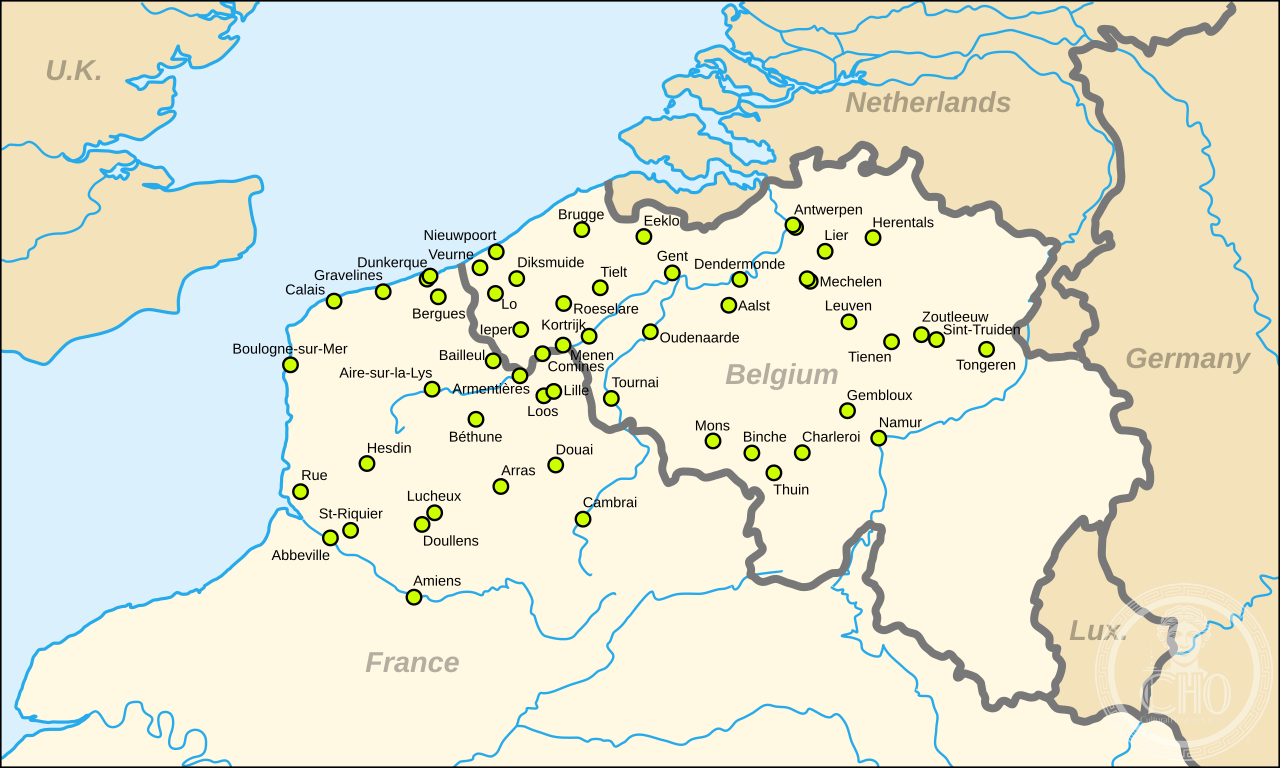
Fifty-six civic towers spanning Belgium and France stand as symbols of urban autonomy, their stones recording the moment when merchant cities declared independence from feudal and religious authority.
At a glance
This UNESCO World Heritage collection comprises 56 belfries distributed across Belgium and France, chiefly in the regions of Flanders and Wallonia in Belgium, and the French Flanders area of France. These structures mark the geographic and cultural heart of the former County of Flanders and neighbouring territories once held by the House of Burgundy.
History
The belfries emerged during a transformative period when civic institutions began to challenge feudal and ecclesiastical power. Rising in towns across Flanders and Burgundian possessions, they embodied the aspirations of merchant guilds and municipal governments seeking political autonomy. These towers became tangible expressions of a society in transition—from medieval hierarchy to urban self-governance.
What you see
The belfries represent civic rather than religious architecture, a distinction crucial to understanding their significance. Across the 56 sites, you will encounter diverse expressions of urban pride: towers dominating market squares, structures integrated into cloth halls, and monuments reflecting regional building traditions. Each reflects the aspirations and resources of its community.
Cultural significance
These belfries testify to a pivotal shift in European civilization. As civic rather than ecclesiastical symbols, they document the emergence of municipal identity and commercial power in medieval society. Their collective designation recognises them as architectural manifestations of the struggle for independence from feudal structures that had long governed European life.
Key facts
- Comprises 56 historical buildings
- UNESCO World Heritage Sites designation
- Located in Belgium and France
- Primary concentrations in Flanders and Wallonia (Belgium) and French Flanders (France)
- Historical connection to the former County of Flanders and House of Burgundy territories
- Coordinates: 50.635266, 3.514842
Practical information & getting there
The belfries are distributed across urban centres in Belgium and northern France. You will find them integrated into the fabric of city centres, often accessible year-round as public monuments. Individual opening hours and access details vary by location; consult local tourism information for specific sites you wish to visit.
Sources & resources
Find it on the map
See this place and what’s around it →📷 Become a Cultural Heritage Online photographer
Share your photos of places: they stay published under your name as the author. The more they're seen, the more you get noticed — and soon a contest will reward the most appreciated photos.
Log in or sign up free to add a photo