
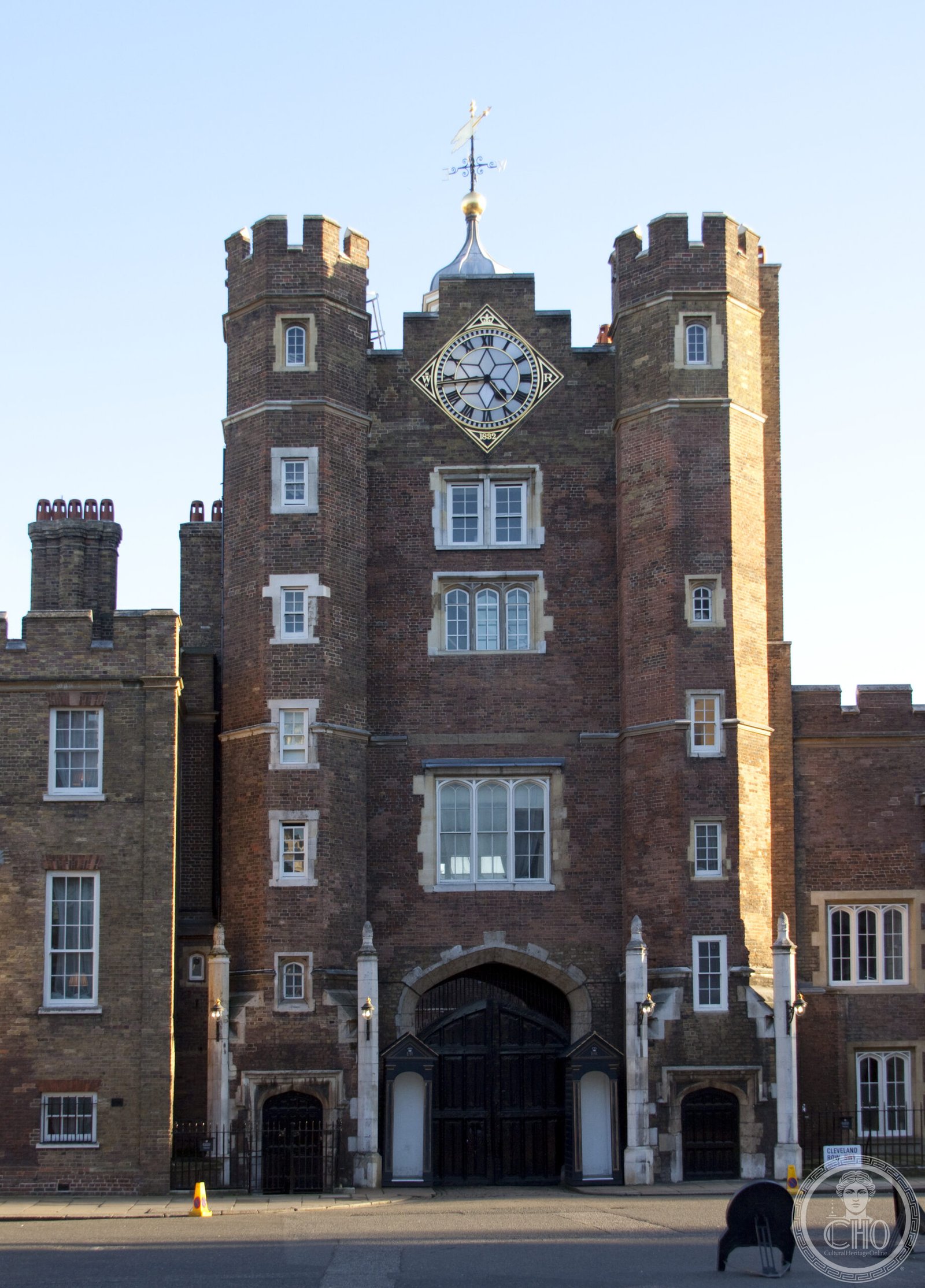
London’s most senior royal palace, built by Henry VIII in the 1530s and home to the Court of St James’s—where all foreign ambassadors and high commissioners to the United Kingdom are still accredited.
At a glance
St James’s Palace stands as the ceremonial heart of British monarchy, though no longer the sovereign’s primary residence. It serves as the official meeting place of the Accession Council, houses diplomatic offices, and remains the London home of several members of the royal family. The palace continues to host official receptions and functions of the royal household.
History
King Henry VIII ordered construction of the palace in the 1530s on land previously occupied by a leper hospital dedicated to Saint James the Less. For Tudor and Stuart monarchs, it remained secondary to the Palace of Whitehall, serving chiefly as a hunting lodge and royal retreat set within a deer park and gardens.
The palace’s status shifted dramatically after Whitehall burned down. It assumed greater administrative importance during the Hanoverian era but steadily ceded prominence to Buckingham Palace from the early 1800s onward. Queen Victoria formalized this transition in 1837, establishing Buckingham Palace as the principal royal residence.
What you see
Built mainly between 1531 and 1536 in red brick, the palace displays primarily Tudor architectural character. The Queen’s Chapel was added during the 1620s; Clarence House rose on the adjacent grounds in the 1820s. A destructive fire in 1809 consumed the monarch’s private apartments—never rebuilt—and other sections.
Surviving 17th-century interiors remain, though the majority underwent substantial remodelling during the Victorian era. The Chapel Royal continues in active use for royal functions.
Cultural significance
St James’s Palace embodies the evolution of British royal power and protocol. The Court of St James’s remains the formal designation for the British monarchy’s diplomatic relations worldwide. As the site of the Accession Council, the palace plays a constitutionally significant role in the succession of the throne.
Key facts
- Country: United Kingdom
- City: London
- Coordinates: 51.50472222, −0.13777778
- Built: 1531–1536 (with later additions)
- Material: Red brick, primarily Tudor style
Practical information & getting there
St James’s Palace remains an active royal residence and ceremonial venue; public access is limited. The Chapel Royal occasionally hosts services open to the public. Check official Royal Household announcements for visiting opportunities and current access details.
Sources & resources
Find it on the map
See this place and what’s around it →📷 Become a Cultural Heritage Online photographer
Share your photos of places: they stay published under your name as the author. The more they're seen, the more you get noticed — and soon a contest will reward the most appreciated photos.
Log in or sign up free to add a photoIs this page about you?
This page is read by travellers and heritage enthusiasts who find it on Google. Tell us how you are connected to this place and we will take it from there.