
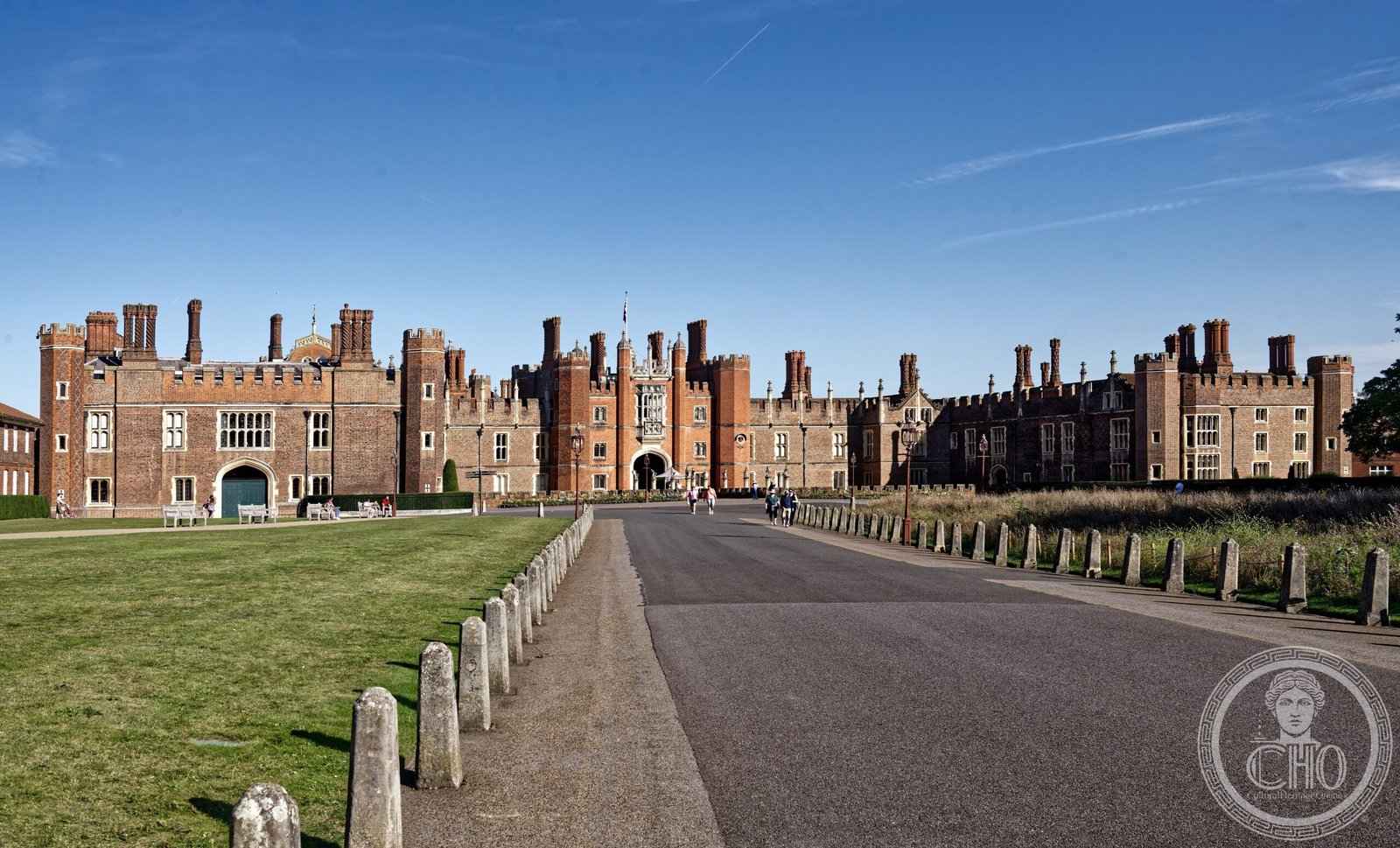
A royal palace on the Thames southwest of London, Hampton Court Palace showcases five centuries of English monarchy through its striking blend of Tudor and Baroque architecture, art collections, and historic gardens.
At a glance
Hampton Court Palace stands 12 miles southwest of central London on the River Thames, in the London Borough of Richmond upon Thames. A Grade I listed building, it ranks among England’s most significant royal residences, reflecting the architectural ambitions and personal tastes of successive monarchs from Henry VIII to George II.
History
Construction began in 1514 under Cardinal Thomas Wolsey, Archbishop of York and chief minister to Henry VIII. In 1529, as Wolsey’s influence waned and the king’s displeasure mounted, the cardinal surrendered the palace to Henry in a desperate bid for clemency. The gift proved insufficient; Wolsey fell from power entirely.
Henry VIII quickly made Hampton Court his favourite residence, expanding it dramatically to house his large court. The palace remained a seat of royal power for generations. In the early 1690s, William III undertook massive rebuilding and expansion work intended to rival the Palace of Versailles. This ambitious project ceased in 1694, leaving the palace with two distinct architectural periods. George II was the last monarch to regularly inhabit it.
What you see
Hampton Court’s architecture presents a visual history of English royal taste. The domestic Tudor work—red brick, mullioned windows, intimate courtyards—contrasts sharply with William III’s grander Baroque additions. While this duality resulted from circumstance rather than design, unity emerges through consistent use of pink bricks and a broadly symmetrical arrangement of low-slung wings.
Inside, the palace displays masterworks from the Royal Collection. The gardens encompass the famous Hampton Court Maze, a royal tennis court, and as of 2005, the world’s largest grape vine, a testament to centuries of horticultural ambition.
Cultural significance
Hampton Court Palace embodies the evolution of English royal architecture across two centuries. Its architectural hybrid—neither purely Tudor nor fully continental Baroque—represents a unique moment when royal ambition met political reality. The palace remains a principal repository of royal art and a symbol of England’s monarchical heritage.
Key facts
- Country: United Kingdom
- City: Richmond upon Thames, London
- Coordinates: 51.40°N, 0.34°W
- Grade I listed building
- Founded: 1514 (Cardinal Wolsey); acquired by Henry VIII, 1529
- Major rebuilding: early 1690s (William III)
- Managed by Historic Royal Palaces (independent charity)
Practical information & getting there
Hampton Court Palace is open to the public year-round and managed by Historic Royal Palaces, an independent charity. The grounds host the annual Hampton Court Palace Festival and Hampton Court Garden Festival. Visit the official website for current opening hours, admission prices, and event schedules. The palace is accessible by train, bus, or car from central London; riverboat services also operate from Westminster Pier.
Sources & resources
Find it on the map
See this place and what’s around it →📷 Become a Cultural Heritage Online photographer
Share your photos of places: they stay published under your name as the author. The more they're seen, the more you get noticed — and soon a contest will reward the most appreciated photos.
Log in or sign up free to add a photoIs this page about you?
This page is read by travellers and heritage enthusiasts who find it on Google. Tell us how you are connected to this place and we will take it from there.