
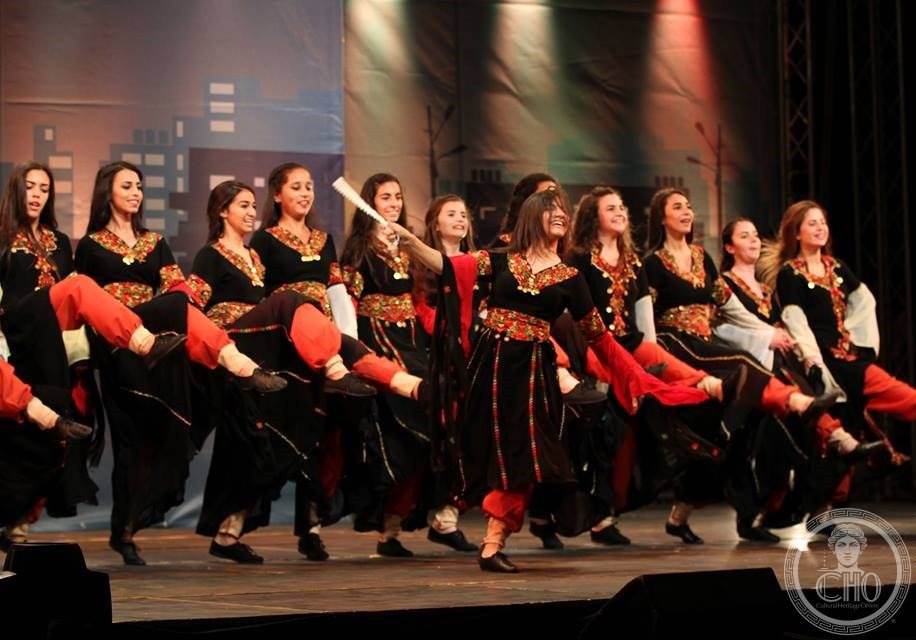
A Levantine circle and line dance performed at celebrations, dabkeh brings communities together through synchronized footwork, rhythmic movement, and the authority of a lead dancer who guides the line with face and body.
At a glance
Dabkeh is a traditional folk dance central to Lebanese, Palestinian, Jordanian, and Syrian cultures. Dancers form a line moving from right to left, combining elements of circle and line dancing. The practice appears at weddings, celebrations, and moments of joy, performed by men and women together or separately depending on context.
Origins & history
Dabkeh’s roots run deep in Levantine communities across the eastern Mediterranean. The dance is thought to emerge from collective agricultural and social traditions, though its exact origins remain debated among folklorists. It has evolved across generations, adapting to regional preferences while maintaining its core identity as a communal celebration.
The practice
Dancers stand shoulder to shoulder or hand in hand, moving in unison through coordinated footwork and hip movements. The leader—positioned at the front of the line—alternates between facing the audience and the other dancers, setting the pace and direction. The line advances, retreats, and turns in patterns synchronized to live music, often played on drums and wind instruments. Participants wear traditional dress, though modern performances vary. Movements are energetic and joyful, with the collective rhythm binding performers and onlookers alike.
Cultural significance
Dabkeh embodies Palestinian and broader Levantine identity, marking moments of celebration, kinship, and resilience. The dance affirms community bonds through shared movement and rhythm. Its performance at weddings and festivals reinforces cultural continuity and collective memory across generations. For Palestinian communities, dabkeh carries particular resonance as an expression of cultural pride and social cohesion.
Key facts
- Performed across Palestine, Lebanon, Jordan, and Syria
- Anchor community: Ramallah, Palestine (31.90095°N, 35.20785°E)
- Primary occasions: weddings and joyous celebrations
- UNESCO Intangible Cultural Heritage, 2018 (Reference 01998)
- Line direction: right to left
Where to experience it
Ramallah and surrounding Palestinian towns remain the heartland of dabkeh tradition. The dance is performed at weddings, national celebrations, and cultural festivals throughout the region. Visitors may encounter dabkeh at social gatherings and festive occasions; specific performance schedules and venues are best confirmed locally.
Sources & resources
- Dabke – Wikipedia
- Dabkeh: Traditional Dance in Palestine – UNESCO Intangible Cultural Heritage
- Cultural Heritage Online
Find it on the map
See this place and what’s around it →📷 Become a Cultural Heritage Online photographer
Share your photos of places: they stay published under your name as the author. The more they're seen, the more you get noticed — and soon a contest will reward the most appreciated photos.
Log in or sign up free to add a photo