

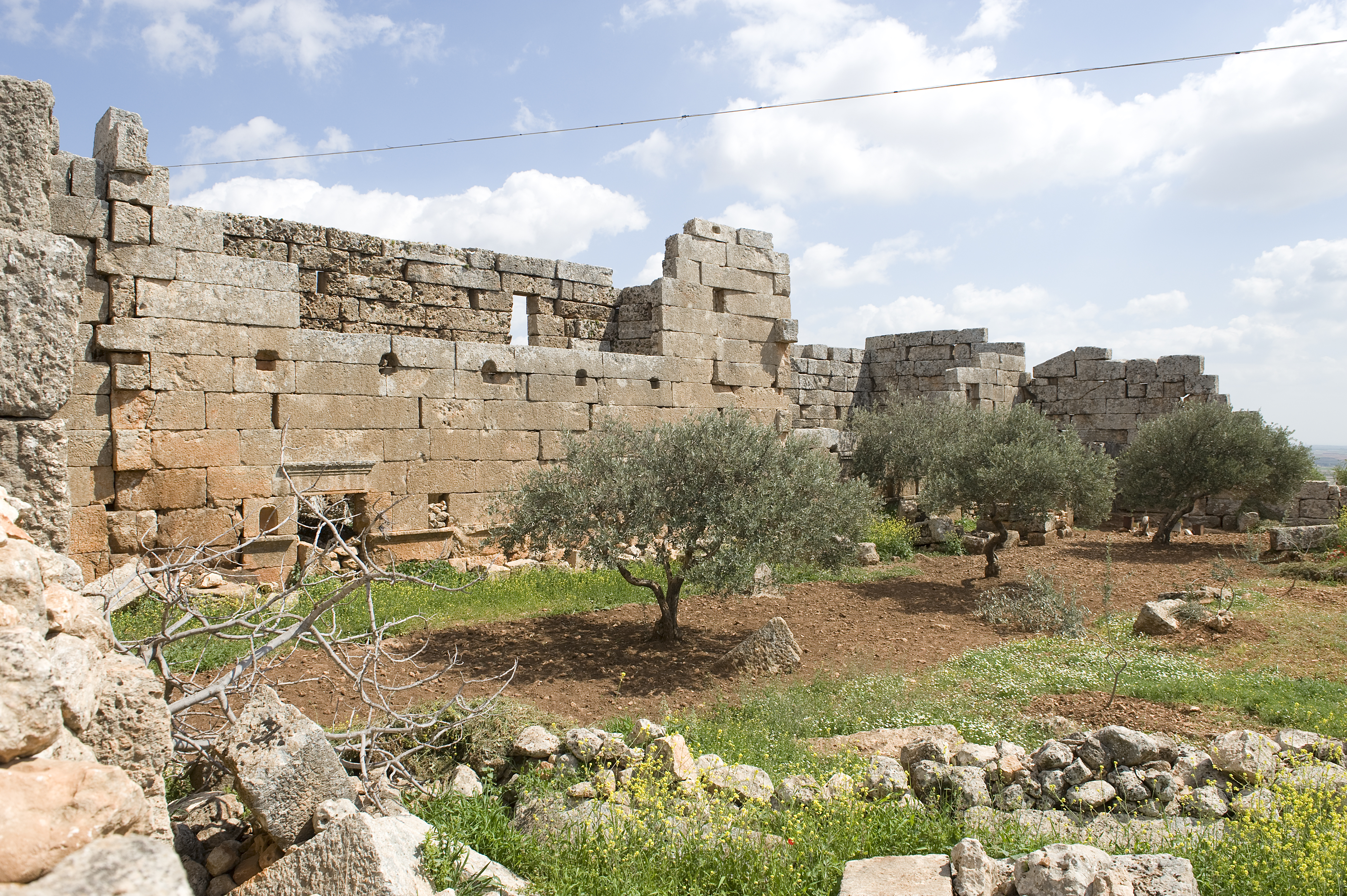
A village in northwestern Syria that preserves one of the country’s remarkable Dead Cities, testimony to centuries of Byzantine and early Islamic settlement in the limestone plateau north of Aleppo.
At a glance
Jarada sits within Maarrat al-Nu’man District in Idlib Governorate, in a region celebrated for its concentration of abandoned ancient towns. The village itself recorded a population of 837 at the 2004 census.
History
Jarada’s significance lies in its role as custodian of a Dead City—one of dozens scattered across the limestone plateau of northern Syria. These settlements, predominantly from the Byzantine and early Islamic periods, were gradually abandoned as trade routes shifted and populations migrated. The exact sequence of Jarada’s own settlement and abandonment remains poorly documented in accessible sources.
What you see
The Dead City at Jarada exhibits the typical character of northern Syrian archaeological sites: stone structures of Byzantine and early Islamic construction, including domestic dwellings and communal buildings set within a now-quiet landscape. The plateau’s distinctive honey-colored limestone shapes both the visual identity and preservation of these ruins.
Cultural significance
Jarada contributes to our understanding of early Islamic and Byzantine settlement patterns in the Levant. The Dead Cities of northern Syria collectively form one of the world’s most important archaeological records of late antiquity and the early medieval Mediterranean.
Key facts
- Country: Syria
- District: Maarrat al-Nu’man
- Governorate: Idlib
- Coordinates: 35.72°N, 36.71°E
- Population (2004): 837
Practical information & getting there
Jarada lies in northern Syria. Access and conditions vary considerably depending on current circumstances in the region. Research local conditions and consult official travel advice before planning a visit. The site is part of the broader Dead Cities network that requires dedicated archaeological interest and careful logistics to explore.
Sources & resources
Find it on the map
See this place and what’s around it →📷 Become a Cultural Heritage Online photographer
Share your photos of places: they stay published under your name as the author. The more they're seen, the more you get noticed — and soon a contest will reward the most appreciated photos.
Log in or sign up free to add a photoIs this page about you?
This page is read by travellers and heritage enthusiasts who find it on Google. Tell us how you are connected to this place and we will take it from there.