

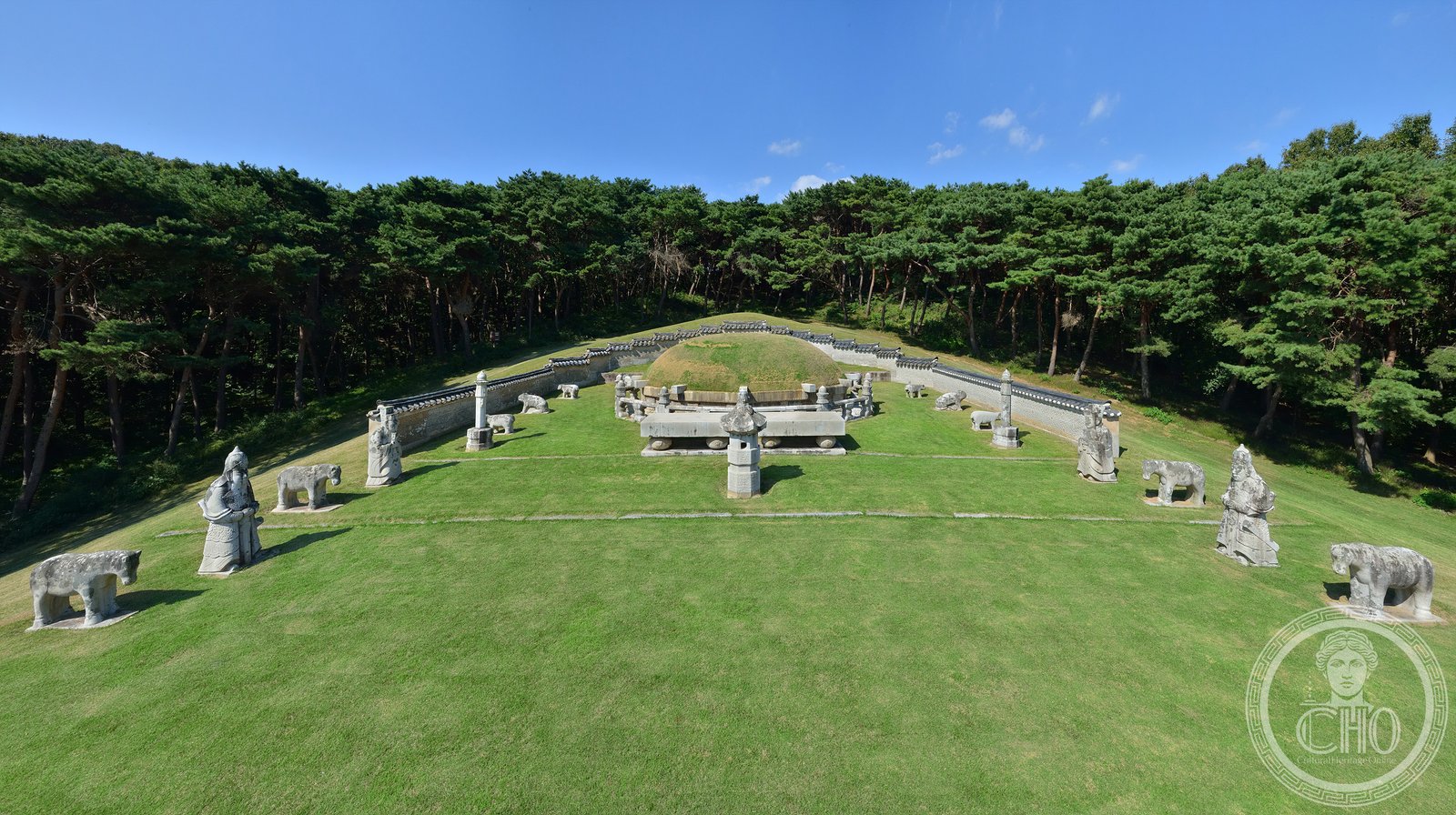
The royal burial ground of King Injo and Queen Inyeol, this Joseon-era mausoleum stands as a testament to dynastic ceremony and architectural restraint in one of Korea’s most significant UNESCO World Heritage Sites.
At a glance
Jangneung is a royal burial complex in Paju, Gyeonggi Province, housing the remains of King Injo and his first wife, Queen Inyeol. The site reflects the formal conventions governing royal interment during the Joseon dynasty, Korea’s longest-ruling kingdom. As a UNESCO World Heritage Site, it preserves both architectural and ceremonial traditions central to Korean royal culture.
History
King Injo reigned during the Joseon period, and upon his death, was interred at this location along with Queen Inyeol, his primary consort. The burial ground was constructed according to established protocols for royal tombs, ensuring both dignity and symbolic importance within the dynastic hierarchy. Jangneung remains one of many Joseon royal burial sites distributed across the Korean peninsula.
What you see
The complex exhibits the characteristic design of Joseon royal mausolea, organized according to principles of geomancy and ceremonial propriety. Visitors encounter the traditional stone markers, pathways, and landscape arrangements typical of Korean royal burial grounds. The site’s spatial organization reflects Confucian values governing respect for ancestors and social order.
Cultural significance
Jangneung exemplifies the sophisticated ritual and architectural traditions governing royal burial in Joseon Korea. The site preserves important evidence of dynastic ceremonies and the material culture surrounding royal death and commemoration. Its UNESCO recognition acknowledges the historical and cultural value of Joseon royal tombs as a collective patrimony of Korean civilization.
Key facts
- Country: South Korea
- Location: Paju, Gyeonggi Province
- Occupants: King Injo and Queen Inyeol
- Coordinates: 37.7736, 126.7081
- UNESCO World Heritage Site: Yes
Practical information & getting there
The site is accessible by public transportation from Seoul to Paju. Visitors should check local information for current opening hours and any seasonal closures. Respectful behavior is essential at this sacred burial ground.
Sources & resources
Find it on the map
See this place and what’s around it →📷 Become a Cultural Heritage Online photographer
Share your photos of places: they stay published under your name as the author. The more they're seen, the more you get noticed — and soon a contest will reward the most appreciated photos.
Log in or sign up free to add a photoIs this page about you?
This page is read by travellers and heritage enthusiasts who find it on Google. Tell us how you are connected to this place and we will take it from there.