
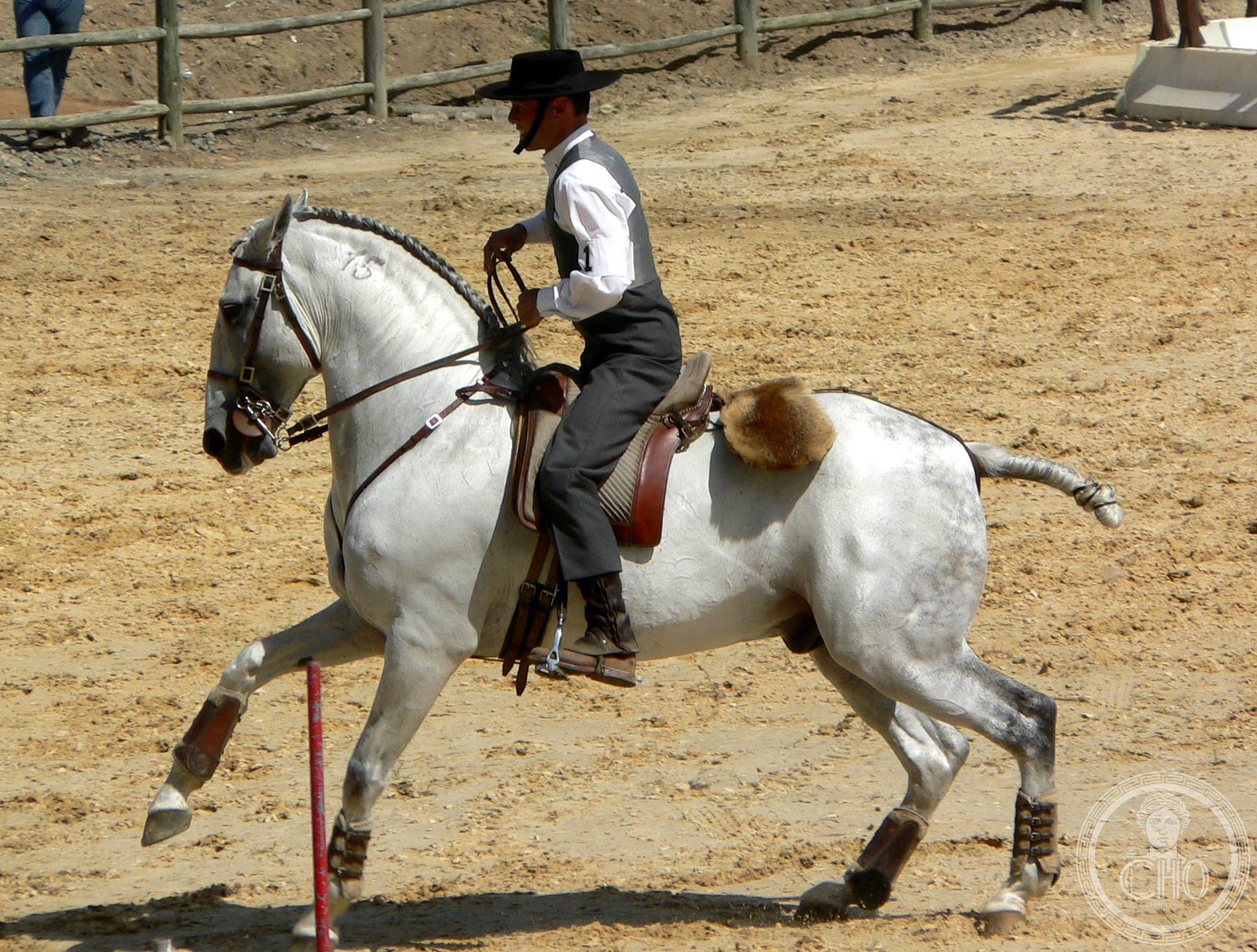
An ancient Portuguese breed shaped by conquest and refinement, the Lusitano represents millennia of horsemanship—from classical dressage to the arena.
At a glance
The Lusitano, also known as the Pure Blood Lusitano (PSL or Puro Sangue Lusitano), is Portugal’s signature horse breed. Compact and muscular with an intelligent temperament, Lusitanos excel in dressage, driving, and the traditional Portuguese bullfighting arena. They are recognized for their convex facial profiles, heavy muscling, and naturally elevated, agile movement.
Origins and history
Horses have inhabited the Iberian Peninsula since at least 20,000 BC. By 800 BC, the region was already renowned for war horses, and Roman writers celebrated the speed and spirit of Lusitanian mounts—a reputation they attributed to the influence of the West wind. The breed as we know it today took shape after 711 AD, when Muslim invaders brought Arabian horses to Iberia. Crossbreeding Arabian and native stock produced a horse suited to warfare, classical dressage, and bullfighting. The name Lusitano derives from Lusitania, the ancient Roman designation for the territory now occupied by Portugal.
The tradition today
Four main lineages exist within the breed, each with subtle variations in type and character. Lusitanos typically appear in gray, bay, or chestnut; horses from the Alter Real strain are always brown. Members compete internationally in Olympic and World Equestrian Games dressage competitions as part of Portuguese and Spanish teams. A Belgian-driven pair won multiple international titles in driving competitions. The breed continues its historic role in Portuguese and Spanish bullfighting.
Cultural significance
The Lusitano embodies Portuguese cultural identity and horsemanship tradition spanning thousands of years. More than a working animal or sport horse, the breed represents a living continuity between classical equestrianism and contemporary equestrian art—a tangible link to Portugal’s Renaissance riding schools and its enduring place in European haute école.
Key facts
- Country: Portugal
- Anchor community: Golegã
- UNESCO listing: Equestrian art in Portugal, Representative List of Intangible Cultural Heritage
- Historical presence: Documented from at least 800 BC as a war horse; refined after 711 AD through Arabian crossbreeding
- Breed lineages: Four main lines with variable characteristics
- Modern roles: Dressage, driving, bullfighting, and international sport competition
Where to experience it
Golegã, in central Portugal, is home to the heart of Lusitano breeding and equestrian tradition. The annual Golegã Fair (Feira da Golegã), held each November, showcases Lusitano horses and draws breeders, riders, and enthusiasts from across the Iberian Peninsula and beyond. Visitors can observe the breed at stud farms, watch demonstrations of classical dressage and horsemanship, and participate in the region’s vibrant equestrian culture.
Sources & resources
Find it on the map
See this place and what’s around it →📷 Become a Cultural Heritage Online photographer
Share your photos of places: they stay published under your name as the author. The more they're seen, the more you get noticed — and soon a contest will reward the most appreciated photos.
Log in or sign up free to add a photo