

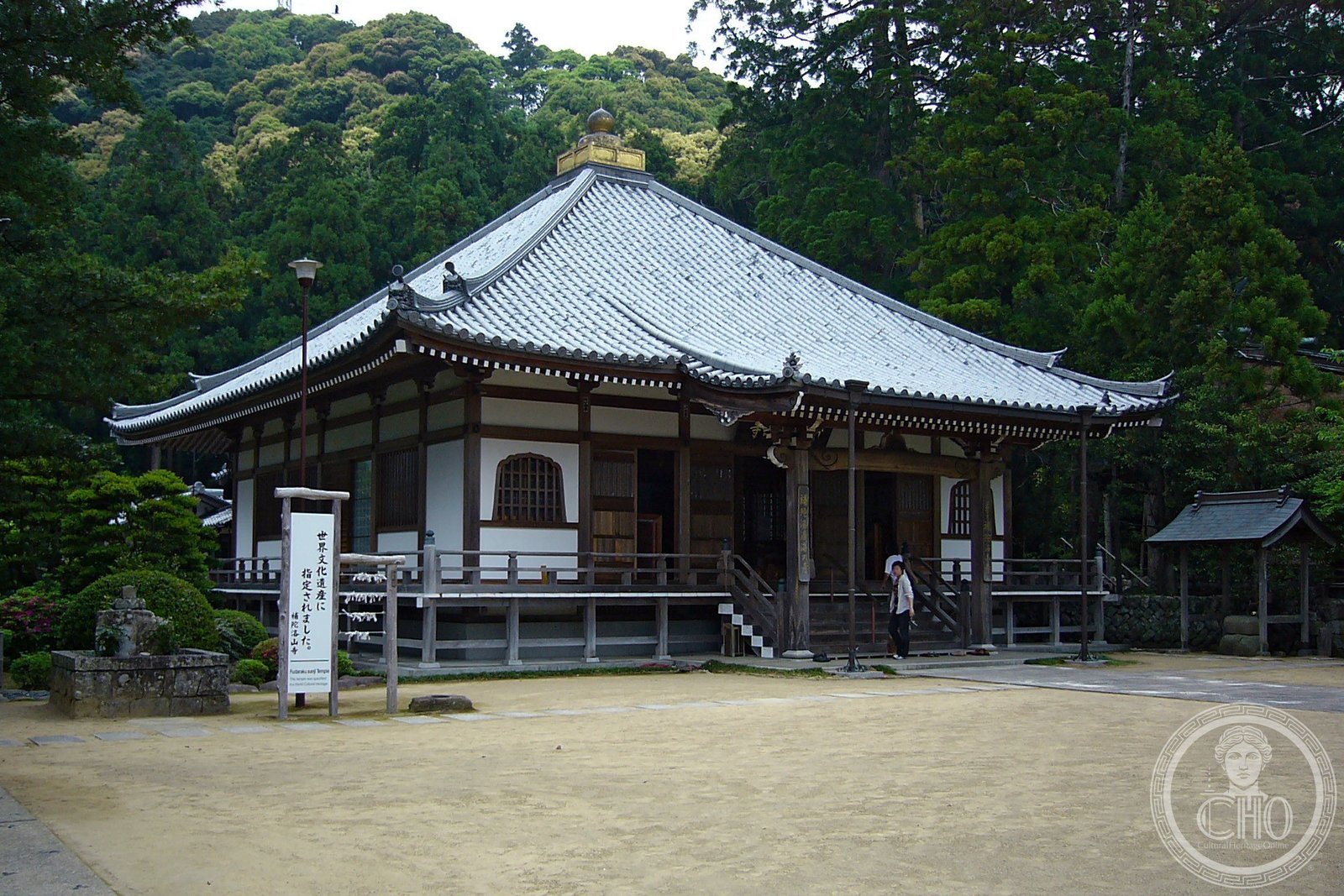
A Tendai Buddhist temple whose name invokes Mount Potalaka, the legendary home of Avalokiteshvara, set in the sacred Kii Mountains of Wakayama prefecture.
At a glance
Fudarakusan-ji occupies a place of profound spiritual significance within the pilgrimage network of the Kii Mountain Range. The temple represents a vital node in one of Japan’s most important sacred routes—a landscape where mountain worship, Buddhism, and pilgrimage tradition converge.
History
Tradition holds that Fudarakusan-ji was founded by Ragyō Shōnin, a monk said to have come from India. The temple’s name derives from Mount Potalaka, the mythical abode of Avalokiteshvara in Buddhist cosmology—a connection that anchors the site to both Indian Buddhist heritage and Japanese religious practice. In 2004, Fudarakusan-ji was designated part of a UNESCO World Heritage Site under the designation Sacred Sites and Pilgrimage Routes in the Kii Mountain Range, recognizing its role within a broader sacred landscape.
Cultural significance
The temple embodies the intersection of Indian Buddhist thought and Japanese religious practice. Its association with Potalaka connects it to one of Buddhism’s most enduring mythological geographies, while its integration into the Kii pilgrimage routes reflects centuries of Japanese spiritual devotion. The UNESCO designation recognizes the entire mountain range as a unified sacred landscape where pilgrimage itself constitutes religious practice.
Key facts
- Country: Japan
- Prefecture: Wakayama
- District: Higashimuro
- Coordinates: 33.6447, 135.9344
- Affiliation: Tendai Buddhism
- UNESCO status: Part of Sacred Sites and Pilgrimage Routes in the Kii Mountain Range (2004)
Practical information & getting there
Fudarakusan-ji lies within the Kii Mountain Range in Wakayama prefecture. You can reach the region from Osaka or Kobe via train and local transport. As part of a wider pilgrimage network, the temple connects to other sacred sites in the Kii Mountains, including Kumano Hongū Taisha and Kumano Nachi Taisha. Check locally for current visiting hours and conditions before your visit.
Sources & resources
- Fudarakusan-ji – Wikipedia
- Cultural Heritage Online
Find it on the map
See this place and what’s around it →📷 Become a Cultural Heritage Online photographer
Share your photos of places: they stay published under your name as the author. The more they're seen, the more you get noticed — and soon a contest will reward the most appreciated photos.
Log in or sign up free to add a photoIs this page about you?
This page is read by travellers and heritage enthusiasts who find it on Google. Tell us how you are connected to this place and we will take it from there.