
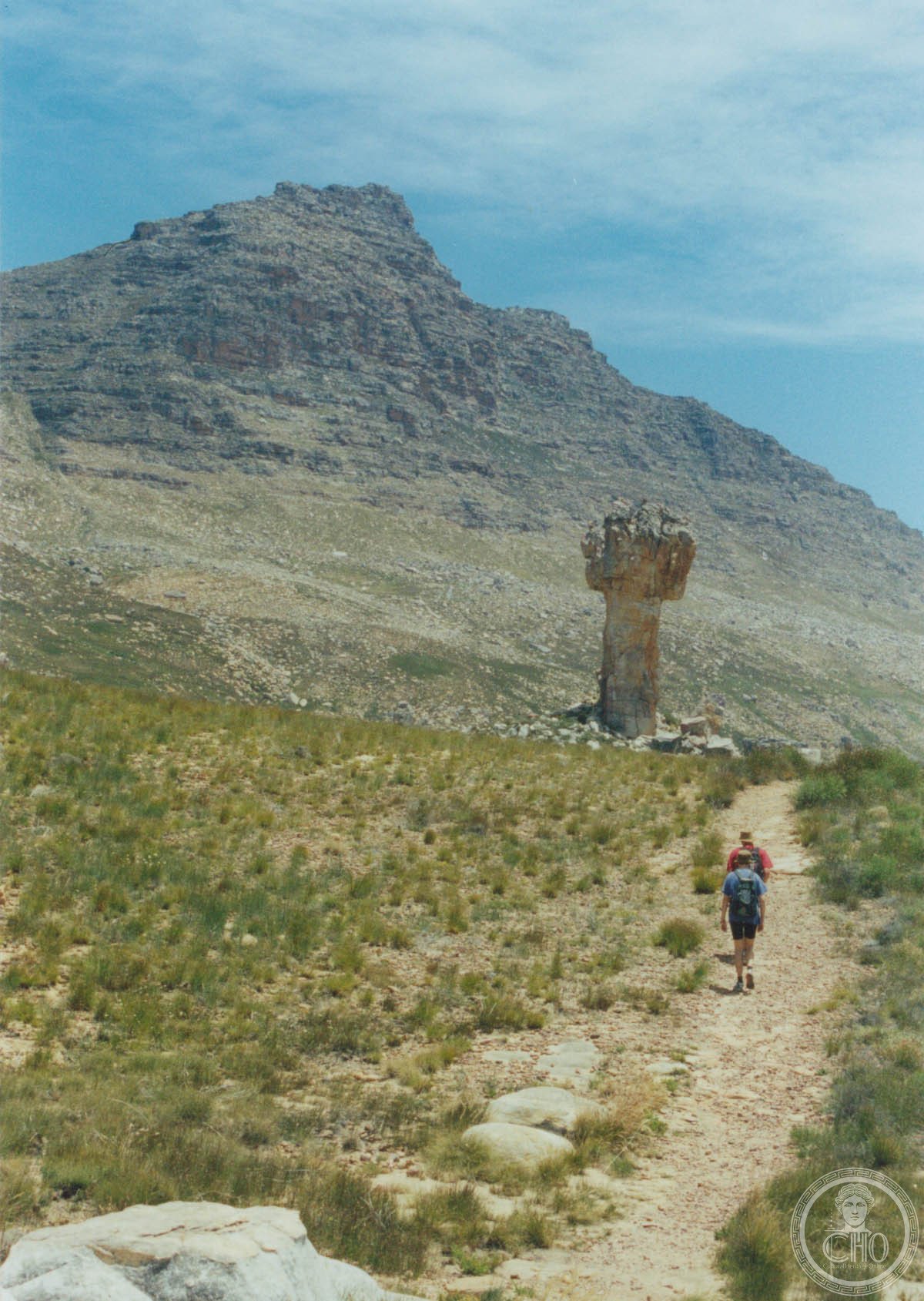
A dramatic mountain range in the Western Cape, shaped by ancient geological forces and crowned with San rock art that speaks across millennia.
At a glance
The Cederberg mountains rise some 300 kilometres north of Cape Town, commanding the landscape with striking rock formations and archaeological treasures. The range derives its name from the endangered Clanwilliam cedar, a tree found nowhere else on Earth. Today the wilderness is protected and managed by CapeNature.
History
The San people inhabited these mountains for centuries, leaving an enduring record in rock art scattered across the range. The name itself bridges two languages—combining the English “Cedarberg” and Afrikaans “Sederberg” into the modern spelling now universally accepted.
What you see
Cederberg’s defining feature is its dramatic rock formations, shaped by erosion into towers, arches and sculptural outcrops. The San rock art—ochre hand stencils, animal paintings and ceremonial imagery—marks sacred and lived spaces throughout the range, offering visual testimony to one of Africa’s oldest cultures.
Cultural significance
The Cederberg holds profound importance for understanding southern African prehistory. The rock art galleries represent an unbroken artistic tradition stretching back hundreds of years. The endemic Clanwilliam cedar, now critically endangered, remains a botanical symbol of the region’s ecological distinctiveness and conservation urgency.
Key facts
- Country: South Africa
- Region: Western Cape, near Clanwilliam
- Coordinates: 32°30′S 19°0′E
- Distance from Cape Town: Approximately 300 km (190 mi) north
- Managed by: CapeNature
Practical information & getting there
The Cederberg Wilderness Area is open to visitors. You can reach Clanwilliam by road from Cape Town; local guides and outfitters in the town offer access to rock art sites and hiking routes. Contact CapeNature for current conditions, permits and visitor facilities.
Sources & resources
Find it on the map
See this place and what’s around it →📷 Become a Cultural Heritage Online photographer
Share your photos of places: they stay published under your name as the author. The more they're seen, the more you get noticed — and soon a contest will reward the most appreciated photos.
Log in or sign up free to add a photoIs this page about you?
This page is read by travellers and heritage enthusiasts who find it on Google. Tell us how you are connected to this place and we will take it from there.