
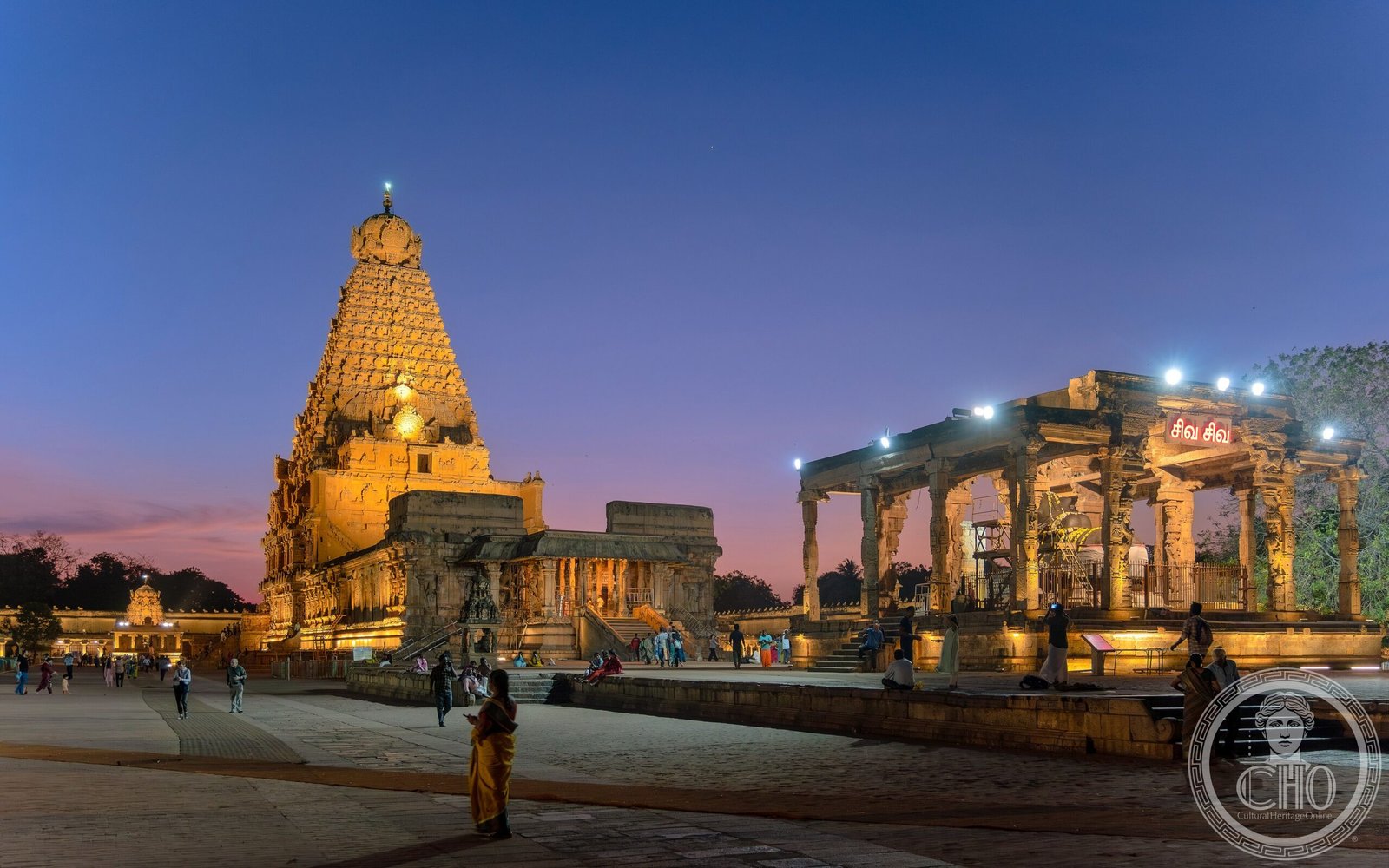
A masterwork of Chola architecture, this granite temple rises above the Cauvery river with one of South India’s tallest vimana towers, commissioned by emperor Rajaraja I and famed for its monumental sculpture and devotional artistry.
At a glance
Brihadisvara Temple stands as one of India’s largest Hindu temples and a defining exemplar of Tamil architectural genius. Built between 1003 and 1010 CE on the south bank of the Cauvery, it forms part of the UNESCO-listed Great Living Chola Temples—a trio of masterpieces spanning the Chola heartland of Tamil Nadu.
History
Emperor Rajaraja I commissioned this temple, calling it Rajarajesvaram—’Lord of Rajaraja’—to honor both his dynasty and the god Shiva. Built around an original moat, the 11th-century complex rose with gopura, shrine, vimana tower, inscriptions, frescoes and sculptures dedicated to Shaivism, alongside imagery of Vishnu and the divine feminine. The temple suffered damage over centuries; some artworks remain lost. Additional mandapam and monuments were added across succeeding generations. Fortified walls, constructed after the 16th century, now enclose the sacred precinct.
What you see
The vimana tower, built entirely of granite, rises as one of the tallest in South India, its soaring form dominating the landscape. A massive colonnaded prakara—a vast circumambulatory corridor—encircles the shrine. Within stands one of India’s largest Shiva lingas. The temple complex encompasses shrines to Nandi, Parvati, Murugan, Ganesha and numerous other deities, each distinguished by refined sculptural detail. The temple’s renown rests equally on the exceptional quality of its carved stone work.
Cultural significance
Brihadisvara Temple commissioned the iconic brass Nataraja sculpture in the 11th century—a masterpiece representing Shiva as the cosmic dancer that became an enduring symbol of Hindu spirituality. The temple embodies the sophistication and ambition of Chola imperial patronage at its height, influencing temple architecture throughout South India. Today it attracts pilgrims and visitors as one of Tamil Nadu’s most visited temples, sustaining a living tradition of worship alongside its status as a cultural monument.
Key facts
- Country: India
- City: Thanjavur, Tamil Nadu
- Built: 1003–1010 CE by emperor Rajaraja I
- Coordinates: 10.78°N, 79.13°E
- UNESCO World Heritage Site: Great Living Chola Temples
- Material: Granite (vimana tower)
- Related temples: Gangaikonda Cholapuram (70 km northeast), Airavatesvara (40 km northeast)
Practical information & getting there
The temple stands on the south bank of the Cauvery river in central Thanjavur. As one of Tamil Nadu’s premier cultural attractions, it welcomes regular visitors. For detailed visiting hours, ceremonies, and access information, consult local tourism resources or the temple authorities directly.
Sources & resources
- Brihadisvara Temple — Wikipedia
- Cultural Heritage Online
Find it on the map
See this place and what’s around it →📷 Become a Cultural Heritage Online photographer
Share your photos of places: they stay published under your name as the author. The more they're seen, the more you get noticed — and soon a contest will reward the most appreciated photos.
Log in or sign up free to add a photoIs this page about you?
This page is read by travellers and heritage enthusiasts who find it on Google. Tell us how you are connected to this place and we will take it from there.