
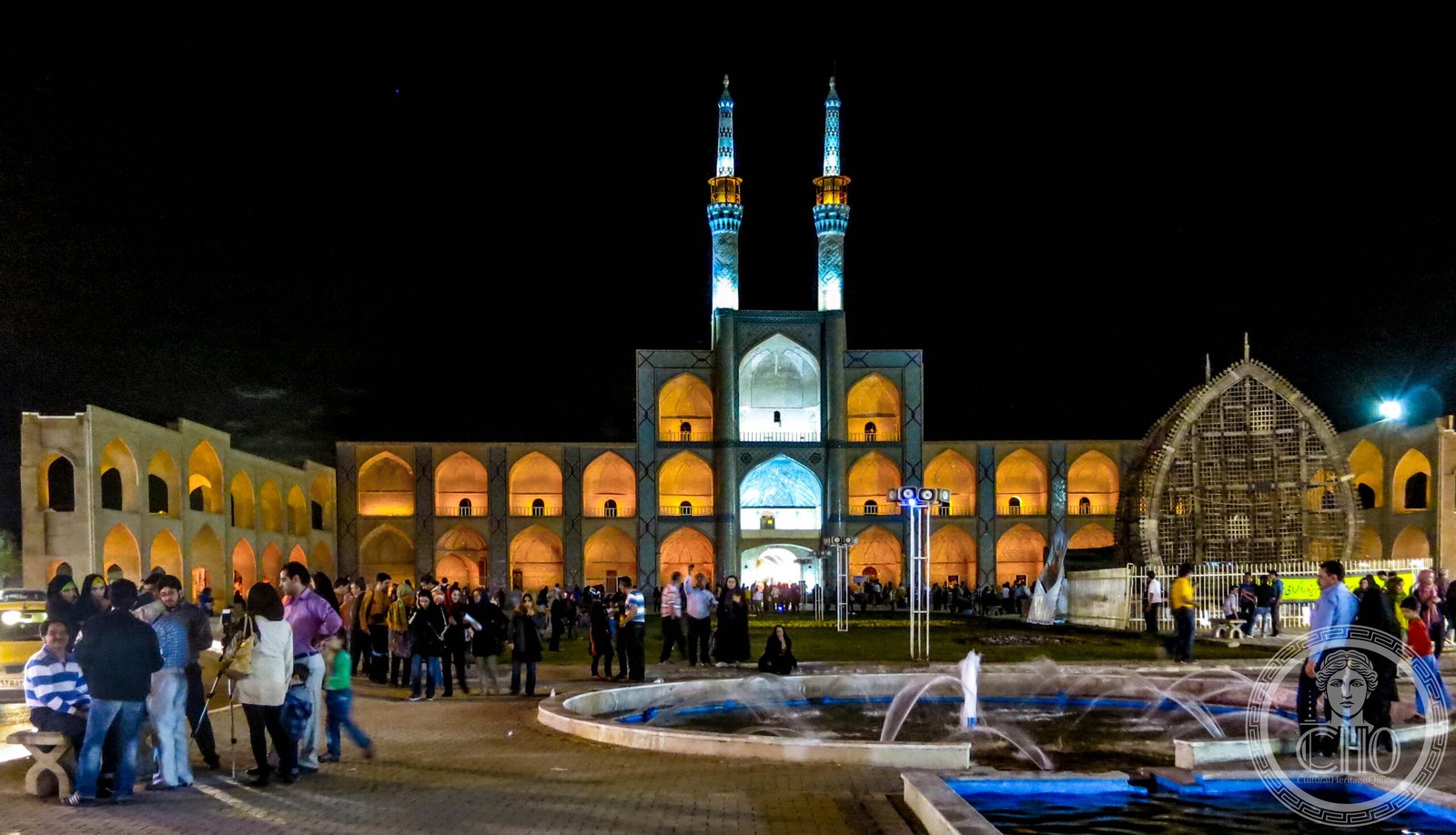
A desert city of windcatchers and ancient fire temples, Yazd preserves centuries of Persian ingenuity in water management, handicraft, and architecture adapted to one of Iran’s harshest climates.
At a glance
Yazd is the capital of Yazd province in central Iran and home to 529,673 people (2016 census). Since 2017 it has been recognized as a UNESCO World Heritage Site for its distinctive historical architecture and cultural traditions. The city is renowned for its Persian windcatchers—tall ventilation structures that cool buildings without electricity—and its significant Zoroastrian heritage.
History
Generations of residents adapted their city to survive in a desert environment, developing ingenious solutions for water and air management that shaped Yazd’s unique character. Bicycle culture emerged here in the nineteenth century following contact with European visitors, making Yazd the birthplace of cycling in Iran and earning it the nickname “City of Bicycles.”
What you see
Yazd’s defining feature is its abundance of badgirs (windcatchers)—towering structures that funnel breezes into homes and buildings, creating natural cooling. The city also showcases ab anbars (cisterns), qanats (underground water channels), and yakhchals (traditional coolers). Zoroastrian fire temples reflect Yazd’s role as a center of pre-Islamic Persian faith. Narrow alleyways and mud-brick architecture create a unified, human-scaled urban fabric.
Cultural significance
Yazd represents a living archive of Persian desert adaptation and craft tradition. Its Zoroastrian temples stand among the most important in the world. The city remains a center for handwoven textiles including termeh (traditional silk cloth), silk weaving, and confectionery-making—trades practiced for centuries. UNESCO recognition honors both its architectural heritage and its role as a living cultural landscape.
Key facts
- Country: Iran
- Coordinates: 31.88°N, 54.34°E
- Population: 529,673 (2016 census)
- UNESCO World Heritage Site: Designated 2017
- Known for: Windcatchers, Zoroastrian fire temples, traditional handicrafts, Persian architecture
Practical information & getting there
Yazd is served by Shahid Sadoughi Airport. The city is accessible by road from Tehran (240 km north) and Isfahan (240 km west). You can explore the historic core on foot or by bicycle, which fits the city’s cycling tradition. Local guides are recommended for understanding the engineering of windcatchers and the significance of Zoroastrian sites.
Sources & resources
Find it on the map
See this place and what’s around it →📷 Become a Cultural Heritage Online photographer
Share your photos of places: they stay published under your name as the author. The more they're seen, the more you get noticed — and soon a contest will reward the most appreciated photos.
Log in or sign up free to add a photo