
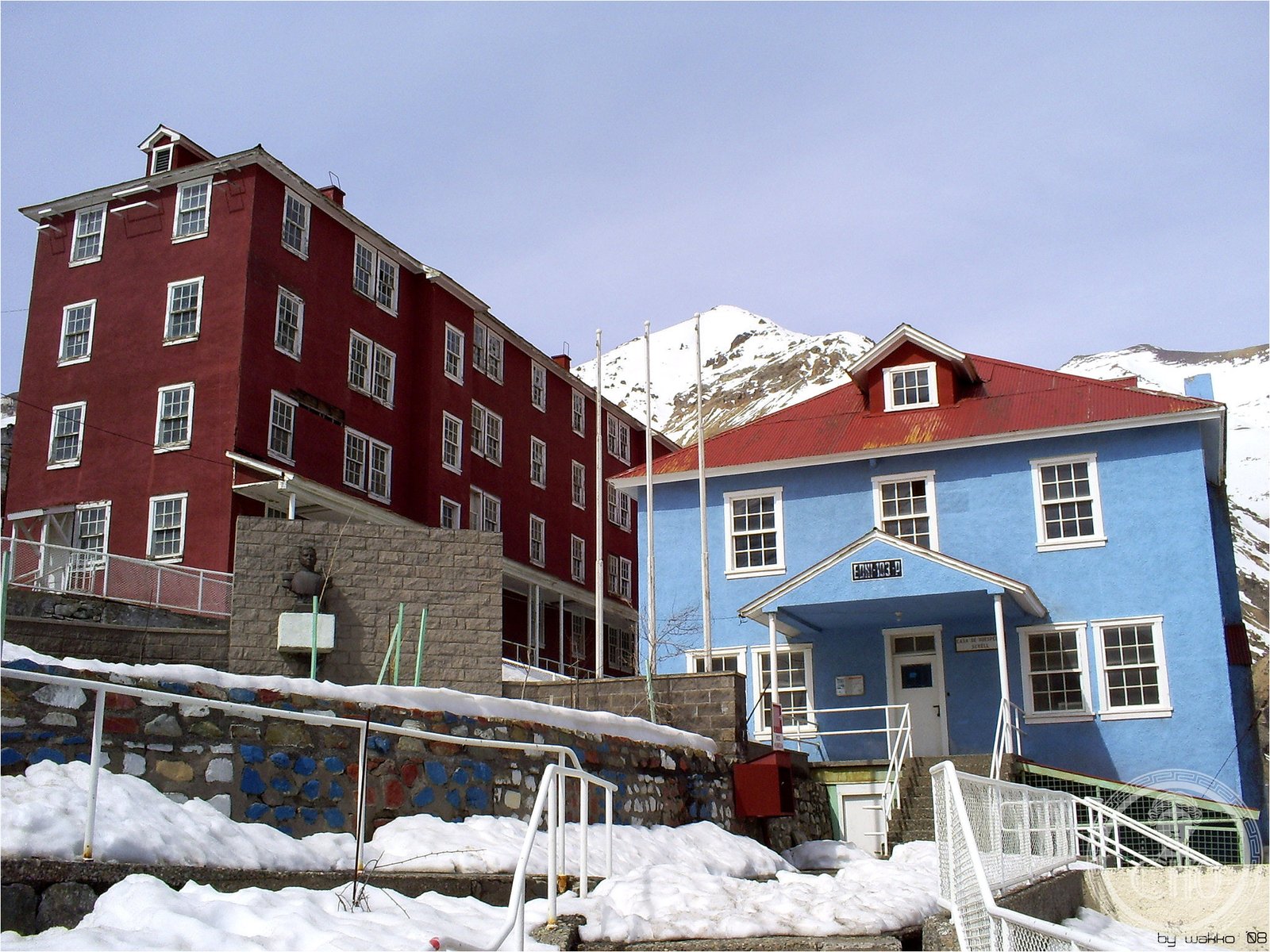
Perched high in the Andes, this abandoned copper-mining town preserves a vanished industrial era. Once home to 16,000 workers and their families, Sewell now stands as a UNESCO-protected monument to corporate settlement and Chile’s mining past.
At a glance
Sewell is an uninhabited mining town built on the steep slopes of the Andes between 2,000 and 2,250 metres altitude. The Braden Copper Company developed it as a company town to house workers for El Teniente, the world’s largest underground copper mine. Its architecture and urban layout document a complete twentieth-century industrial settlement.
History
The Braden Copper Company established Sewell to serve El Teniente’s workforce and their families. At its peak in 1960, the town held approximately 16,000 residents, making it a thriving settlement in one of the world’s most remote locations. After Chile’s government acquired a majority stake in the mine, and especially following nationalization of copper mining in 1971, the state company relocated workers to the valley below. Engineers built the Copper Highway to enable commuting between the new residential areas and the mine. Demolitions during the 1980s removed some structures, but preservation efforts have since restored buildings and adapted others for contract workers. The Chilean government designated Sewell a National Monument in 1998 and UNESCO recognized it as a World Heritage Site in 2006.
What you see
The town’s buildings and infrastructure reflect early-twentieth-century company-town planning and design, arranged across steep terrain. Though partially demolished and subsequently renovated, the surviving structures illustrate the housing, commercial, and administrative facilities that sustained a major industrial operation in extreme topography.
Cultural significance
Sewell represents a rare intact example of a company town devoted to mineral extraction. Its urban design, labor history, and abandonment document Chile’s role in global copper production and the social structures created by foreign corporate investment. The site preserves evidence of how industrial capitalism shaped settlement patterns in remote environments.
Key facts
- Location: Machalí, Cachapoal Province, Libertador General Bernardo O’Higgins Region, Chile
- Altitude: 2,000–2,250 metres
- Coordinates: -34.08°S, 70.38°W
- Peak population: ~16,000 (1960)
- UNESCO World Heritage Site: 2006
- Chilean National Monument: 1998
Practical information & getting there
Sewell is located in the high Andes above the Cachapoal Valley, accessible via the Copper Highway from the valley floor. The site is open to visitors as a preserved heritage area. Current conditions, access routes, and any restrictions should be verified before planning a visit.
Sources & resources
Find it on the map
See this place and what’s around it →📷 Diventa un fotografo di Cultural Heritage Online
Condividi le tue foto dei luoghi: restano pubblicate con la tua firma come autore. Più vengono viste, più ti fai conoscere — e presto un concorso premierà le foto più apprezzate.
Accedi o registrati gratis per aggiungere una foto