
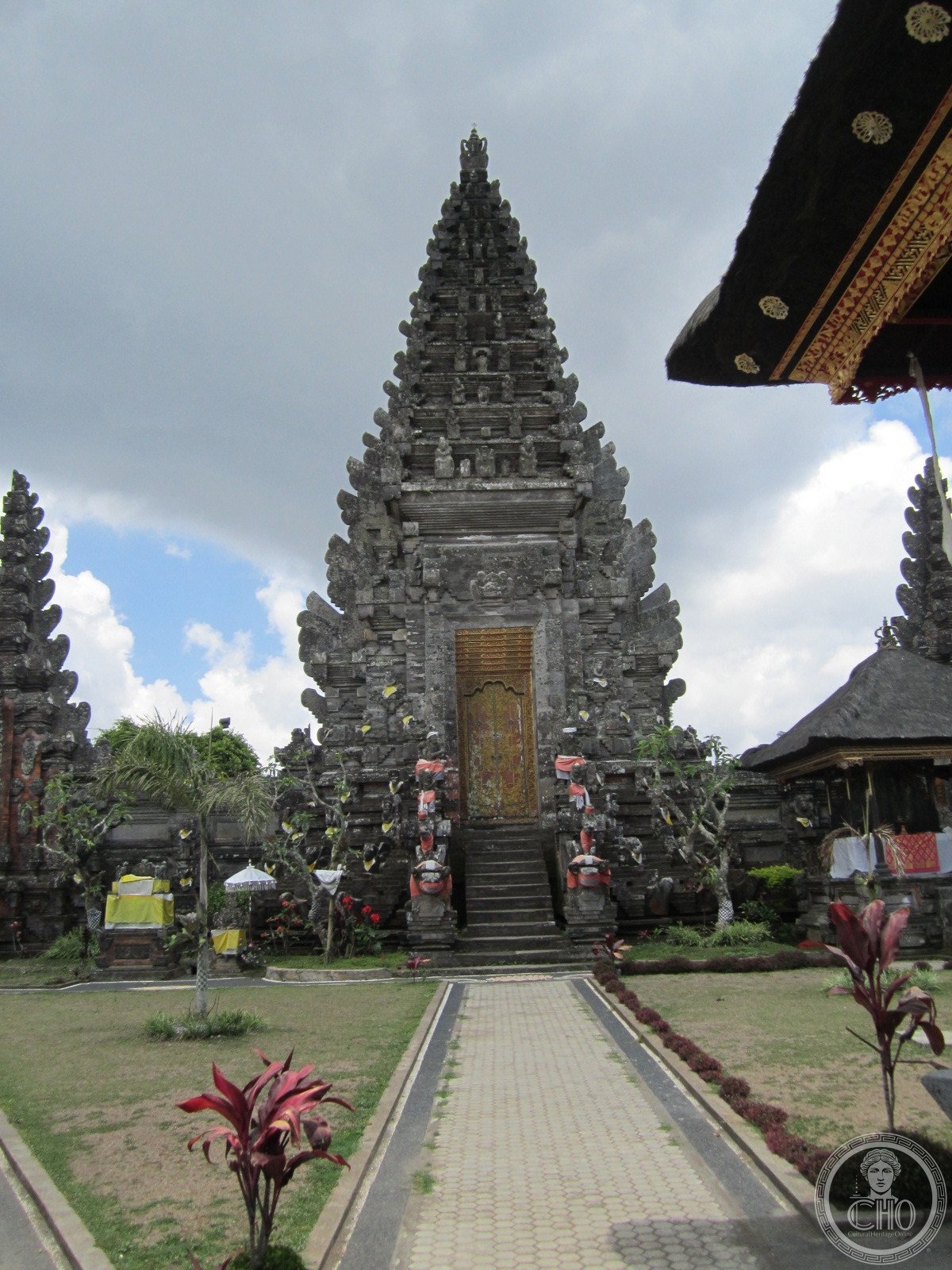
One of Bali’s most sacred temples, Pura Ulun Danu Batur guards the spiritual equilibrium of the entire island and honours the goddess of its largest lake.
At a glance
Pura Ulun Danu Batur ranks among the Pura Kahyangan Jagat, the highest-order temples in the Balinese Hindu hierarchy. Its primary role has always been to maintain cosmic harmony and stability across the island. The temple is oriented to the north and dedicated to both the god Vishnu and Dewi Danu, the goddess who presides over Lake Batur—Bali’s largest freshwater lake and a vital source of irrigation and life.
History
The temple’s original compound was destroyed, prompting a complete relocation and reconstruction. In 1926, the temple was rebuilt at its present site, establishing the sacred landscape that pilgrims and devotees visit today. This rebuilding became a defining moment in Balinese religious architecture and community resilience.
What you see
The temple exemplifies Balinese Hindu architectural tradition, with structures aligned according to sacred directional principles. Its layered courtyards and shrines reflect the spiritual cosmos, inviting visitors to experience the integration of landscape, water, and devotional space that characterises Bali’s temple culture.
Cultural significance
Beyond its role as a pilgrimage destination, Pura Ulun Danu Batur represents the interconnection between Balinese spirituality and environmental stewardship. The temple embodies the island’s philosophical commitment to maintaining balance between the divine, human, and natural worlds. In 2012, UNESCO recognised the Cultural Landscape of Bali Province—which includes this temple alongside three other major sites—as a World Heritage Site, affirming its universal cultural value.
Key facts
- Country: Indonesia
- Location: Bali
- Coordinates: −8.254719, 115.335851
- Rebuilt: 1926
- UNESCO World Heritage Site: Cultural Landscape of Bali Province (2012)
Practical information & getting there
The temple is accessible from Bali’s main towns via local transport and guided tours. As an active place of Hindu worship, visitors should dress respectfully and observe local customs. Check ahead for ceremonial dates when access may be restricted to devotees.
Sources & resources
Find it on the map
See this place and what’s around it →📷 Become a Cultural Heritage Online photographer
Share your photos of places: they stay published under your name as the author. The more they're seen, the more you get noticed — and soon a contest will reward the most appreciated photos.
Log in or sign up free to add a photo