
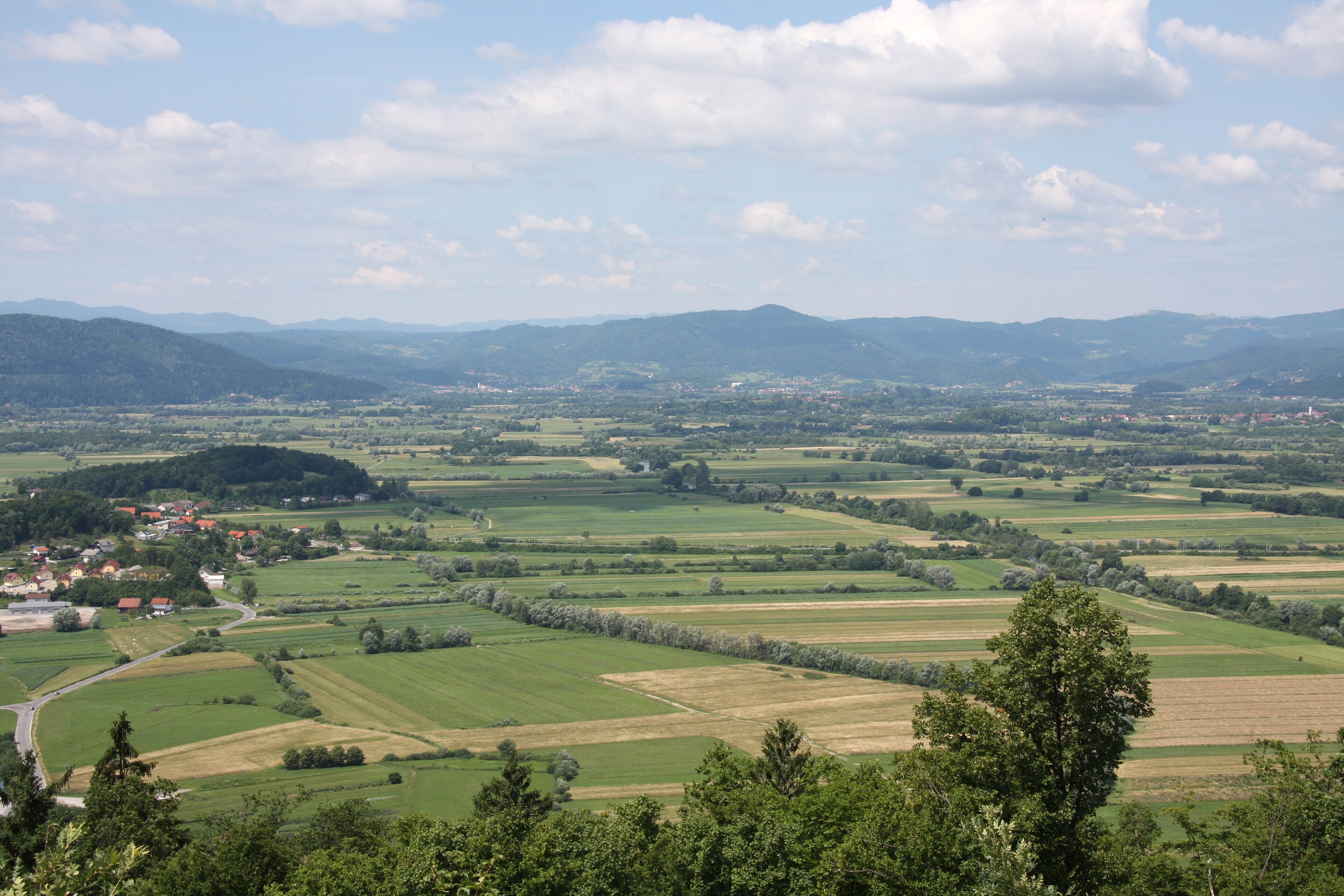
Slovenia’s largest wetland ecosystem, the Ljubljana Marsh stretches across 163 square kilometres of lowland terrain south of the capital, supporting diverse flora and fauna within a landscape shaped by centuries of human settlement.
At a glance
The Ljubljana Marsh dominates the landscape south of Ljubljana. At 163 square kilometres, it represents 0.8% of Slovenia’s total territory and remains the country’s most significant marsh system. The wetland’s ecological and hydrological importance has made it a focus of both conservation and regional planning efforts.
History
The marsh has been inhabited and managed for millennia, with archaeological evidence and historical records revealing how successive generations adapted to and shaped this watery landscape. Today it remains a working ecosystem where human activity and natural processes continue to interact.
What you see
The Ljubljana Marsh presents a complex mosaic of wetland habitats: open water bodies, reed beds, willow thickets, and grasslands. Scattered throughout are traditional farmsteads and villages that appear to float above the terrain, connected by networks of roads and waterways that follow the contours of the land.
Cultural significance
The marsh defines the regional identity of central Slovenia. Its inhabitants developed distinctive ways of living with water—traditional architecture, agricultural practices, and local knowledge systems adapted to seasonal flooding and saturated soils. The landscape remains economically important for agriculture and increasingly valued for tourism and ecological restoration.
Key facts
- Country: Slovenia
- Region: South of Ljubljana
- Area: 163 square kilometres (63 square miles)
- Percentage of Slovenia: 0.8%
- Coordinates: 45.9874°N, 14.4539°E
- Administered by: Seven municipalities including Ljubljana, Vrhnika, Ig, Brezovica, Borovnica, Škofljica, and Log-Dragomer
Practical information & getting there
The marsh is accessible from Ljubljana by car or public transport. Multiple towns and villages within the marsh offer entry points for exploration. Cycling and walking trails traverse the landscape, offering close encounters with wetland ecology and traditional settlement patterns. Local heritage centres provide context for understanding the region’s distinctive character.
Sources & resources
Find it on the map
See this place and what’s around it →
📷 Become a Cultural Heritage Online photographer
Share your photos of places: they stay published under your name as the author. The more they're seen, the more you get noticed — and soon a contest will reward the most appreciated photos.
Log in or sign up free to add a photo