
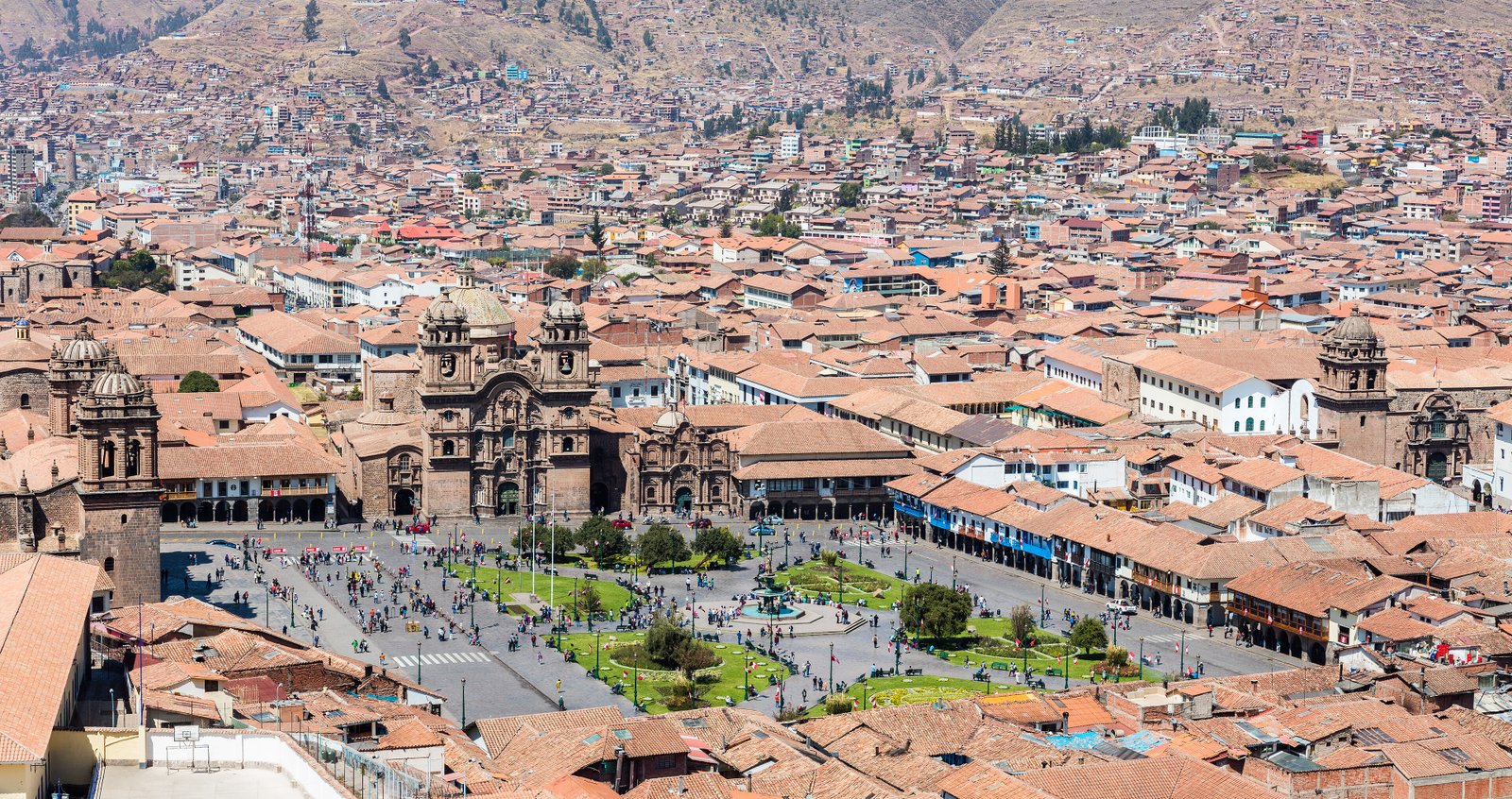
The former capital of the Inca Empire, transformed into a Spanish colonial city and now one of Peru’s most visited cultural destinations.
At a glance
Cusco’s historic centre preserves the layered urban fabric of an imperial Inca capital and its Spanish colonial successor. Two overlapping designations protect it: Peru’s Monumental Zone (1972) and UNESCO’s World Heritage Site (1983), with marked buildings receiving the organisation’s official blue-and-white shield since 2021.
History
Originally the capital of the Inca Empire, Cusco fell to Spanish forces in 1533 following the Inca Civil War. The conquistadors established it as a major urban centre of the Viceroyalty of Peru. The city retained significant administrative importance through the colonial period, becoming the capital of independent Peru briefly after the Spanish were expelled in 1821 during the Peruvian War of Independence. That prominence faded when Lima became the definitive capital of the new republic, yet Cusco remained economically and culturally vital.
What you see
The historic centre embodies the collision and synthesis of two civilisations. Inca stonework—including ashlar blocks and architectural foundations—survives beneath and within Spanish colonial buildings. Churches, civic structures, and residences from the viceregal era dominate the streetscape, many built directly atop earlier Inca foundations. This archaeological and architectural stratification makes the city a palimpsest of conquest and cultural exchange.
Cultural significance
Cusco represents a critical point of contact between pre-Columbian American civilisation and European expansion. Its preservation allows study of how colonial powers physically and socially reorganised indigenous urban space. Today it stands as one of Peru’s premier tourist destinations, drawing visitors to experience both Inca heritage and colonial Spanish architecture within a single, walkable landscape.
Key facts
- Location: Cusco, Peru (13°31′2″S, 71°58′48″W)
- UNESCO World Heritage Site: Yes, inscribed 1983 as City of Cuzco
- National designation: Monumental Zone, established 1972
- Historic period: Inca Empire (pre-1533) and Spanish Colonial era (1533–1821)
Practical information & getting there
Cusco is accessible by air, bus, and train from major Peruvian cities. The high altitude (3,400 m / 11,150 ft) requires acclimatisation. Most major monuments and museums are within the compact historic centre. Visitor facilities and guided tours are widely available. Plan several days to explore the archaeological sites, colonial architecture, and surrounding Inca ruins.
Sources & resources
Find it on the map
See this place and what’s around it →📷 Become a Cultural Heritage Online photographer
Share your photos of places: they stay published under your name as the author. The more they're seen, the more you get noticed — and soon a contest will reward the most appreciated photos.
Log in or sign up free to add a photo