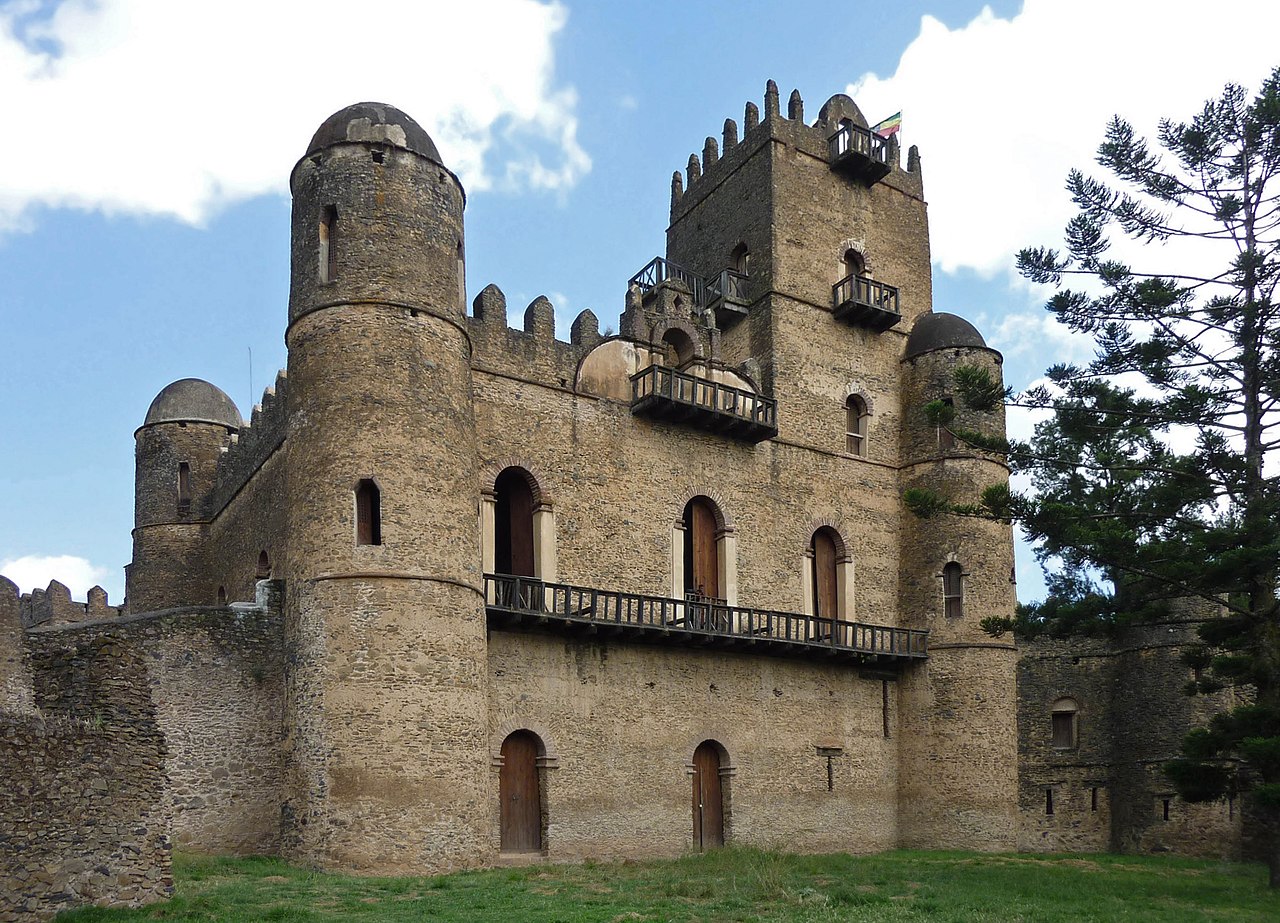
Fasil Ghebbi (inscribed 1979) is the imperial fortress-city of Gondar — a 70,000 m² walled enclosure containing five royal palaces, royal baths, churches, a library, and stables built by the emperors of Ethiopia’s Gondar Kingdom (1635–1769 CE), a unique synthesis of Ethiopian, Portuguese-influenced, Mughal Indian, and Arabic architectural traditions that earned Gondar the title “the Camelot of Africa.”
Fasil Ghebbi: The Imperial Fortress of Ethiopia’s Gondar Kingdom Gondar (Gonder), Amhara Region, northwestern Ethiopia, 3,200 km north of Addis Ababa by road
Fasil Ghebbi (Royal Enclosure; inscribed in 1979 under criteria (i), (ii), (iii)) is the ensemble of royal structures — palaces, churches, stables, and administrative buildings — built within a walled enclosure of approximately 70,000 m² by successive Ethiopian emperors of the Gondar period. The Gondar period began with Emperor Fasilides (r. 1632–1667 CE), who established Gondar as Ethiopia’s permanent capital (previous emperors had governed from a mobile court that moved from region to region). The Palace of Emperor Fasilides (Fasil Gemb, c. 1635–1667 CE) is the largest and most important structure: a four-storey stone palace of approximately 32 × 32 metres with circular towers at each corner, battlements, arched gateways, and a distinctive silhouette that combines the fortified palace tradition of medieval Europe (which Ethiopian rulers knew through their contacts with Portuguese Jesuit missionaries who arrived in the early sixteenth century) with Ethiopian church-building traditions and Islamic-influenced decorative details (geometrical window frames, carved stone panels). The structure is often described as reflecting the architectural exchange that occurred during the Portuguese Embassy to Ethiopia of 1520–1526 CE and the subsequent Portuguese military intervention (1541–1543 CE) that helped Ethiopia defeat the Muslim forces of Ahmed ibn Ibrahim al-Ghazi (Gragn). The Gondar period (1635–1769 CE) was Ethiopia’s most architecturally prolific: in addition to the Fasil Ghebbi, Gondar and its surroundings contain 44 historic churches (11 of which are within the royal enclosure), many with wall paintings depicting biblical scenes in the distinctive Gondarine style (a flat, formal Ethiopian style with large eyes and elongated figures).
The Timkat Festival and Ethiopian Orthodox Christianity Fasilides Bath, Gondar, January annually
The Timkat Festival (Ethiopian Epiphany, the feast of the Baptism of Jesus Christ) is celebrated across Ethiopia on Timkat (the 19th of Ter in the Ethiopian calendar, approximately January 19–20) and is the most spectacular annual religious festival in Ethiopia. In Gondar, the festival centres on the Fasilides Bath (Fasilides Abreha Hadu, the royal bathhouse built by Emperor Fasilides in the mid-seventeenth century CE) — a rectangular stone bathhouse approximately 60 × 40 metres that is filled with water for Timkat and into which clergy, deacons, and tens of thousands of white-robed Ethiopian Orthodox faithful wade or are baptized in a re-enactment of the baptism of Jesus in the River Jordan. The Timkat procession (which begins the previous evening with a nighttime procession carrying the Tabot — a replica of the Ark of the Covenant, which every Ethiopian Orthodox church possesses — in an ornate container on the head of the priest) is UNESCO-inscribed on the Intangible Cultural Heritage list (2019). The bathing in the Fasilides Bath at dawn on Timkat — the single most photographed ritual event in Ethiopian culture — draws hundreds of thousands of Ethiopians and thousands of international visitors to Gondar annually.
Practical information
Gondar Airport (GDQ) has daily flights from Addis Ababa (Ethiopian Airlines, approximately 1 hour 30 minutes). The Fasil Ghebbi is a 10-minute walk from the city centre; entry fee approximately 200 ETB (foreigners). The Debre Birhan Selassie Church (a 17th-century church 1 km from the Fasil Ghebbi, with the most celebrated interior paintings in Ethiopia — ceiling covered with 135 painted angel faces) is the most important individual church in the Gondar area. The Fasilides Bath is 2 km from the city centre and is accessible by taxi. The best season is October–March; the Timkat festival (January 19–20) is the most spectacular time to visit but the most crowded.
Frequently Asked Questions
Is Gondar a UNESCO World Heritage Site?
Yes. The Fasil Ghebbi, Gondar Region (also described in some UNESCO documentation as the “Fasil Ghebbi and the Historical Monuments of Gondar”) was inscribed in 1979 under criteria (i), (ii), and (iii). The inscription covers the Fasil Ghebbi royal enclosure and the associated historic churches of the Gondar region. Ethiopia has 9 UNESCO World Heritage Sites (as of 2024); Fasil Ghebbi was one of the first two Ethiopian sites to be inscribed (simultaneously with the Simien National Park in 1978).
Why is Gondar called the “Camelot of Africa”?
The “Camelot of Africa” epithet was applied to Gondar by European travelers and historians of the nineteenth and early twentieth centuries to convey the combination of the Royal Enclosure’s dramatic fortified palatial architecture (which reminded European observers of the medieval castle tradition of Arthurian legend) and the Ethiopian imperial court’s elaborate ceremonial life, military valor, and artistic patronage during the Gondar period (1635–1769 CE). The description also reflects the period of Gondar’s later decline: after the rise of the Zemene Mesafint (“Era of the Princes,” 1769–1855 CE), during which the Gondar emperors were reduced to puppets of regional warlords, Gondar ceased to be the effective capital and fell into partial ruin — giving it the “ruined Camelot” quality that enhanced the romantic comparison in European eyes. Gondar was also damaged during the Italian occupation (1936–1941 CE) and the Ethiopian civil war (1980s). The Fasil Ghebbi restoration programme (ongoing since the 1990s) has stabilized the principal structures.
What is the Tabot and why is every Ethiopian Orthodox church required to have one?
The Tabot (ጣቦት, from the Hebrew תֵּבוֹת Tevot, “boxes” or “arks”) is a consecrated replica of the Ark of the Covenant — a flat square board of wood, marble, or metal inscribed with Christian symbols — that is the most sacred object in every Ethiopian Orthodox church and the object without which a church cannot be consecrated or function. Ethiopian Orthodox theology holds that the Ark of the Covenant is physically present in the Chapel of the Tablet at Aksum (see the Aksum article), and that the Tabot in each parish church is a divinely authorized replica of the original that shares in the sacred power of the Ark. The Tabot is kept in the inner sanctum (Qiddiste Qiddusan, “Holy of Holies”) of every Ethiopian Orthodox church, wrapped in rich cloth and inaccessible to all except the clergy; it is the Tabot, not the church building, that is the focus of the consecration ceremony and of the annual Timkat procession. The concept of the Tabot as a replica of the Ark reflects the Ethiopian Orthodox tradition’s continuity with ancient Hebrew religious practice (Ethiopian Jews, the Beta Israel community, also maintain traditions associated with the Ark) and is one of the most distinctive elements of Ethiopian Christianity compared to other Orthodox traditions.