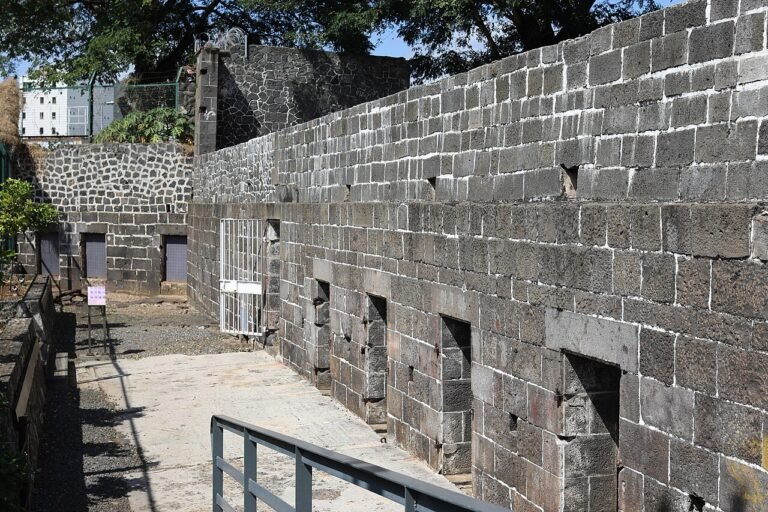
Ani (inscribed 2016) is the most significant ruined medieval city in the South Caucasus — the abandoned capital of the Bagratid Armenian Kingdom (961–1064 CE) on the plateau of northeastern Anatolia near the Armenian border, whose Cathedral of Ani (1001 CE), Church of the Redeemer, Church of St. Gregory, and Seljuk palace ruins are the most important surviving monuments of medieval Armenian architecture anywhere in the world.
Ani: The City of a Thousand and One Churches Kars Province, eastern Turkey, near the Armenian border
Ani (inscribed in 2016 under criteria (iii) and (iv)) is the archaeological site of the ruined medieval capital of the Bagratid Armenian Kingdom, located on a triangular plateau above the canyon of the Arpaçay River (which forms the modern border between Turkey and Armenia) 45 km east of Kars. Ani was the capital of the Bagratid kings from 961 CE (when King Ashot III moved the capital from Kars to Ani), becoming one of the largest and most important cities in the medieval world at its peak — with a population estimated at 100,000–200,000 in the late tenth and early eleventh centuries, making it comparable to Constantinople, Cairo, and Baghdad in size and a significant centre of Islamic, Armenian Christian, and Byzantine cultural exchange. The city was famously described as “the city of a thousand and one churches” (an exaggeration reflecting its actual density of religious buildings); the most significant surviving monuments are the Cathedral of Ani (999–1001 CE, built by the architect Tiridates — the same Tiridates who repaired the dome of Hagia Sophia in Constantinople after its partial collapse in 989 CE), the Church of the Redeemer (1034 CE, split longitudinally by lightning in 1957, leaving exactly half of the drum and dome standing), the Church of St. Gregory of Tigran Honents (1215 CE, with the finest surviving fresco cycle in Armenia medieval tradition — Byzantine-influenced but with unique Armenian iconographic features), and the Palace of the Manuchihr (twelfth century CE, the Seljuk ruler who controlled Ani after the city’s conquest by the Seljuks in 1064 CE). The city was progressively abandoned after the Mongol invasions of the thirteenth century and was completely empty by the seventeenth century.
Kars: The Russian Tsarist Town Kars, 45 km west of Ani
Kars (population approximately 80,000) is the provincial capital and the principal base for visiting Ani. The city was successively Ottoman (until 1828), Russian (1878–1921, following Russia’s victory in the Russo-Turkish War of 1877–1878 and the Treaty of Berlin), and Turkish (from 1921, when the Treaty of Kars returned it to the newly-formed Turkish Republic). The Russian period has left the most distinctive architectural legacy: the Kars grid plan (laid out by Russian military engineers), the Russian-era town hall (Belediye Sarayı), the Russian Orthodox cathedral (now the Kümbet Mosque), and numerous stone townhouses in the flat-fronted Russian provincial style. The Kars Museum has the most important archaeological collection from Ani and the surrounding region. Kars is also the production centre of kars kaşarı (Kars kashkaval cheese) — a hard yellow cheese made from raw cow’s milk, aged in the cold Anatolian climate, considered by many food writers the best cheese produced in Turkey. Orhan Pamuk’s novel “Snow” (Kar, 2002) is set in Kars during a snowstorm and political crisis; the city’s desolate, snow-covered winter landscape (the novel’s setting) is one of the most vivid in contemporary Turkish literature.
Practical information
Kars Airport (KSY) has direct flights from Istanbul (Turkish Airlines and Pegasus, approximately 2 hours, multiple daily). Kars has overnight trains from Ankara (approximately 26 hours) and Erzurum (5 hours). Ani is 45 km east of Kars; minibuses run from Kars’s main square on summer mornings (or take a taxi for approximately TRY 300–500 return). The archaeological site requires an entry fee (Turkish Ministry of Culture admission, approximately TRY 100 for foreign visitors). The Cathedral of Ani, Church of St. Gregory, and Church of the Redeemer are the three most significant monuments; the site covers approximately 5 km² and requires 2–3 hours to visit properly. The best season is May–June (spring, green plateau, no snow) and September–October (autumn colours); July–August is warm and visited; November–April has snow and some road access difficulties. Ani directly overlooks the Armenian border and the Armenian city of Gyumri; the Armenian side of the canyon is visible from the site.
Frequently Asked Questions
Is Ani a UNESCO World Heritage Site?
Yes. Ani was inscribed in 2016 under criteria (iii) and (iv). The inscription covers the archaeological site of the ruined medieval capital of the Bagratid Armenian Kingdom — the Cathedral, Church of the Redeemer, Church of St. Gregory, Manuchihr Palace, city walls, and the overall planned urban layout on the plateau above the Arpaçay canyon. Turkey has 21 UNESCO World Heritage Sites (as of 2024), including the archaeological sites of Troy (1998), Ephesus (2015), Ani (2016), Göbekli Tepe (2018), and Arslantepe (2021).
What ended the Bagratid Armenian Kingdom?
The Bagratid (Bagratuni) Armenian Kingdom of Ani was destroyed by the Seljuk Turk invasion of 1064 CE, when the Seljuk Sultan Alp Arslan (famous for his later victory over the Byzantine Emperor Romanos IV Diogenes at Manzikert in 1071 CE) besieged and sacked Ani. Contemporary Armenian and Muslim chronicles describe the sack as one of the most catastrophic events in Armenian history: after three days of siege, the city walls were breached and the population massacred or enslaved. The city was subsequently held by the Seljuks, the Georgian Kingdom (which briefly controlled Ani in 1124–1161 and again from 1199), the Kurdish Shaddadid dynasty, the Mongols (1236), and the Ilkhanate. By the fourteenth and fifteenth centuries, with the trade routes bypassing Ani and the population having fled successive destructions, the city was effectively abandoned. The completeness of the ruins’ preservation is due precisely to this total abandonment: no later population rebuilt on or with the medieval structures, leaving them standing in the slow process of natural decay rather than systematic demolition.
Who was the architect Tiridates and why is he significant?
Tiridates (Armenian: Trdat, fl. 970–1010 CE) is the only medieval Armenian architect known by name and documented biography — a master builder who was the court architect of the Bagratid kings Smbat II and Gagik I. He designed the Cathedral of Ani (999–1001 CE), a basilica with a cruciform interior, tall drum and dome (the dome later collapsed and was replaced), pointed arches (one of the earliest systematic uses of pointed arches in a Christian church, predating the Gothic pointed arch of northern Europe by approximately a century), and a blind arcade exterior articulation of extraordinary sophistication. He is also documented as having been sent to Constantinople by the Bagratid king to repair the partially collapsed dome of Hagia Sophia after the earthquake of 989 CE — an extraordinary testament to the international reputation of Armenian master builders in the late tenth century, when the Armenian church-building tradition was the most technically advanced in the Christian world.