Liechtenstein has no UNESCO World Heritage Sites, but Vaduz lies within 80 km of two significant Swiss inscriptions: prehistoric pile dwelling sites around Lake Constance and the Swiss Tectonic Arena Sardona, a mountain landscape that transformed the geological sciences. From Cultural Heritage Online.
Prehistoric Pile Dwellings around the Alps — Lake Constance sites 70–80 km north — 1 hr by road
The UNESCO inscription of Prehistoric Pile Dwellings around the Alps (2011) is a serial site covering 111 individual pile dwelling settlements — the remains of villages built on wooden stilts at the edges of Alpine lakes and rivers between approximately 5000 and 500 BC — distributed across six countries: Switzerland, Austria, Germany, France, Italy, and Slovenia. Several of the inscribed sites are located on Lake Constance (Bodensee), 70–80 km north of Vaduz, and in the Swiss Rhine valley. The settlements were preserved by the anaerobic lake sediments beneath the water surface, which prevented decomposition of organic material: wooden posts, floor planks, tools, textile fragments, seeds, and food remains have been recovered in exceptional condition from many sites, providing an unusually detailed picture of Neolithic and Bronze Age daily life in the Alpine region.
The pile dwelling tradition around the Alps lasted for approximately 4,500 years. Early Neolithic settlements (c. 4300 BC) were built at the water’s edge for protection from predators and rival communities; by the Bronze Age, the communities had developed sophisticated trade networks extending across the Alps. The most accessible cluster of inscribed sites near Vaduz is around the southern shore of Lake Constance, where several cantonal archaeological museums in Switzerland display recovered material. The Pfahlbaumuseum at Unteruhldingen on the German shore of Lake Constance (about 80 km from Vaduz) provides full-scale reconstructions of pile dwellings.
Getting there: From Vaduz, drive north via Feldkirch (Austria) and across the German border to the southern Lake Constance shore — approximately 70–80 km, 1 hour. The Pfahlbaumuseum at Unteruhldingen is the best-organised visitor centre for the pile dwelling culture. Allow: Half day for the museum; full day to combine with lake exploration. Best for: Archaeology and prehistory visitors; families.
Swiss Tectonic Arena Sardona 60 km west — 1 hr by road and cable car
The Swiss Tectonic Arena Sardona was inscribed as a UNESCO World Heritage Site in 2008 for its outstanding geological significance: the Glarus Thrust, visible as a distinct horizontal fault line on the mountain faces of the Sardona massif (canton of Glarus, about 60 km west of Vaduz), is the most clearly exposed example of a large-scale thrust fault in the world — a place where ancient rock (approximately 250–300 million years old) was pushed over younger rock (approximately 35–50 million years old) by tectonic forces. The geological observation of this phenomenon in the nineteenth century — first correctly interpreted by Albert Heim in 1884 — was one of the foundational discoveries of modern plate tectonics and structural geology. The fault contact is visible to the naked eye as a colour-contrast line on the cliff faces of Tschingelhörner and surrounding peaks.
Getting there: From Vaduz, drive west through Buchs (Switzerland) toward Glarus via the Linth valley — about 60 km, 1 hour. Cable cars at Elm and Braunwald provide access to the upper terrain where the thrust fault is most visible. Allow: Full day for the geological landscape; add hiking time if ascending to the Martinsloch (a natural rock arch associated with the inscribed site). Best for: Geology enthusiasts; mountain hikers with interest in Earth sciences.
Frequently Asked Questions
Does Liechtenstein have any UNESCO World Heritage Sites?
No. As of 2026, Liechtenstein has no inscribed UNESCO World Heritage Sites. The principality has submitted a Tentative List, but no site has reached the nomination stage. The nearest inscribed sites are in Switzerland: the Swiss Tectonic Arena Sardona (60 km west) and the prehistoric pile dwelling settlements around Lake Constance (70–80 km north).
What is the Glarus Thrust at the Swiss Tectonic Arena Sardona?
The Glarus Thrust is a major geological fault visible as a colour-contrast line on the cliff faces of the Sardona massif in canton Glarus, Switzerland. It marks the contact between ancient Permian and Triassic rock (approximately 250–300 million years old) that was thrust northward over much younger Eocene flysch (approximately 35–50 million years old) during the Alpine orogeny. Its first correct scientific interpretation in 1884 was foundational for the development of structural geology and plate tectonics theory.
What are pile dwellings and why are the Alpine ones UNESCO-inscribed?
Pile dwellings (also called lake dwellings or stilt houses) were settlements built on wooden posts at the margins of Alpine lakes and rivers during the Neolithic and Bronze Age (approximately 5000–500 BC). The UNESCO inscription covers 111 sites across six countries; the Alpine lake sediments preserved organic materials in exceptional condition, providing a uniquely detailed record of prehistoric daily life over 4,500 years. The Lake Constance sites are among the most accessible from Vaduz.
Is Vaduz Castle open to visitors?
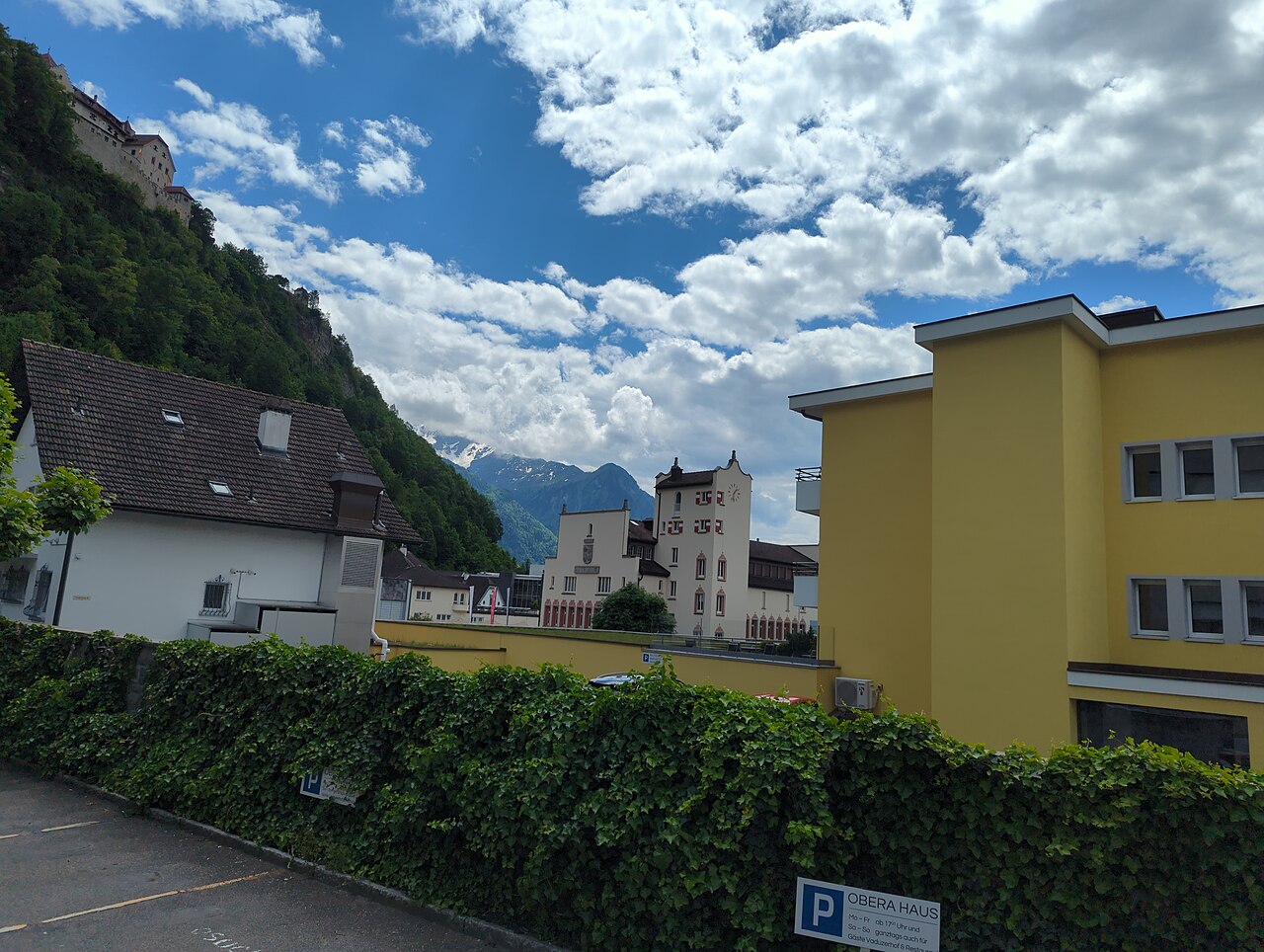
No. Vaduz Castle (Schloss Vaduz) is the official residence of the Prince of Liechtenstein and is not open to the public. The exterior and panoramic setting can be reached on foot via a marked path from the town centre (about 20 minutes uphill). The view from the castle path over the Rhine Valley into Switzerland is one of the best in Liechtenstein.
Sources
- S1 — Menotti, Francesco, ed. Living on the Lake in Prehistoric Europe. Routledge, 2004. ISBN 978-0-415-31720-7.
- S2 — Viazzo, Pier Paolo. Upland Communities: Environment, Population and Social Structure in the Alps. Cambridge University Press, 1989. ISBN 978-0-521-30663-8.
Spotted an error? Write to editorial@culturalheritageonline.com and we correct it the same day.