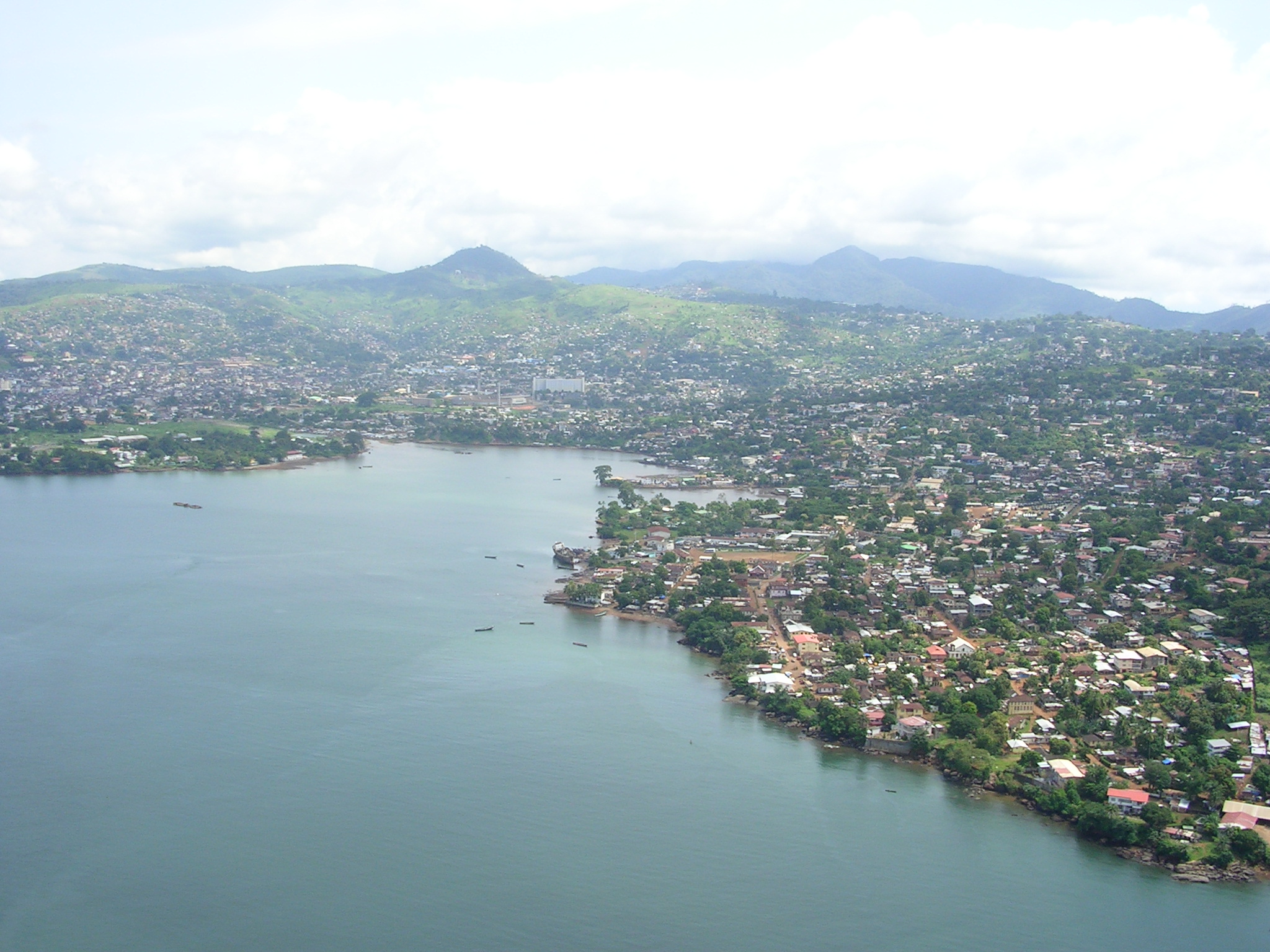
Sierra Leone has no formally inscribed UNESCO World Heritage Sites, but the Freetown region holds heritage of exceptional global significance — from the Atlantic slave trade’s most important West African fort to one of the continent’s oldest conservation sanctuaries. From Cultural Heritage Online.
Sierra Leone and UNESCO: Where Things Stand
As of 2026, Sierra Leone has not had any site formally inscribed on the UNESCO World Heritage List. The country has submitted a Tentative List — a required first step in the nomination process — but no site has yet completed the evaluation and inscription cycle. This is not unusual for West African nations with limited institutional resources for the lengthy UNESCO process. It does not reflect a shortage of significance.
The Freetown region contains sites that would be competitive candidates by any reasonable standard: an intact Atlantic slave trade fort of hemispheric importance, a founding city narrative unlike any other in West Africa, and one of the region’s most biodiverse forest patches. What follows is a guide to heritage that merits the attention UNESCO inscription brings — whether or not the formal recognition has yet arrived.
Bunce Island 32 km upriver — approx. 1 hr by boat
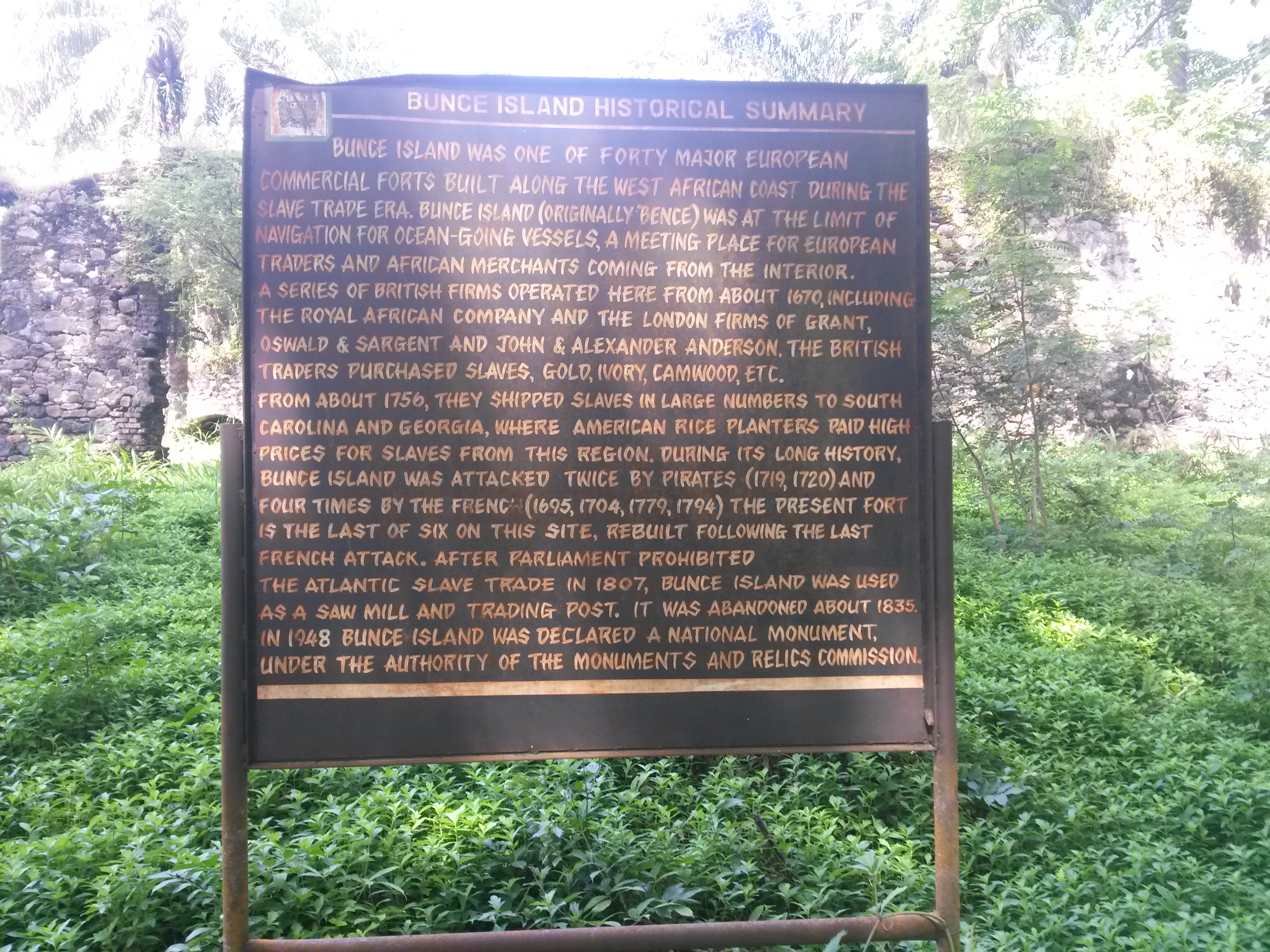
Bunce Island sits in the Sierra Leone River, roughly 32 kilometres upstream from Freetown. A British trading company established a fort here in 1670, and from that point until 1808 — when Britain abolished the slave trade — it operated as one of the most active slave-trading posts on the West African coast. Between 30,000 and 50,000 enslaved people were held in its dungeons and shipped across the Atlantic during that period.
What makes Bunce Island distinctive within the broader geography of the trade is the specific destination of many of those ships. Planters in South Carolina and Georgia actively sought enslaved people from this stretch of the Sierra Leone coast because they brought with them generations of expertise in rice cultivation. The Gullah Geechee communities of the American South — who maintain their own distinct language, foodways, and spiritual traditions to this day — trace significant roots to this island. Bunce Island is therefore not only a site of trauma but a point of origin for a living diaspora culture, and descendants make the journey here regularly.
The fort ruins are accessible by boat from Freetown and are managed as a protected national monument. Archaeological work continues on the site. The brick walls of the fort, the cannon emplacements, and the outlines of the slave quarters and trading house all remain visible. There is no visitor centre on the island itself, and the approach is deliberately unmediated — the silence and the river are part of the experience. Guide services are available through operators in Freetown and are strongly recommended for context.
Getting there: Boat from Freetown’s Aberdeen or Government Wharf, approximately 1 hour each way; arrange through a local heritage guide or tour operator. Allow: A full day including travel. Best for: Diaspora heritage travellers, historians, anyone with a serious interest in Atlantic world history.
The Cotton Tree, Freetown city centre
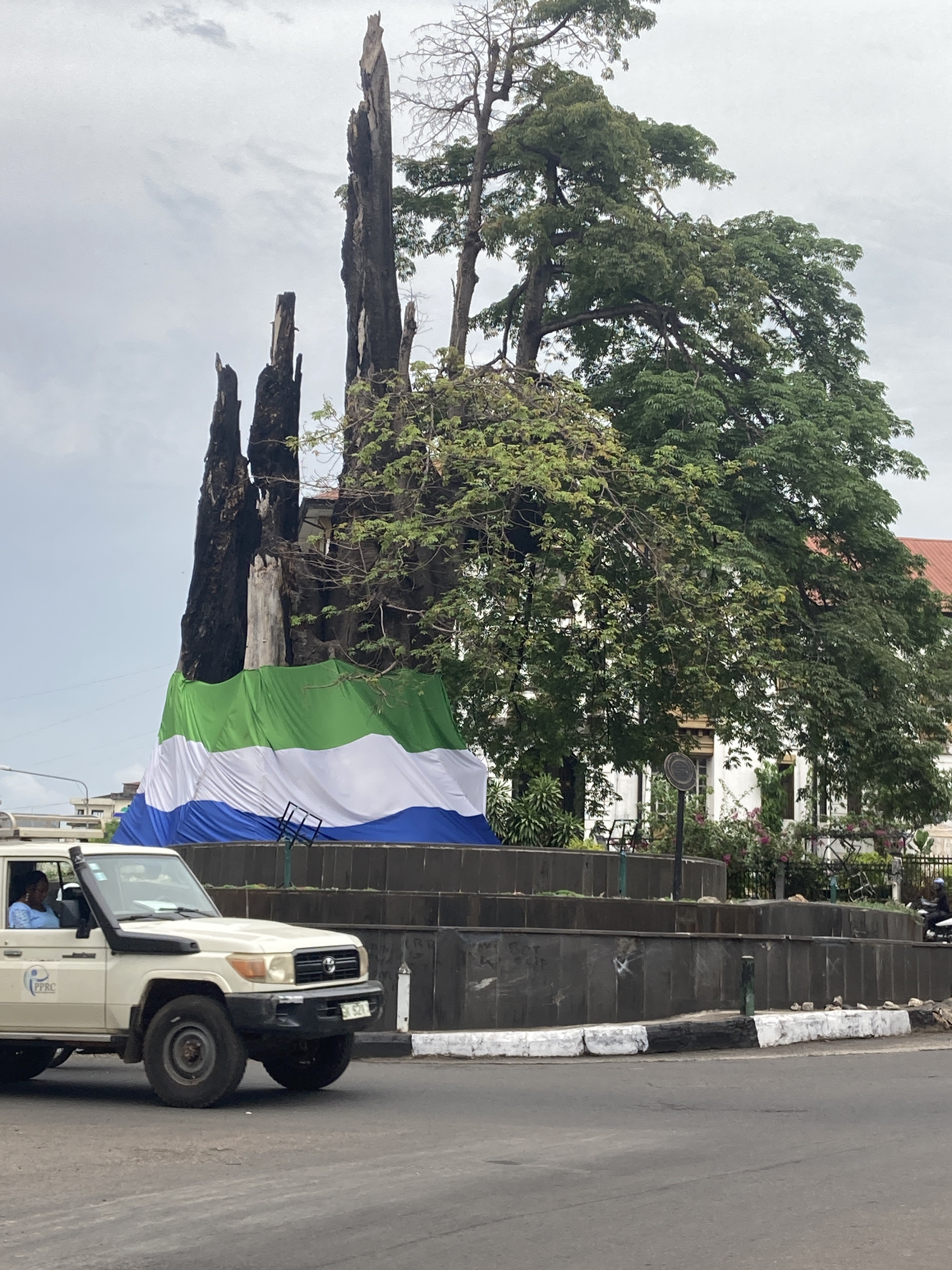
At the intersection of Siaka Stevens Street and Lightfoot Boston Street in central Freetown stood, for approximately five centuries, a Ceiba pentandra — a cotton tree — that had become the founding symbol of the city. When formerly enslaved Black Loyalists arrived from Nova Scotia in 1792 after a 52-day Atlantic crossing, they gathered beneath this tree on their first day in Africa and held a prayer service of thanksgiving. The city of Freetown, built around that act of arrival, grew outward from this point.
In May 2023, after days of heavy rain, the tree collapsed. Its loss was mourned nationally and internationally, not only as an ecological event but as the disappearance of a living monument. What remains at the site is the stump, now enclosed and marked, alongside the adjacent National Museum of Sierra Leone. The National Museum holds collections relating to the history of the freed slave settlements, the Krio culture that developed from them, and the broader history of Sierra Leone’s peoples.
The site retains its significance as a place of memory and a focal point for the Krio diaspora community worldwide. Discussions about what, if anything, should replace the tree are ongoing, and the site has become part of a broader conversation about how Freetown honours its founding narrative.
Getting there: Walking distance from any central Freetown hotel; the intersection is a well-known landmark. Allow: 1–2 hours including the National Museum. Best for: All visitors to Freetown; essential context for understanding the city.
Tacugama Chimpanzee Sanctuary 20 km from Freetown — approx. 45 min by road
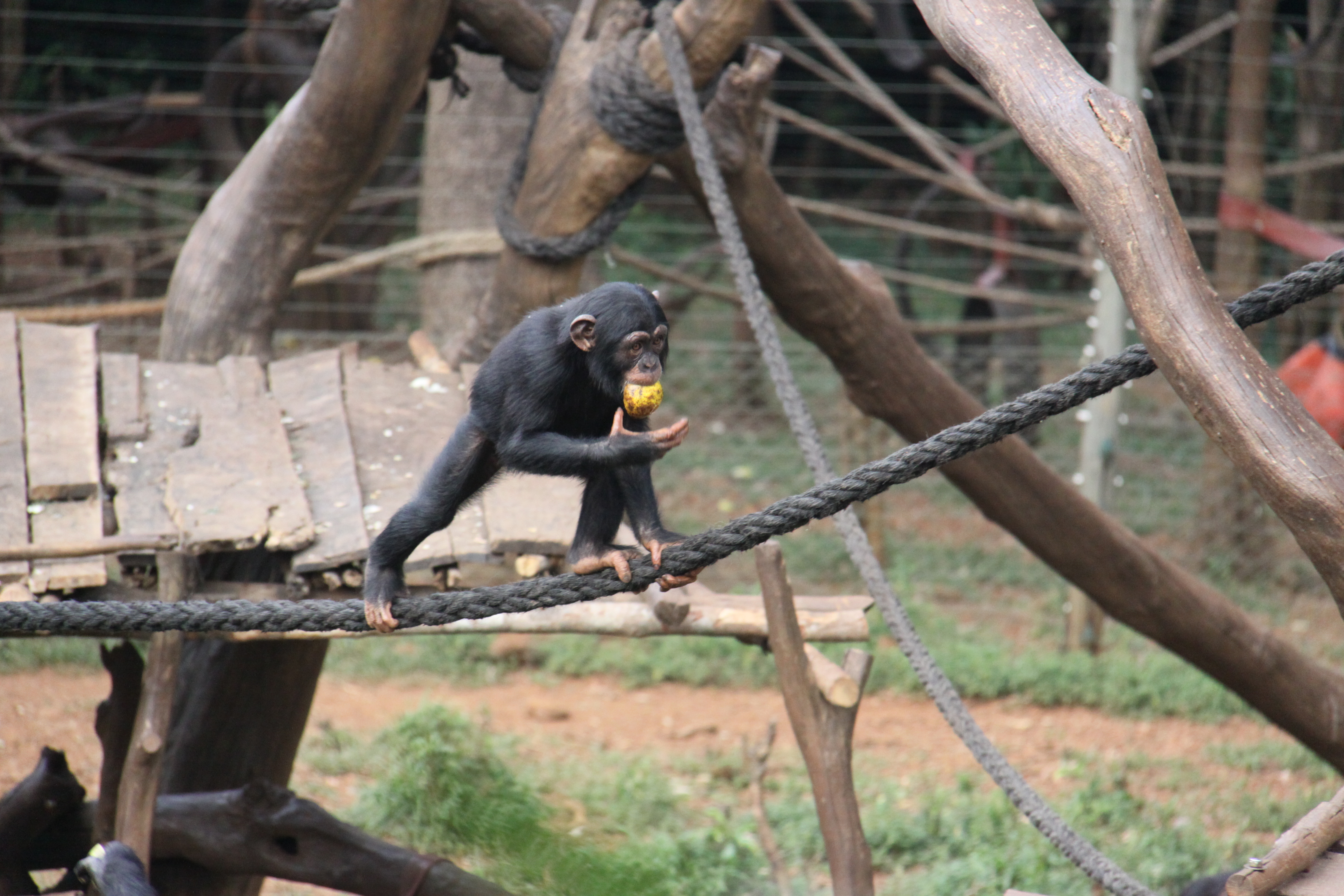
Set within the Western Area Peninsula National Park, roughly 20 kilometres from central Freetown, the Tacugama Chimpanzee Sanctuary was founded in 1995 to care for orphaned and confiscated West African chimpanzees. The sanctuary is now home to approximately 100 chimpanzees and is regarded as one of the leading great ape rescue facilities in West Africa.
The Western Area Peninsula National Park itself is ecologically rare — a remnant patch of lowland tropical forest on a peninsula that is otherwise under heavy development pressure from the expansion of Freetown. The park supports a range of wildlife beyond chimpanzees, including pygmy hippopotamus and numerous bird species. Its proximity to a capital city of over a million people makes it an unusual case in conservation geography: one of the few places in the world where you can observe a critically endangered great ape subspecies within an hour of an international airport.
Tacugama runs guided visits that explain the rescue and rehabilitation work, and the forest walks through the sanctuary grounds give a sense of the broader ecosystem. The sanctuary is one of the most professionally operated wildlife tourism sites in Sierra Leone and handles visitors with care for both animal welfare and educational value.
Getting there: Taxi or private vehicle from central Freetown along the Peninsula Road; advance booking required via Tacugama’s website. Allow: Half a day including travel. Best for: Conservation-minded travellers, families, anyone seeking natural heritage alongside the cultural sites.
Frequently Asked Questions
How many UNESCO World Heritage Sites are near Freetown?
Sierra Leone has no formally inscribed UNESCO World Heritage Sites as of 2026. The country has submitted a Tentative List to UNESCO — a prerequisite for nomination — but no site has yet been evaluated and inscribed. The Freetown region nonetheless contains heritage of significant global importance, including Bunce Island, which is one of the best-preserved Atlantic slave trade forts in West Africa and a site of profound meaning for the Gullah Geechee diaspora in the United States.
Can visitors access Bunce Island, and what is needed to get there?
Yes. Bunce Island is accessible by motorised boat from Freetown, with the journey taking approximately one hour each way. Boats depart from Aberdeen Creek or the Government Wharf. There is no fixed scheduled service; visitors arrange transport through local tour operators or heritage guide services. A guide is strongly recommended — the site lacks on-island interpretation beyond some signage, and local guides provide essential historical and diaspora context. The island is uninhabited and the ruins are exposed to the elements, so appropriate footwear and sun protection are advisable.
What is the best time of year to visit Freetown and its heritage sites?
The dry season, running from November to April, is the most comfortable period for travel in and around Freetown. The rainy season (May to October) brings heavy rainfall that can make road access to sites like Tacugama more difficult and river conditions for the Bunce Island crossing less predictable. That said, the Peninsula National Park is at its most lush during the rains, and experienced travellers who are comfortable with West African logistics visit year-round. The Cotton Tree site in central Freetown is accessible in any season.
What is the significance of Bunce Island to African-American history?
Bunce Island holds a specific and documented connection to the Gullah Geechee people of South Carolina and Georgia. Planters in those colonies deliberately sought enslaved people from the Sierra Leone coast because of their expertise in rice cultivation — a crop that defined the Low Country economy. DNA and genealogical research has confirmed direct links between Gullah Geechee communities and the populations of the Sierra Leone River region. Bunce Island is thus a point of origin in a way that can be traced more precisely than most Atlantic slave trade sites, which is part of what makes it a significant destination for diaspora heritage travel and why its formal protection and eventual UNESCO nomination would carry international weight.
Sources
- S1 — Fyfe, Christopher. A History of Sierra Leone. Oxford University Press, 1962. ISBN 978-0-19-821613-1.
- S2 — Barry, Boubacar. Senegambia and the Atlantic Slave Trade. Cambridge University Press, 1998. ISBN 978-0-521-59760-9.
Spotted an error? Write to editorial@culturalheritageonline.com and we correct it the same day.