
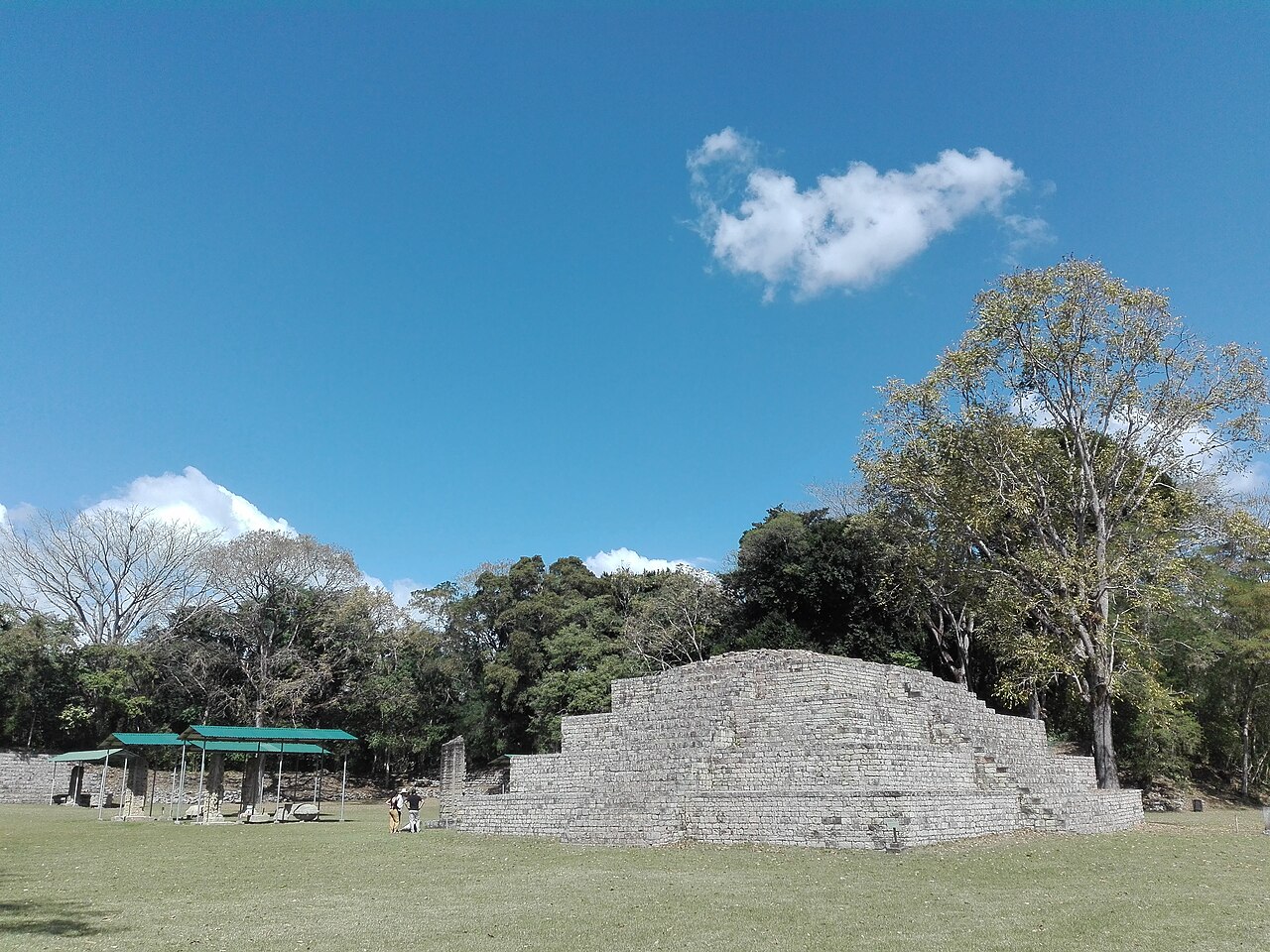
Honduras has one UNESCO World Heritage Site — the Maya Site of Copán — and it is among the most intellectually significant archaeological sites in the entire Americas. Roughly 350 kilometres west of Tegucigalpa, this former capital of Classic Maya learning rewards visitors with the longest hieroglyphic inscription ever found and stone carving of unmatched refinement. From Cultural Heritage Online.
Maya Site of Copán 350 km west · 5 hr by road
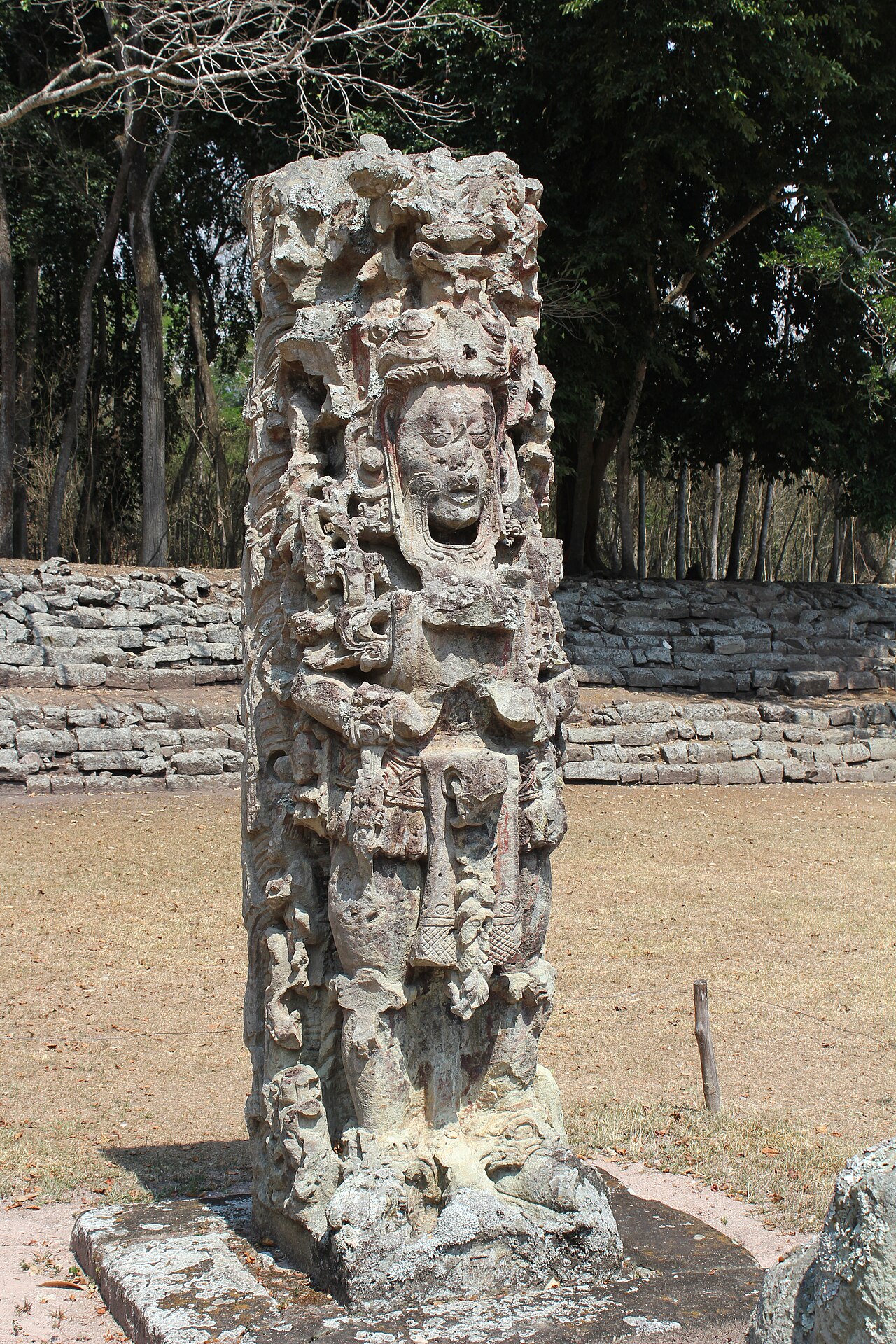
Copán flourished as a major Maya centre from approximately 400 to 820 AD, occupying a fertile river valley in what is now western Honduras near the Guatemalan border. Where many Maya cities excelled at monumental scale, Copán distinguished itself through the extraordinary quality and density of its carved inscriptions and sculpture — traits that led modern scholars to call it the intellectual and artistic capital of the Classic Maya world. Its dynastic sequence of 16 rulers is better documented here than at any comparable site, carved onto stelae, altars, and staircases that still stand in their original positions.
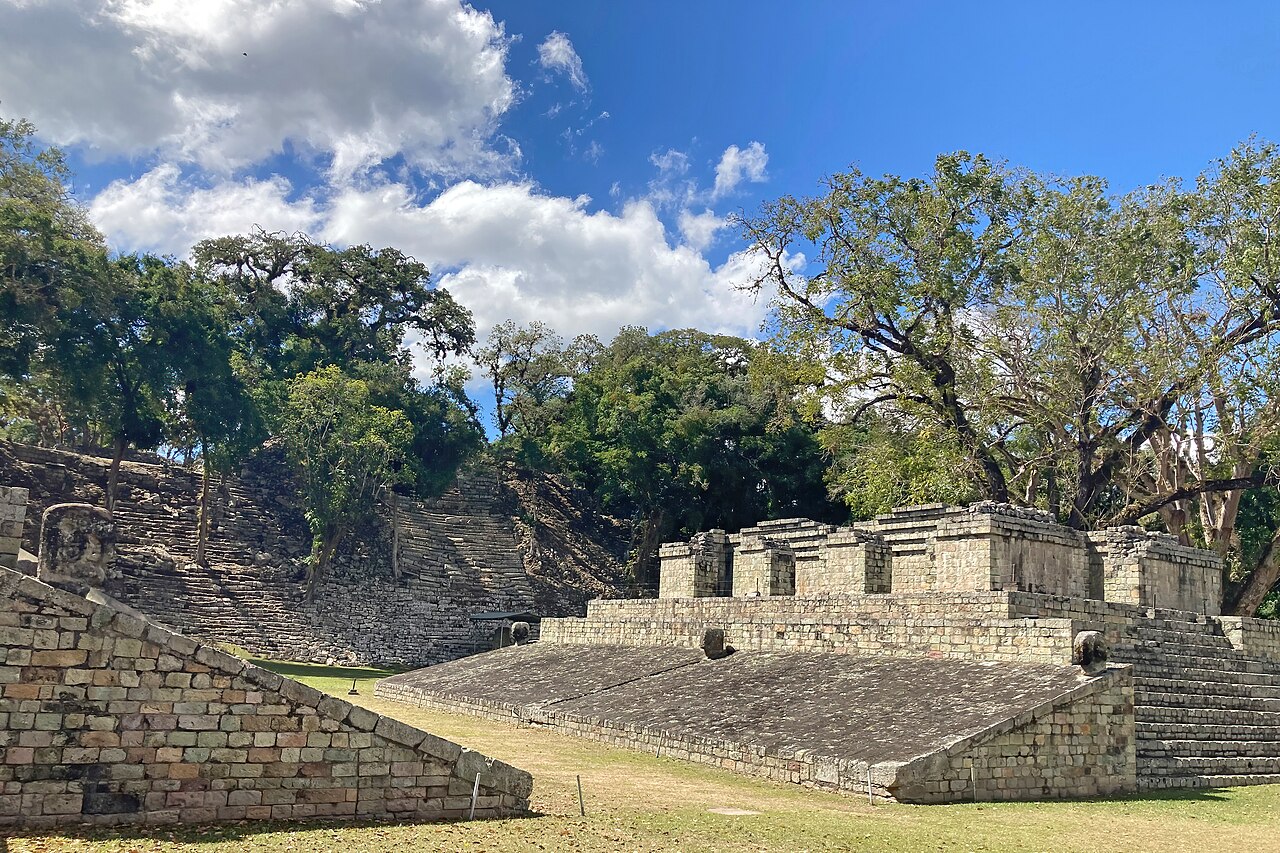
The Main Group concentrates the site’s most significant structures around four interconnected plazas. The Great Plaza holds the highest concentration of free-standing stelae of any Maya site, each portraying a named king in elaborate ceremonial dress, their faces individuated in high relief. The Ball Court — one of the best-preserved in Mesoamerica — features three stone macaw heads set into its sloping walls. Dominating the southern end of the complex, the Acropolis is a multi-layered royal compound whose internal tunnels (several open to guided visits) cut through three successive versions of the main pyramid, revealing the architectural logic of Maya construction: each new ruler built over, and monumentalised, the work of predecessors.
The Hieroglyphic Stairway is the site’s most celebrated single monument. Its 63 steps are carved with 2,200 individual glyphs forming the longest Maya inscription ever discovered, recounting the dynastic history of Copán’s rulers in compressed, allusive text. The adjacent Sculpture Museum, set in a purpose-built building near the site entrance, houses original carved panels removed for conservation and a full-scale painted replica of the Rosalila Temple — one of the few examples of a completely preserved Classic Maya temple facade, with its original polychrome stucco intact. Together, the outdoor ruins and the museum provide an unusually complete picture of how a major Maya royal centre actually looked and functioned.
Getting there: From Tegucigalpa, drive west on CA-5 toward San Pedro Sula, then south on CA-11 to Copán Ruinas — approximately 5 hours total on paved roads. Alternatively, fly from Toncontín International Airport (TGU) to San Pedro Sula (SAP), about 1 hour, then continue by road (3 hours). Several shuttle services and organised day-trips depart from San Pedro Sula. Allow: A minimum of one full day for the ruins and Sculpture Museum; two days if you intend to walk the buffer-zone trails or visit the Las Sepulturas residential complex. Best for: History and archaeology travellers, epigraphy enthusiasts, photographers focused on pre-Columbian stonework, and anyone combining Honduras with the Guatemalan Maya circuit (the Guatemalan border crossing at El Florido is 12 km from Copán Ruinas, giving straightforward access to Quiriguá and Tikal).
Frequently Asked Questions
How many UNESCO World Heritage Sites are near Tegucigalpa?
Honduras has one UNESCO World Heritage Site: the Maya Site of Copán, inscribed in 1980. It lies approximately 350 kilometres west of Tegucigalpa, near the Guatemalan border, and is the only site of this designation in the country. No other UNESCO properties are located within a practical day-trip range of the capital.
How do I get from Tegucigalpa to Copán?
The most straightforward route is to drive west on the CA-5 highway toward San Pedro Sula, then take CA-11 south to Copán Ruinas — roughly 5 hours on paved roads. If you prefer not to drive, fly from Tegucigalpa to San Pedro Sula (about 1 hour) and continue by shuttle or rental car for another 3 hours. Organised transfers also depart from San Pedro Sula hotels and are easy to arrange on arrival.
What is the best time of year to visit Copán?
The dry season, from November through April, offers the most comfortable conditions: clear skies, cooler temperatures in the valley (typically 22–28 °C), and firm paths through the jungle buffer zone. The wet season (May–October) brings daily afternoon rain but also lush green vegetation and far fewer visitors. The site is open year-round; early morning visits in any season allow you to walk the Great Plaza before organised tour groups arrive.
What makes Copán different from other Classic Maya sites?
Copán is distinguished above all by the sophistication and volume of its hieroglyphic inscriptions and the three-dimensional quality of its stone sculpture — traits that set it apart from larger but less text-rich sites such as Tikal or Chichén Itzá. The Hieroglyphic Stairway, with 2,200 glyphs, is the longest Maya inscription ever found. The site’s stelae portray individual rulers with portrait-like realism unusual in Maya art, and the on-site Sculpture Museum preserves the original polychrome Rosalila Temple facade, giving visitors a rare sense of how these monuments appeared when newly built.


.jpg)
