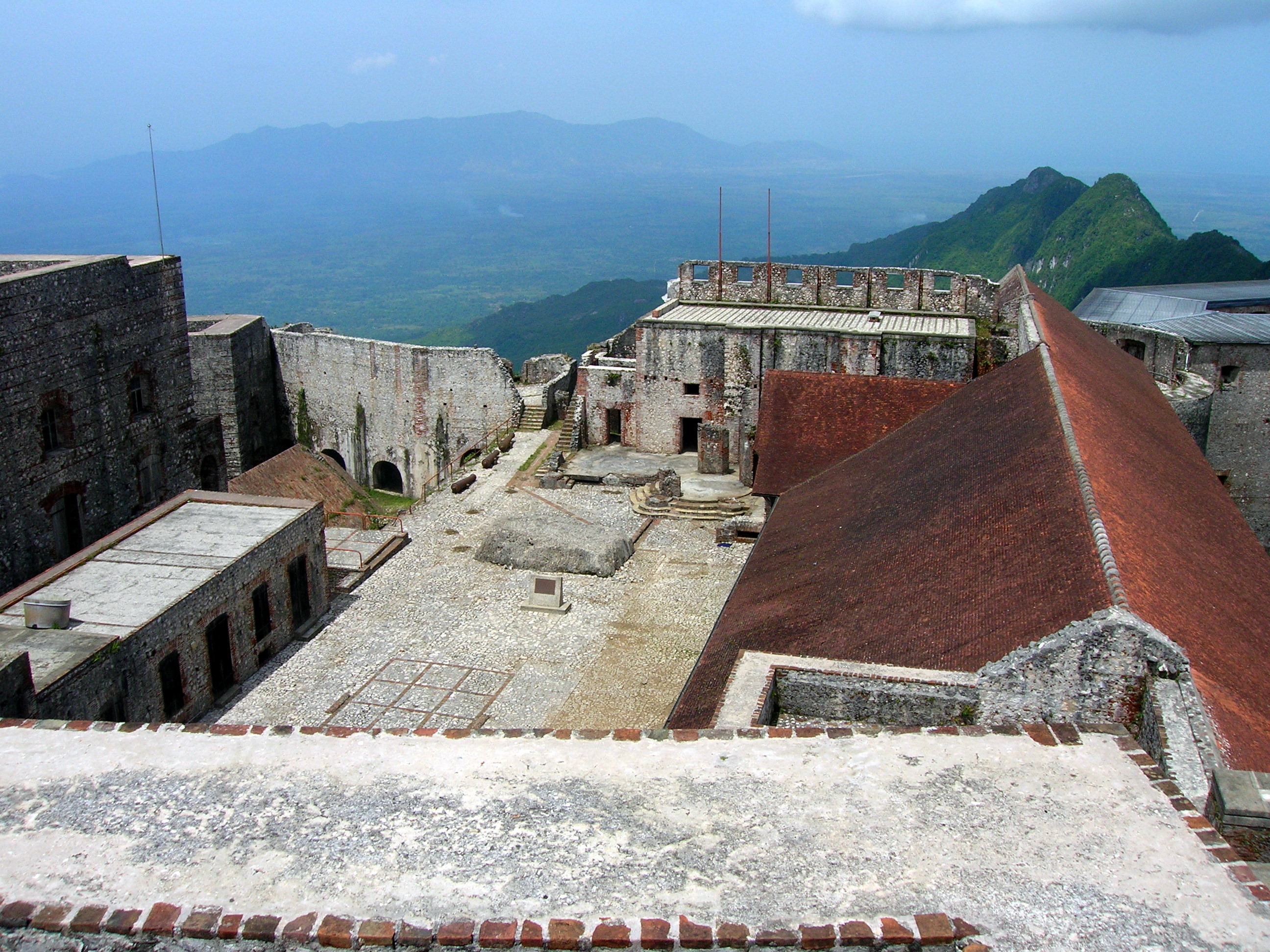
Haiti’s sole UNESCO World Heritage Site sits 250 kilometres north of Port-au-Prince: a complex of early 19th-century monuments built by King Henri Christophe to defend the world’s first Black republic — including La Citadelle Laferrière, the largest fortress in the Americas. From Cultural Heritage Online.
National History Park — Citadel, Sans Souci, Ramiers 250 km north · 1 hr flight + 1 hr road
The National History Park groups three interrelated monument complexes on and around the Bonnet à l’Évêque massif near the northern city of Cap-Haïtien. UNESCO inscribed the site in 1982 — its Outstanding Universal Value resting not only on the architecture itself but on what it represents: the only successful slave revolt in history that produced an independent nation. The monuments were built between 1806 and 1820 by Henri Christophe, who had fought alongside Toussaint Louverture, then ruled the northern kingdom of Haiti until his death in 1820. Nothing remotely comparable in scale or ambition was being constructed elsewhere in the Caribbean at the time.
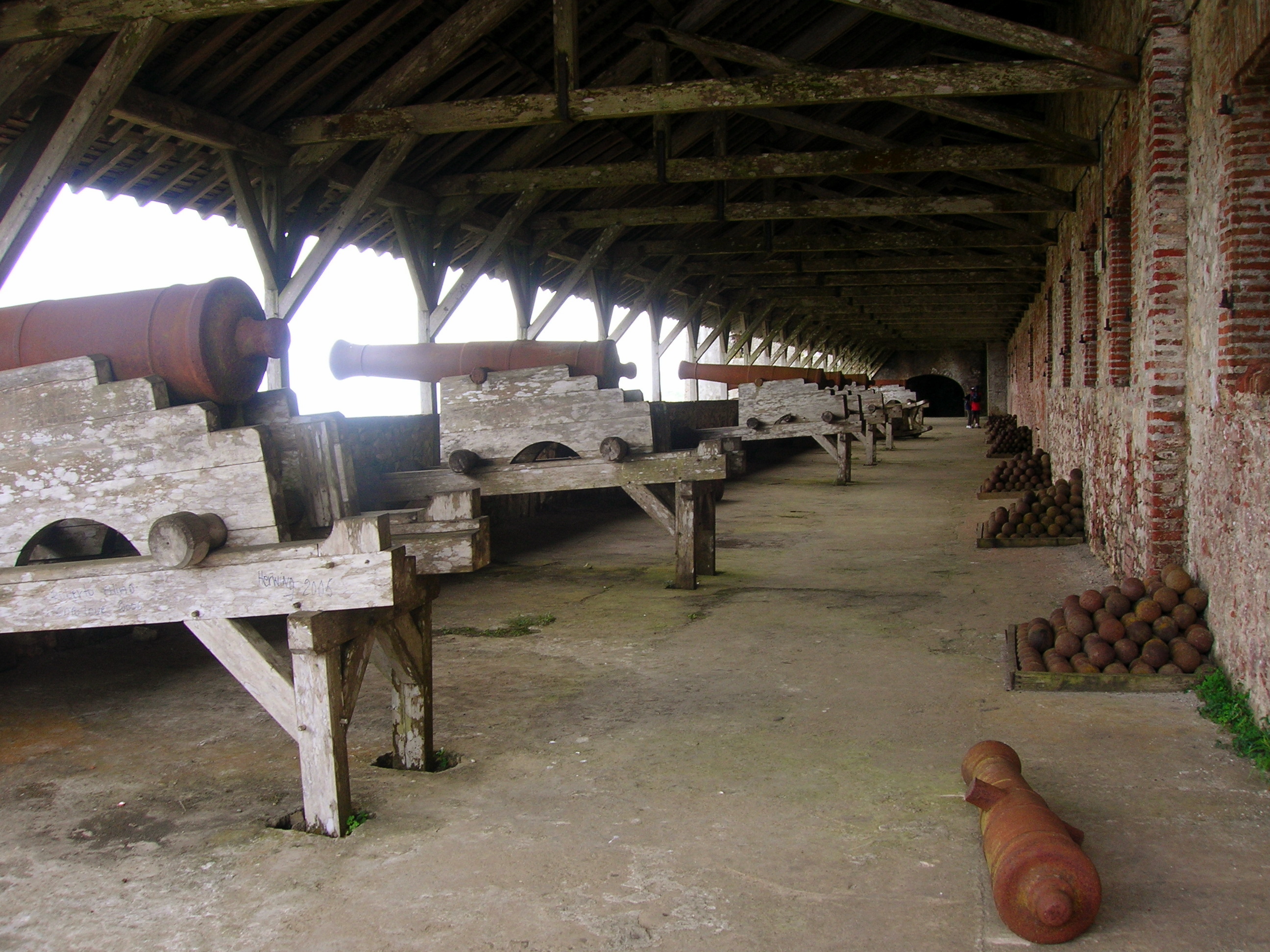
La Citadelle Laferrière — also known as the Citadelle Henry — occupies a ridge at 970 metres above sea level, reached from the village of Milot by a steep 6-kilometre path on foot or horseback. Construction began in 1806, just two years after Haitian independence, and continued for fourteen years with a workforce of up to 20,000 people — formerly enslaved men and women who had survived the revolution. The fortress was conceived as the last line of defence against French reconquest: its walls reach 40 metres in height and 4 metres in thickness; its prow-shaped southern bastion is designed to deflect cannon fire the way a ship’s hull deflects water. Inside, 163 bronze cannons remain in position along the battlements, many of them cast in France for a different army and captured during the war of independence. Pyramids of iron cannonballs are still stacked along the walls. The Citadelle was never used in combat. France formally recognised Haitian sovereignty in 1825, and the fortress became a symbol rather than a working military installation within a decade of its completion.
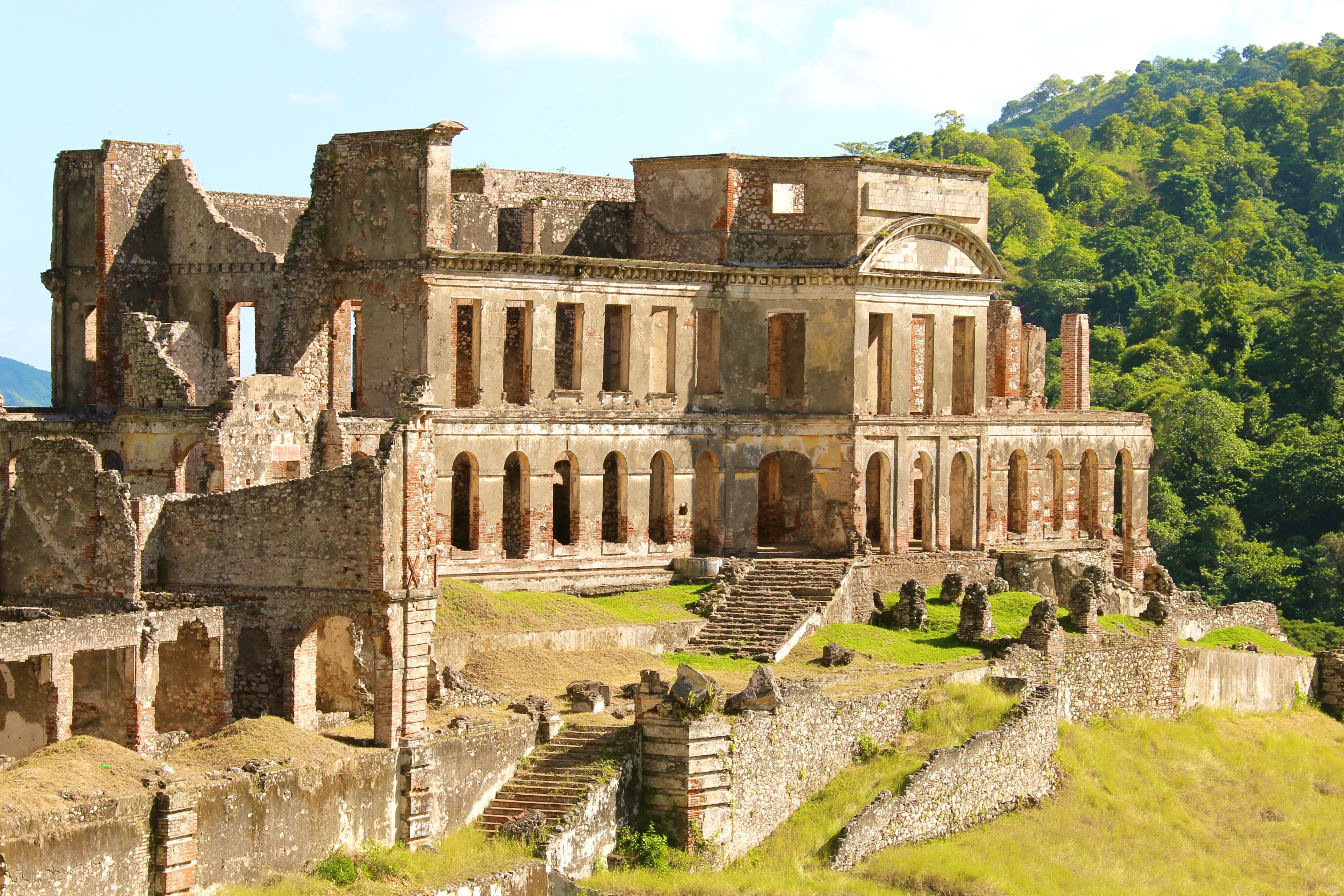
At the foot of the mountain in Milot, Sans Souci Palace (1813) served as Christophe’s royal court. The name is taken from Frederick the Great’s Prussian residence, but the building itself was adapted to tropical conditions — with large open galleries, a system of mountain-stream cooling channels running beneath the floors, and a setting that made the most of the surrounding landscape rather than imposing a formal European garden plan on it. The 1842 earthquake destroyed much of the structure; what remains is a sequence of roofless Baroque rooms whose scale still communicates the ambition of the original project. The Ramiers group of smaller supporting forts on the ridges above completes the defensive system designed by Henri Christophe’s military engineers.
A note on travel conditions: Port-au-Prince suffered catastrophic damage in the January 2010 earthquake, which killed an estimated 316,000 people and destroyed much of the city centre. The UNESCO site near Cap-Haïtien sustained no damage. However, security conditions across Haiti have been severely disrupted by gang violence since 2021, and as of 2026 the northern department around Cap-Haïtien remains significantly more accessible than the capital. Any visit requires thorough research of current conditions, coordination with local operators, and up-to-date government travel advisories. The Citadelle itself remains physically intact and staffed, and guided visits continue to operate for those who make the journey.
Getting there: Domestic flights from Toussaint Louverture International Airport (Port-au-Prince) to Cap-Haïtien Airport take approximately one hour; road transfers from Cap-Haïtien to Milot take a further 45–60 minutes. From Milot, the path to the Citadelle is 6 km and takes 1–2 hours on foot or 45 minutes by horse (available locally). Allow: A full day from Cap-Haïtien for Sans Souci and the Citadelle; two days recommended to pace the climb and explore the fortifications thoroughly. Best for: Travellers with a serious interest in the Haitian Revolution, colonial history, and military architecture who are prepared to plan carefully around current ground conditions.
Frequently Asked Questions
How many UNESCO World Heritage Sites are near Port-au-Prince?
Haiti has one UNESCO World Heritage Site: the National History Park, inscribed in 1982. It encompasses the Citadelle Laferrière, Sans Souci Palace, and the Ramiers fortifications, all located approximately 250 kilometres north of Port-au-Prince near Cap-Haïtien.
Can visitors currently reach the Citadelle Laferrière?
Visits to the National History Park continue to take place, and the site is physically intact. However, security conditions in Haiti have been severely disrupted since 2021. The northern department around Cap-Haïtien is generally considered more stable than Port-au-Prince. Travellers should check current government travel advisories, book through established local tour operators, and confirm conditions immediately before departure.
What is the best time of year to visit the National History Park?
The driest months in northern Haiti run from December through March, making the climb to the Citadelle more manageable. The rainy season peaks between April and June and again in September and October, when the mountain path to the fortress can become muddy and slippery. Early mornings offer clearer views from the battlements before clouds build on the ridge.
Why was the Citadelle Laferrière built by formerly enslaved people so soon after the Haitian Revolution?
Henri Christophe ordered construction of the Citadelle in 1806 — just two years after independence — because the threat of French military reconquest was immediate and credible. Napoleon had attempted to re-establish slavery in Haiti in 1802, and the possibility of a second French expedition remained real for years after the revolution. The fortress was designed to serve as a mountaintop refuge and final defensive position for the entire population of the northern kingdom if an invasion fleet appeared. Its construction by the same workforce that had won independence gave the project a dual meaning: military practicality and a demonstration, in stone and bronze, that the new republic could build on the scale of the European powers it had defeated.