Vilnius holds one of Eastern Europe’s largest and most architecturally layered medieval old towns, and a 45-minute drive places visitors at Kernavė, the ancient capital destroyed by the Teutonic Knights and now preserved as a UNESCO archaeological reserve. Both sites together span more than three thousand years of continuous human presence on Lithuanian soil. From Cultural Heritage Online.
Vilnius Historic Centre Within the city
Inscribed by UNESCO in 1994, the Historic Centre of Vilnius covers 3.6 square kilometres and contains an unusually dense concentration of Gothic, Renaissance, Baroque, and Neoclassical buildings within close walking distance of one another. The city served as the capital of the Grand Duchy of Lithuania from the 14th to the 18th century — at its greatest extent one of the largest states in medieval Europe, stretching from the Baltic to the Black Sea. That political weight drew architects, merchants, and religious orders from across the continent, and each left a distinct architectural imprint on the same compact urban fabric.
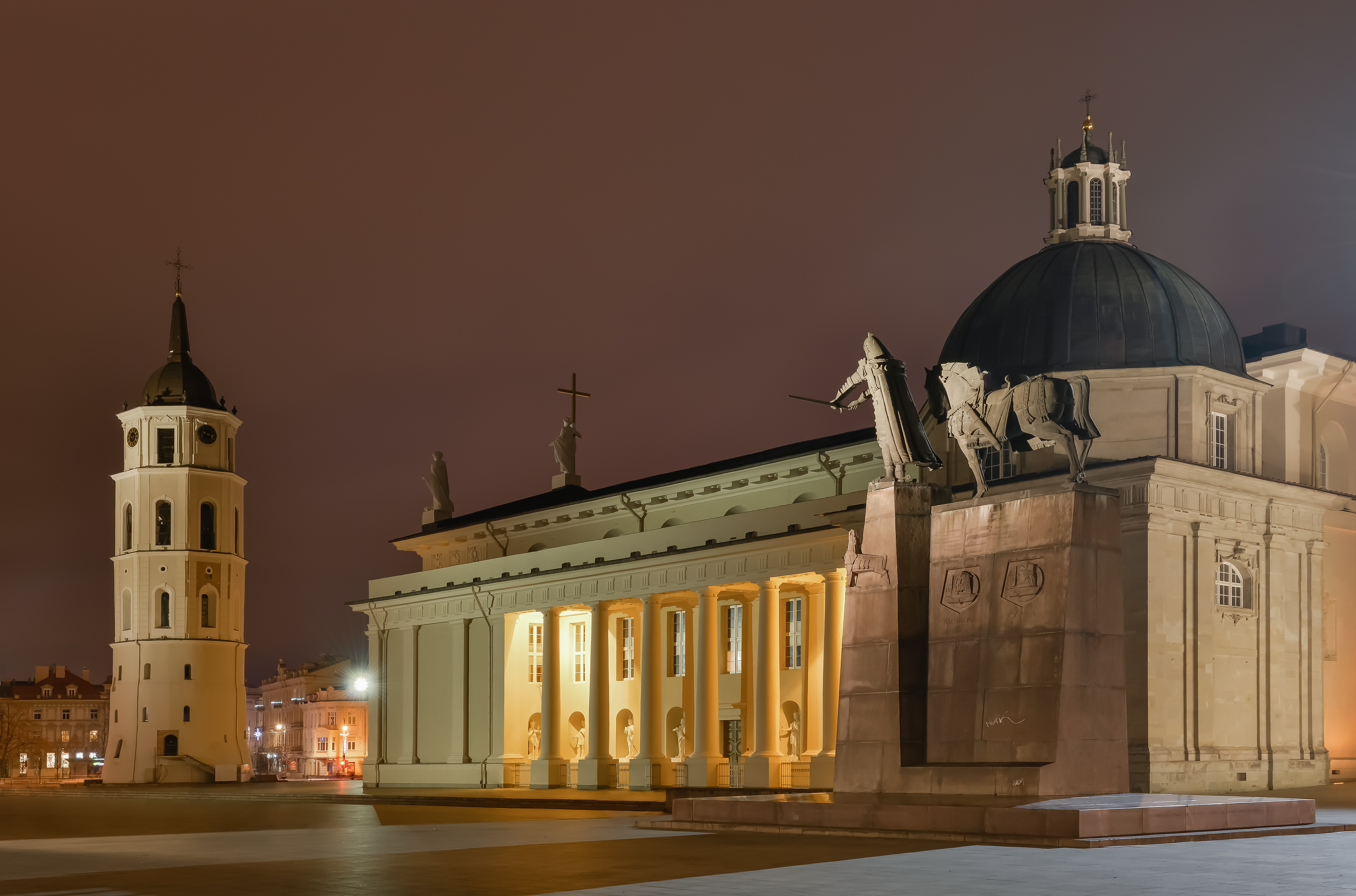
The Cathedral of Vilnius anchors the northern edge of the Old Town. Its present neoclassical exterior dates from an 18th-century reconstruction, but the structure stands on medieval foundations, and the crypt below holds the remains of several Grand Dukes of Lithuania. A few streets south, Vilnius University — founded in 1579 and the oldest university in the Baltic states — occupies a complex of thirteen interconnected courtyards. Walking from one courtyard to the next is to move through five centuries of architectural history: Gothic vaulting gives way to Renaissance arcades and then to Baroque ornament without a single break in the urban fabric.
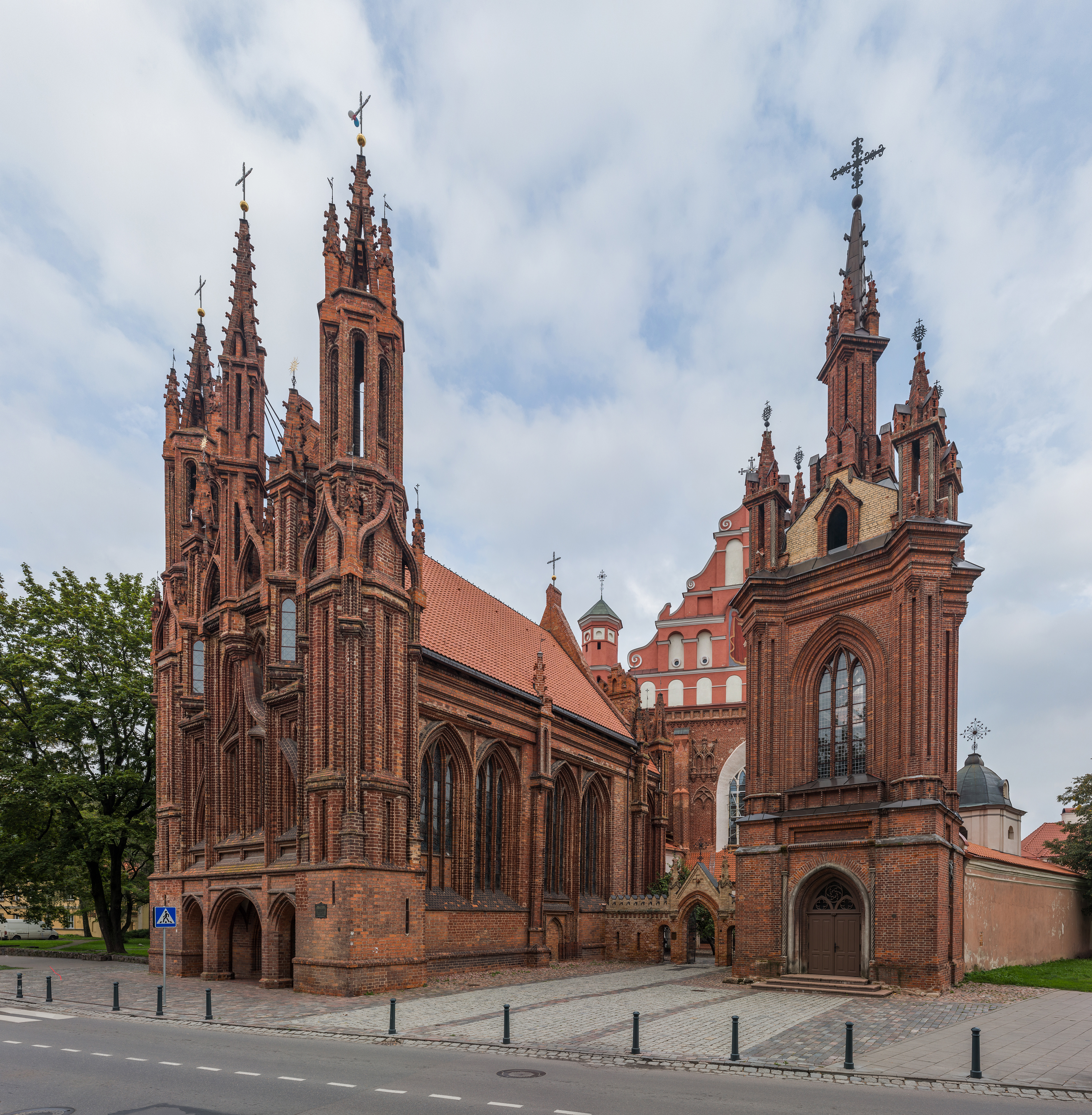
St Anne’s Church, completed between 1495 and 1500, is built entirely of red brick shaped into 33 different moulded forms. The story that Napoleon, passing through in 1812, admired it so extravagantly that he wanted to carry it back to Paris on his palm is almost certainly apocryphal — but it signals what even a cursory glance confirms. A short walk away, the Church of St Peter and St Paul (1668–1704) presents a whitewashed Baroque exterior that gives little warning of what lies inside: some 2,000 stucco figures covering virtually every surface, forming one of the most elaborate church interiors in the Baltic region.
Getting there: The Historic Centre is walkable from any central hotel; the Cathedral Square is roughly 10 minutes on foot from Gediminas Avenue. Allow: At least a full day for the Cathedral, University courtyards, St Anne’s, and St Peter and St Paul. Best for: Travellers interested in medieval urban history, Baroque architecture, and the political history of Eastern Europe.
Kernavė Archaeological Site 35 km — approx. 45 min by road
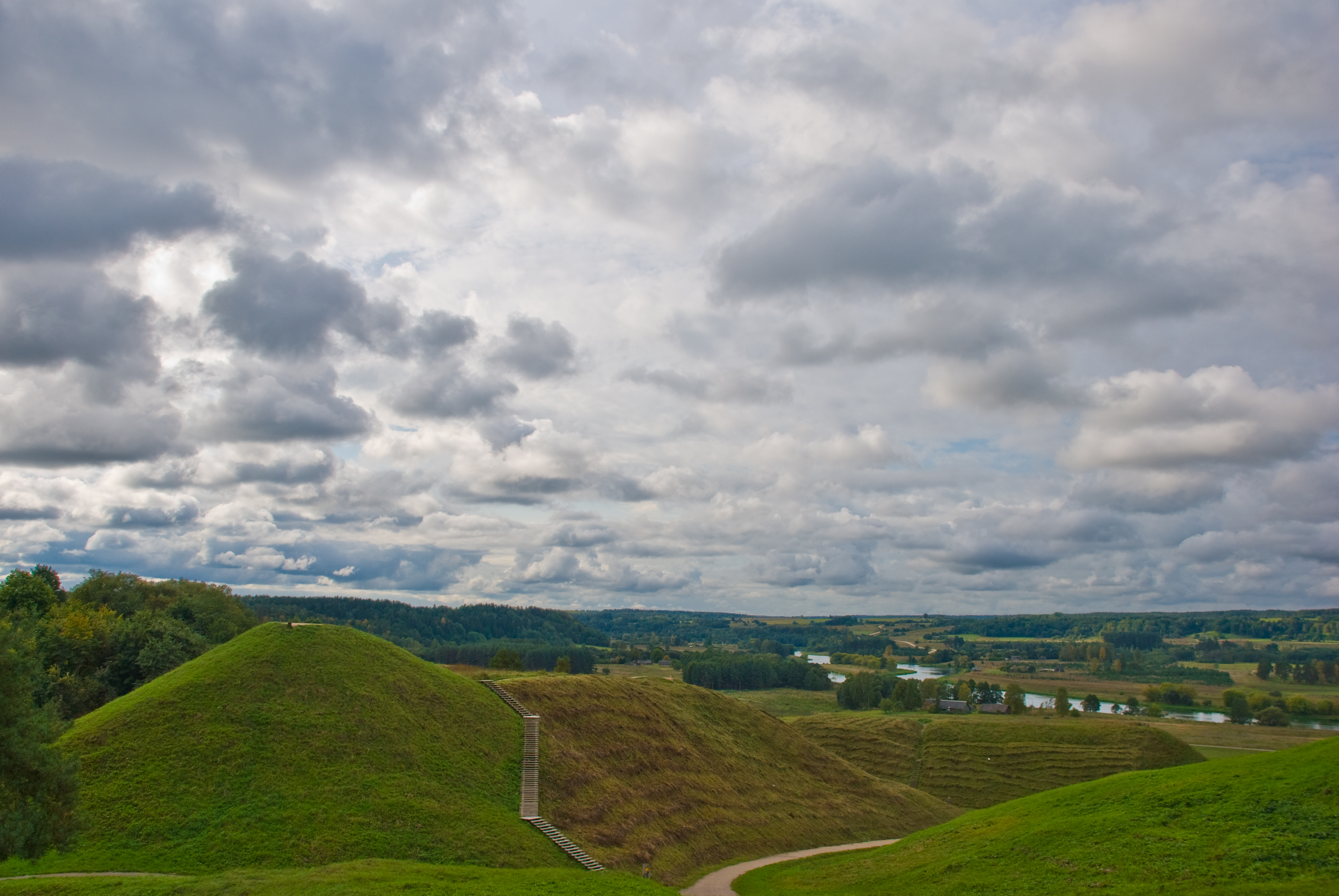
Thirty-five kilometres northwest of Vilnius, the Kernavė Archaeological Site (Cultural Reserve of Kernavė) was inscribed by UNESCO in 2004 as an outstanding example of the interchange of human values over nearly five millennia. The site preserves four prominent hillfort mounds rising from the Neris River valley, the result of continuous and overlapping occupation from the 10th century BC through to the 18th century AD. Archaeological investigation has revealed layer upon layer of settlement, from prehistoric earthworks to the remains of a medieval Lithuanian town.
In the 13th century Kernavė functioned as an early urban centre of the emerging Lithuanian state — arguably its first capital before political power shifted definitively to Vilnius. The town that developed at the foot of the mounds flourished briefly but intensely before the Teutonic Knights razed it in 1390. The town was never rebuilt. What survived was the landscape itself: the mounds, the valley, and the accumulated archaeological record beneath both. Today the Kernavė Museum displays finds from excavations spanning more than a century, and the site hosts an annual archaeology festival each July that draws experimental archaeologists and craftspeople from across Europe.
The visual impact of the mounds is best understood from the valley floor, looking upward at the steep grass-covered slopes against the river bend. The contrast with the dense urban fabric of Vilnius — itself only 35 kilometres away — underlines how different the two UNESCO sites are in character. Vilnius rewards close architectural reading; Kernavė rewards a slower, more landscape-oriented attention.
Getting there: By car from central Vilnius, approximately 45 minutes via the A2 motorway toward Ukmergė; turn off at Kernavė. Public buses from Vilnius Bus Station serve Kernavė several times daily (journey around 1 hour). No direct rail connection. Allow: Half a day including the museum and a walk along the mounds. Best for: Travellers with an interest in prehistoric and medieval archaeology, landscape heritage, and sites away from city crowds.
Frequently Asked Questions
How many UNESCO World Heritage Sites are near Vilnius?
Two UNESCO World Heritage Sites are directly accessible from Vilnius: the Vilnius Historic Centre (inscribed 1994), which is located within the city itself, and the Kernavė Archaeological Site (Cultural Reserve of Kernavė, inscribed 2004), situated 35 kilometres northwest of the city centre. Lithuania has five UNESCO sites in total; the remaining three are located elsewhere in the country.
How do you get from Vilnius to Kernavė?
By car, Kernavė is approximately 45 minutes from central Vilnius via the A2 motorway toward Ukmergė. Public buses depart several times daily from Vilnius Bus Station and take around one hour. There is no direct rail link. Most visitors find the journey straightforward as a half-day trip, with time to visit the Kernavė Museum and walk among the hillfort mounds before returning to the city.
When is the best time to visit Vilnius and Kernavė?
Late spring and summer (May through August) offer the most reliable weather and the longest daylight hours, which is particularly valuable for Kernavė where the outdoor landscape is central to the experience. July is especially worthwhile if your dates coincide with the annual Kernavė archaeology festival. The Vilnius Historic Centre can be visited year-round; winter brings fewer crowds and the chance to see the Baroque streetscapes without the summer tourist peak, though some outdoor café terraces close.
Why is the Grand Duchy of Lithuania significant in European history?
At its greatest territorial extent in the late 14th and 15th centuries, the Grand Duchy of Lithuania stretched from the Baltic coast to the Black Sea, making it one of the largest political entities in medieval Europe. Vilnius served as its capital and became a major centre of cultural and religious pluralism, with Catholic, Orthodox Christian, Jewish, and later Protestant communities all leaving lasting traces in the city’s architecture and intellectual life. The Duchy entered into a dynastic union with the Kingdom of Poland in 1386 and later formed the Polish-Lithuanian Commonwealth, which shaped the political map of Central and Eastern Europe until the late 18th century.