Chiang Mai sits in the mountains of northern Thailand, two UNESCO World Heritage Sites within reach by road: the ancient royal capital of Sukhothai 298 kilometres to the south, and the vast Dong Phayayen–Khao Yai Forest Complex stretching toward the Cambodian border. Both reward the effort. From Cultural Heritage Online.
Historic Town of Sukhothai and Associated Historic Towns 298 km south — 4 hr by car or bus
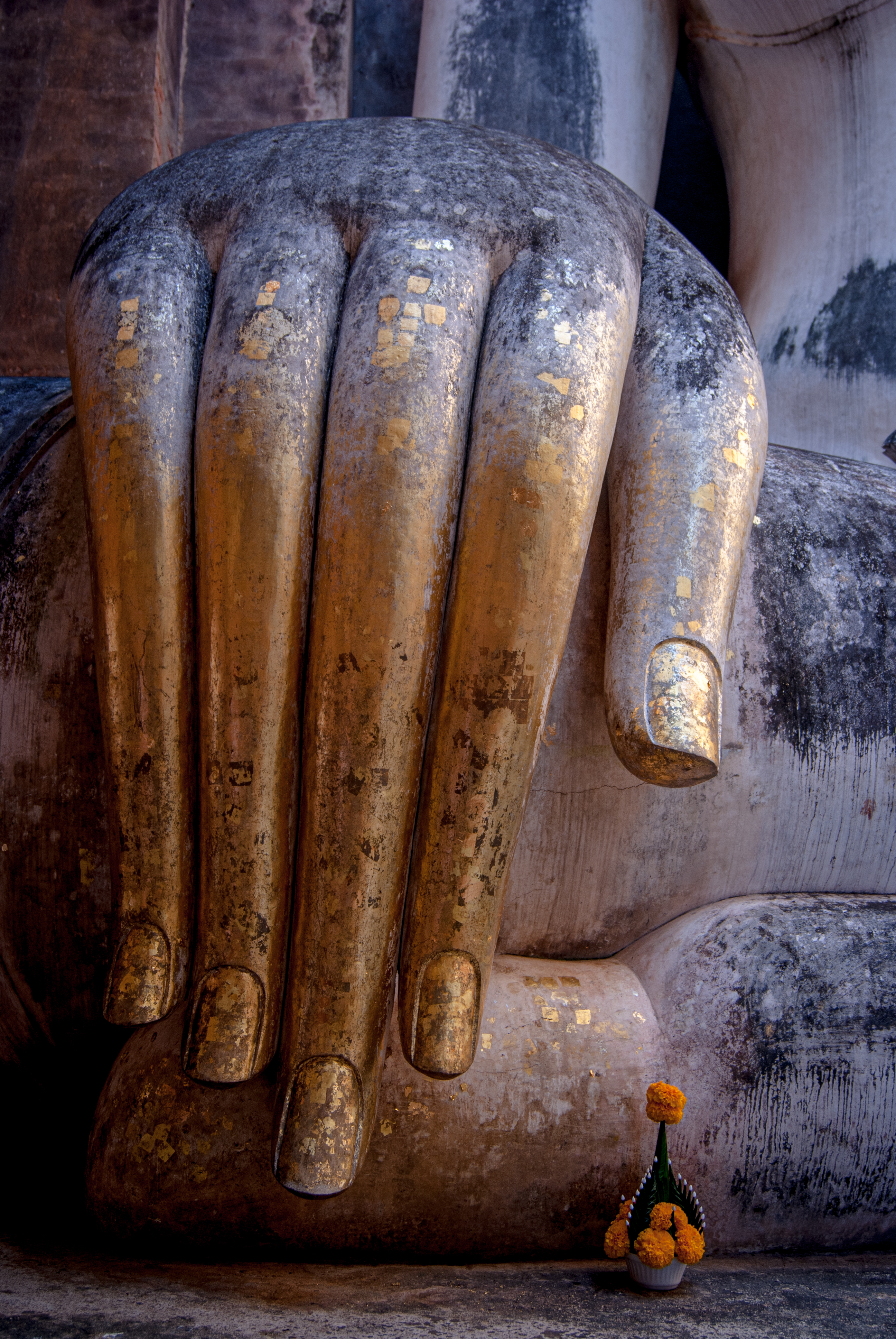
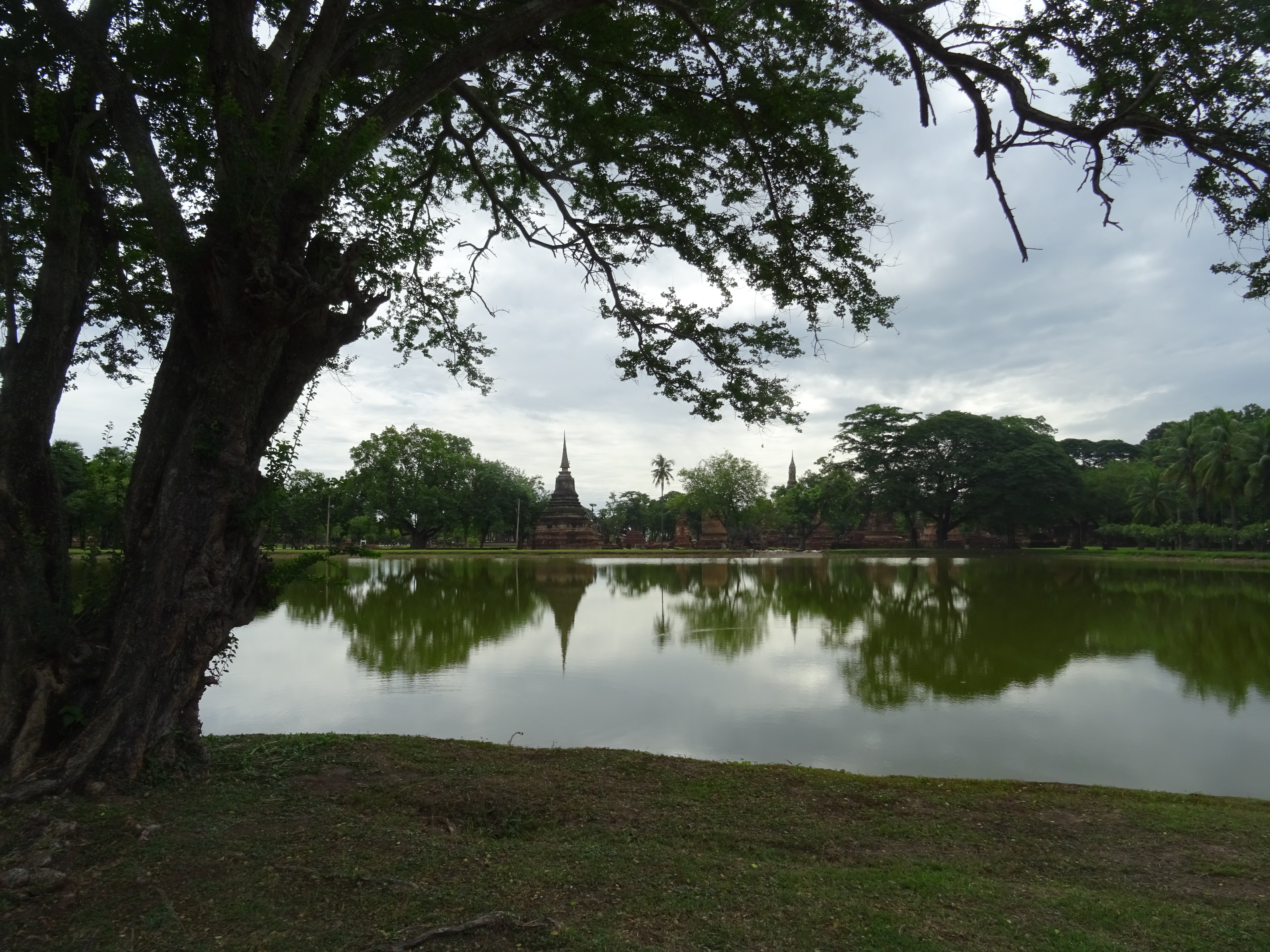
Sukhothai was inscribed on the World Heritage List in 1991 as the cradle of Thai civilisation. Between the 13th and 15th centuries it served as the first capital of a unified Thai kingdom, and the ruins that remain are among the most evocative in Southeast Asia. The Historical Park covers the walled central zone and several satellite temple complexes, all connected by a flat cycling circuit that makes exploration straightforward and pleasant — pedalling between chedis through pools edged with lotus.
Wat Mahathat anchors the park at its centre. The complex contains more than 200 chedis in various states of preservation, their brick profiles rising above the treeline in a way that photographs rarely capture at scale. The adjacent Ramkhamhaeng National Museum holds the 1292 inscription stone of King Ramkhamhaeng — one of the earliest documents in the Thai script — which alone justifies the bus fare. A few hundred metres north, Wat Si Chum shelters a 15-metre stucco Buddha seated inside a narrow mandapa; you enter through a slit in the wall and the figure fills the space entirely.
Fifty kilometres north of the main park, Si Satchanalai Historical Park forms part of the same inscribed property and receives a fraction of the visitors. Its temples climb a forested hillside rather than spread across a plain, and the surrounding town retains the grid of the original garrison city. Travellers with two days can base themselves in new Sukhothai town, cover the central zone on day one and take a songthaew to Si Satchanalai on day two.
Getting there: Direct buses from Chiang Mai Arcade terminal (Nakhonchai Air, Win Tour) take approximately 4 hours; tickets from around 200–260 THB. Renting a car gives flexibility to stop at Si Satchanalai. Allow: One full day for the central park alone; two days to include Si Satchanalai. Best for: History travellers, photographers, cyclists, and anyone who wants to see Thai art and architecture at the point where it first cohered into a national style.
Dong Phayayen–Khao Yai Forest Complex 700 km south — better reached from Bangkok
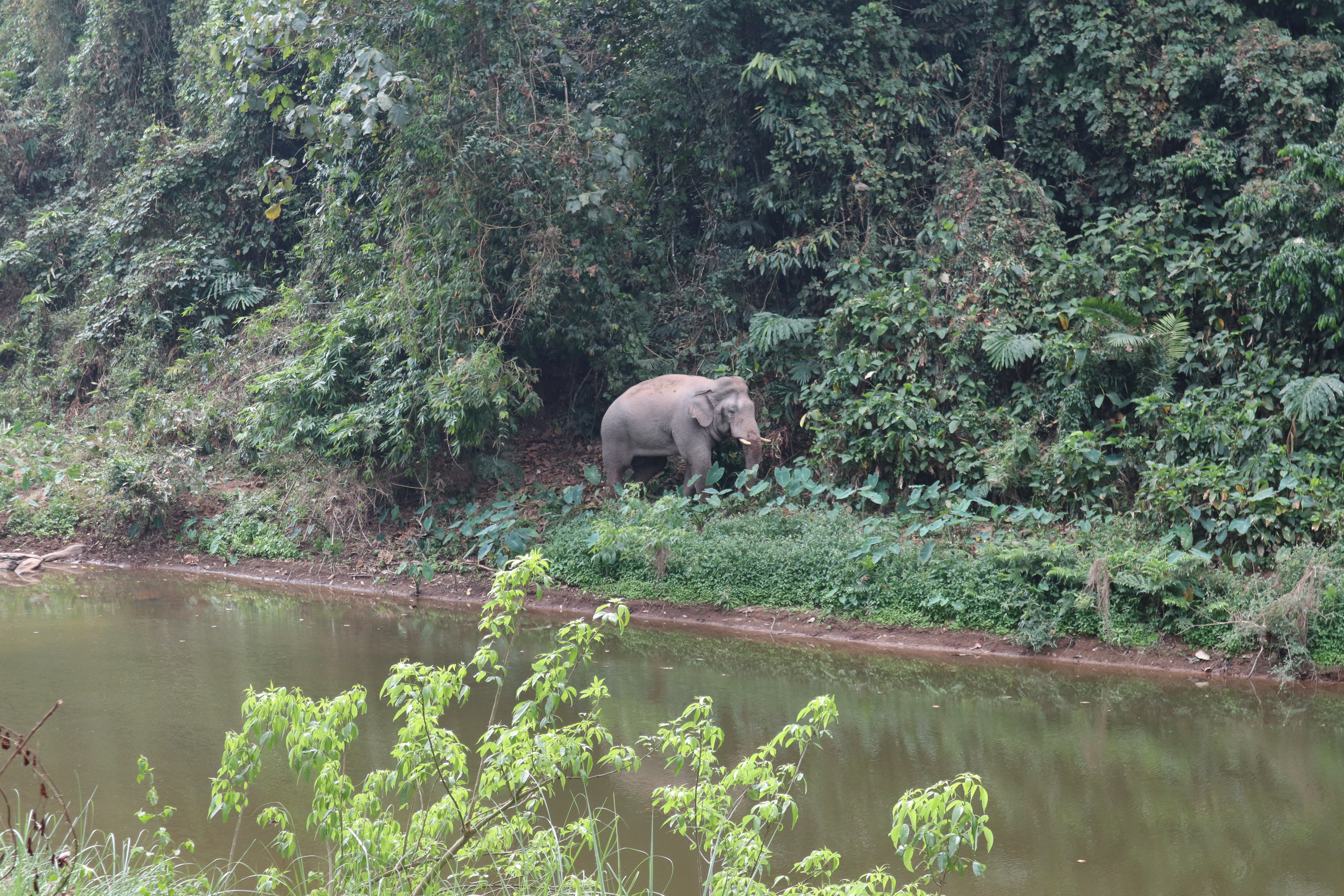
Inscribed in 2005, the Dong Phayayen–Khao Yai Forest Complex is a chain of five contiguous protected areas running 230 kilometres from the Sankamphaeng Range on Thailand’s central plateau to the Cambodian border. The ensemble protects one of the largest intact seasonal tropical forests in Asia: a habitat that supports wild Asian elephants, Indochinese tigers, Siamese crocodiles, and some 400 species of birds, including the great hornbill.
Khao Yai National Park, at the complex’s northwestern end, is the section most accessible to visitors. Established in 1962 as Thailand’s first national park, it offers well-maintained trails through dipterocarp forest, waterfalls, and reliable large mammal sightings, particularly at dawn and dusk on the grassland edges. However, the honest caveat for travellers based in Chiang Mai is one of logistics: Khao Yai is 700 kilometres south, a comfortable two-hour drive from Bangkok and an impractical day trip from the north. Plan it as a dedicated excursion or a stop between Bangkok and the northeast, not as an extension of a Chiang Mai itinerary.
Travellers in the north drawn to wilderness have comparable — if non-UNESCO — options closer to hand. Doi Inthanon National Park, 58 kilometres southwest of Chiang Mai, tops out at Thailand’s highest peak (2,565 m) and harbours montane forest, hill-tribe villages, and two royal garden chedis with fine Lanna views. The Golden Triangle, where Thailand meets Laos and Myanmar at the Mekong confluence, places you within sight of countries where further UNESCO-listed natural heritage begins.
Getting there: Fly Bangkok (1 hr) then drive 2.5 hr to Khao Yai, or overnight train from Chiang Mai to Bangkok then continue by road. Allow: Two nights at minimum to justify the journey from Chiang Mai. Best for: Wildlife and forest travellers; best combined with a Bangkok visit rather than treated as a northern Thailand excursion.
Frequently Asked Questions
How many UNESCO World Heritage Sites are near Chiang Mai?
Thailand has seven inscribed UNESCO World Heritage Sites. Two are reachable from Chiang Mai: the Historic Town of Sukhothai and Associated Historic Towns (inscribed 1991), 298 kilometres to the south, and the Dong Phayayen–Khao Yai Forest Complex (inscribed 2005), located 700 kilometres south and more practically visited from Bangkok. No UNESCO sites are inscribed immediately around Chiang Mai itself, though the ancient temples of the city — including Wat Phra Singh and Wat Chedi Luang — appear on Thailand’s Tentative List for future inscription.
How do you get from Chiang Mai to Sukhothai Historical Park?
The most straightforward option is a direct bus from Chiang Mai Arcade Bus Terminal, operated by companies including Nakhonchai Air and Win Tour. Journey time is approximately four hours; fares start around 200–260 THB. Buses drop passengers in new Sukhothai town, from where songthaews (shared pick-up trucks) cover the 12 kilometres to the Historical Park entrance. Renting a car or hiring a private driver gives more flexibility, particularly if you intend to visit Si Satchanalai Historical Park the following day. Flying via Sukhothai Airport (regular connections from Bangkok) is an option for travellers coming from the south rather than from Chiang Mai.
Can you combine Sukhothai with other heritage sites on a single trip from Chiang Mai?
Yes, with two days. The central zone of Sukhothai Historical Park warrants a full first day; Si Satchanalai Historical Park, 50 kilometres north and part of the same UNESCO property, is a natural second day by songthaew or rented bicycle. The best season is November through February, when temperatures remain manageable for outdoor exploration and the lotus ponds are in bloom. July and August bring heavy rains that can make unpaved paths muddy but also clear the air and reduce crowds considerably — the ruins look striking under stormy skies.
What makes Sukhothai historically significant?
Sukhothai served as the capital of the first sovereign Thai state from roughly 1238 to the late 14th century, when regional power shifted south to Ayutthaya. The kingdom is credited with developing early Thai writing — the stone inscription of King Ramkhamhaeng, dated 1292 and displayed in the Ramkhamhaeng National Museum, is among the oldest surviving examples of the Thai script. The architectural style that emerged here, characterised by the lotus-bud chedi and the elongated flame-topped Buddha image, became the template for Thai religious art for centuries. The site’s Outstanding Universal Value rests on this foundational role: Sukhothai is where a distinct Thai cultural identity first took material form.