
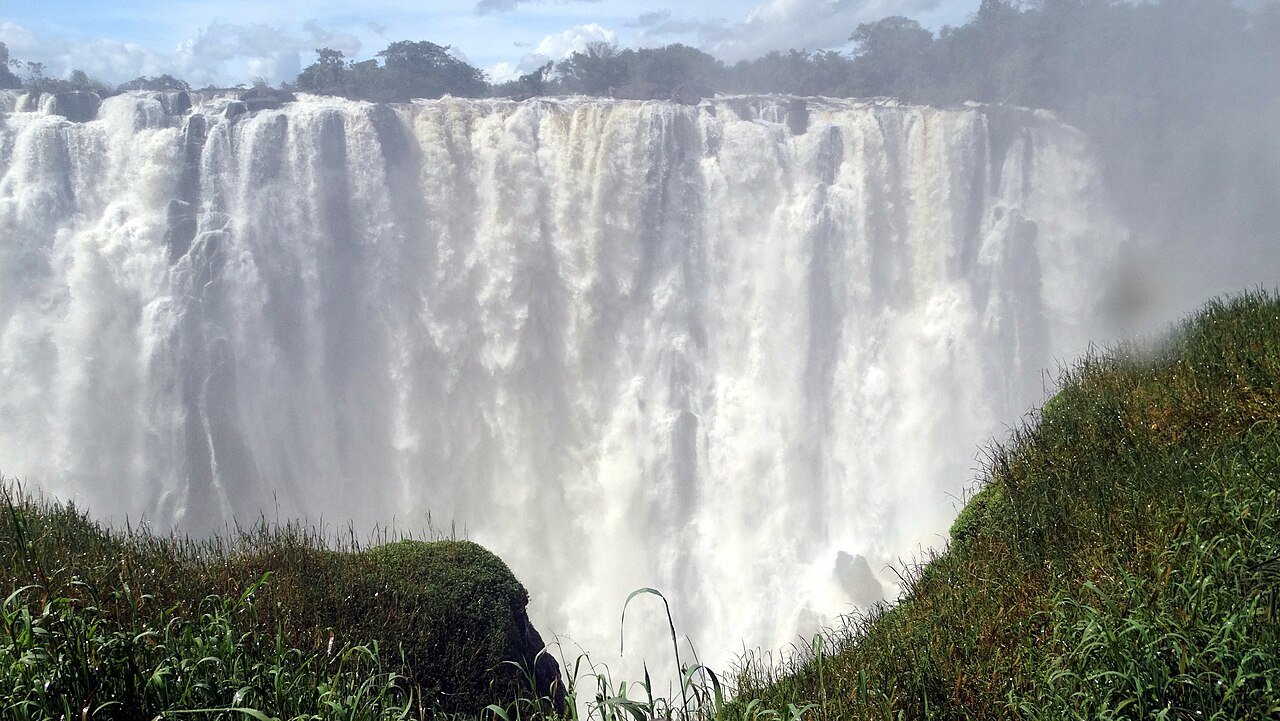
Zambia holds one UNESCO World Heritage Site — the colossal Mosi-oa-Tunya / Victoria Falls, shared with Zimbabwe and widely regarded as the most dramatic single curtain of falling water on Earth. The journey from Lusaka takes under an hour by air or a long half-day by road, and the payoff is a roar you feel in your chest before you see a single drop. From Cultural Heritage Online.
Mosi-oa-Tunya / Victoria Falls 470 km southwest · 1 hr by air, 6–7 hr by road

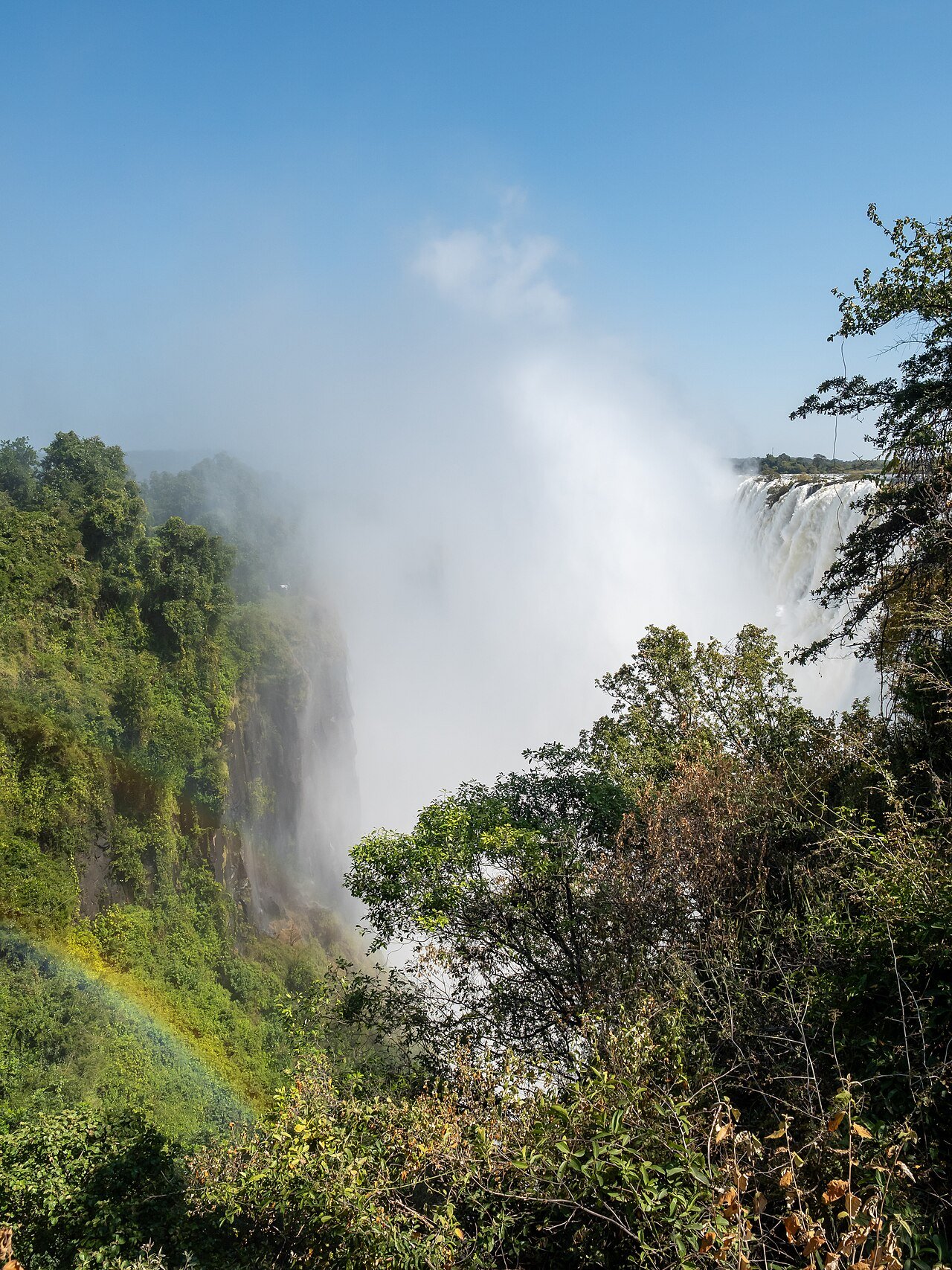
The Lozi people named it Mosi-oa-Tunya — “the smoke that thunders” — and the name is precise. At full flood, between February and May, a permanent cloud of spray rises more than 400 metres and is visible from 50 kilometres away. The falls stretch 1,708 metres across the Zambezi River and plunge up to 108 metres into the Batoka Gorge below, making this the largest single curtain of falling water in the world by the combined measure of width and height. UNESCO inscribed the site in 1989 for its outstanding natural beauty and the geological spectacle of the basalt gorges carved over millions of years.
Scottish explorer David Livingstone reached the falls by canoe in November 1855 and named them after Queen Victoria, though the site had been known and revered by local communities for centuries before his arrival. Today the Zambian bank gives you the most direct frontal view of the Main Falls during peak water season — the spray hits you seconds after you reach the first viewpoint, coating your clothes and lenses in a fine mist that smells of wet stone and river silt. Walk along the cliff-edge path and the sound builds from a low rumble to something that makes normal conversation impossible.
Between August and December, when the Zambezi runs lower, a natural rock pool forms at the very lip of the Eastern Cataract on the Zambian side: the Devil’s Pool. Guided swims take you to the edge of the falls themselves, where the current reverses just enough to hold you in place while the water drops away below. It is one of the more vertiginous experiences available to travellers anywhere on the continent. The adjacent Mosi-oa-Tunya National Park — the smallest national park in Zambia at just 66 square kilometres — is one of the only places in the country where a small population of southern white rhinoceros roams without a fence.
The town of Livingstone, 15 kilometres from the falls, is the operational base for most visitors. Grade 5 white-water rafting on the Batoka Gorge runs year-round except during the highest floods, and the 111-metre bungee jump from the Victoria Falls Bridge — which straddles the border between Zambia and Zimbabwe — has been operating since 1994. Sunset river cruises on the upper Zambezi offer a quieter contrast: hippos surface within arm’s reach of flat-bottomed boats while the light turns amber over the western bank.
Getting there: Proflight Zambia and Zambia Airways operate daily flights from Lusaka Kenneth Kaunda International Airport to Harry Mwanga Nkumbula International Airport in Livingstone (approx. 1 hour). By road, the Kafue Road (M9) connects Lusaka to Livingstone in approximately 6–7 hours depending on traffic and road conditions. Car hire is available in Lusaka; shared minibuses depart from Lusaka’s inter-city terminal but involve one or more changes. Allow: A minimum of two full days — one for the falls and National Park, one for activities. Three to four days gives time for the gorge rafting, sunset cruise, and a rhino walk. Best for: Nature and adventure travellers, families with older children, photographers chasing peak-flood spray or low-water Devil’s Pool access.
Frequently Asked Questions
How many UNESCO World Heritage Sites are near Lusaka?
Zambia has one UNESCO World Heritage Site: Mosi-oa-Tunya / Victoria Falls, inscribed in 1989 and shared with Zimbabwe. It lies approximately 470 kilometres southwest of Lusaka. Visitors who cross into Zimbabwe from the falls can also reach Great Zimbabwe National Monument (about 250 km from the falls) and Hwange National Park within a longer regional itinerary.
How do I visit Victoria Falls from Lusaka?
The fastest option is a domestic flight from Lusaka to Livingstone Airport — roughly one hour, with services from Proflight Zambia operating most days of the week. Livingstone is 15 kilometres from the falls and has a range of accommodation from backpacker lodges to luxury riverside camps. From Livingstone, taxis and guided transfers reach the main falls gate in under 20 minutes. Driving from Lusaka takes 6–7 hours via the M9 highway south.
When is the best time to visit Mosi-oa-Tunya from Lusaka?
The answer depends on what you want to see. Peak water season runs from February to May, when the Zambezi is at full flood and the falls produce their most dramatic spray columns — viewpoints become so saturated that waterproof gear is not optional, it is mandatory. The Zambian bank offers superior full-width views during this period. Low-water season, August to December, reveals the rock face beneath the falls, allows access to the Devil’s Pool on the Zambian side, and makes gorge rafting safer and more consistent. The shoulder months of June and July balance reasonable water levels with dry, clear skies.
What makes the Zambian side of Victoria Falls different from the Zimbabwe side?
Both sides share the same UNESCO inscription, but each offers a distinct vantage. The Zambian bank provides a close frontal view of the full width of the falls during high-water months and is the only side with access to the Devil’s Pool, the natural rock swimming hole at the lip of the Eastern Cataract. It also sits adjacent to the Mosi-oa-Tunya National Park, where guided walks can bring you within sight of white rhinoceros — an animal that had become locally extinct before a reintroduction programme in the 1990s. The Zimbabwe side has a longer cliff-edge walk with more individual viewpoint platforms and direct access to the Victoria Falls Bridge bungee jump, though the bridge itself can be crossed from either country.
.jpg)

.jpg)