
Abu Dhabi sits within reach of some of the Arabian Peninsula’s most significant UNESCO-recognised heritage: a 5,000-year-old oasis city in the desert interior, a living falconry tradition at the heart of Emirati identity, and — across the Saudi border — the world’s largest palm oasis. These are not easy drives, but each one answers a different question about how people have survived and thrived in this landscape. From Cultural Heritage Online.
Cultural Sites of Al Ain 160 km east · 1.5 hr by road
The UAE’s only UNESCO World Heritage Site was inscribed in 2011 under the name Cultural Sites of Al Ain. It spans four distinct components — Al Ain Oasis itself, the Hafit prehistoric tombs on Jebel Hafit, the Hill Archaeological Park, and Hili Archaeological Park with Bidaa Bint Saud — each representing a different layer of human settlement across 5,000 years of continuous habitation in the same desert basin.
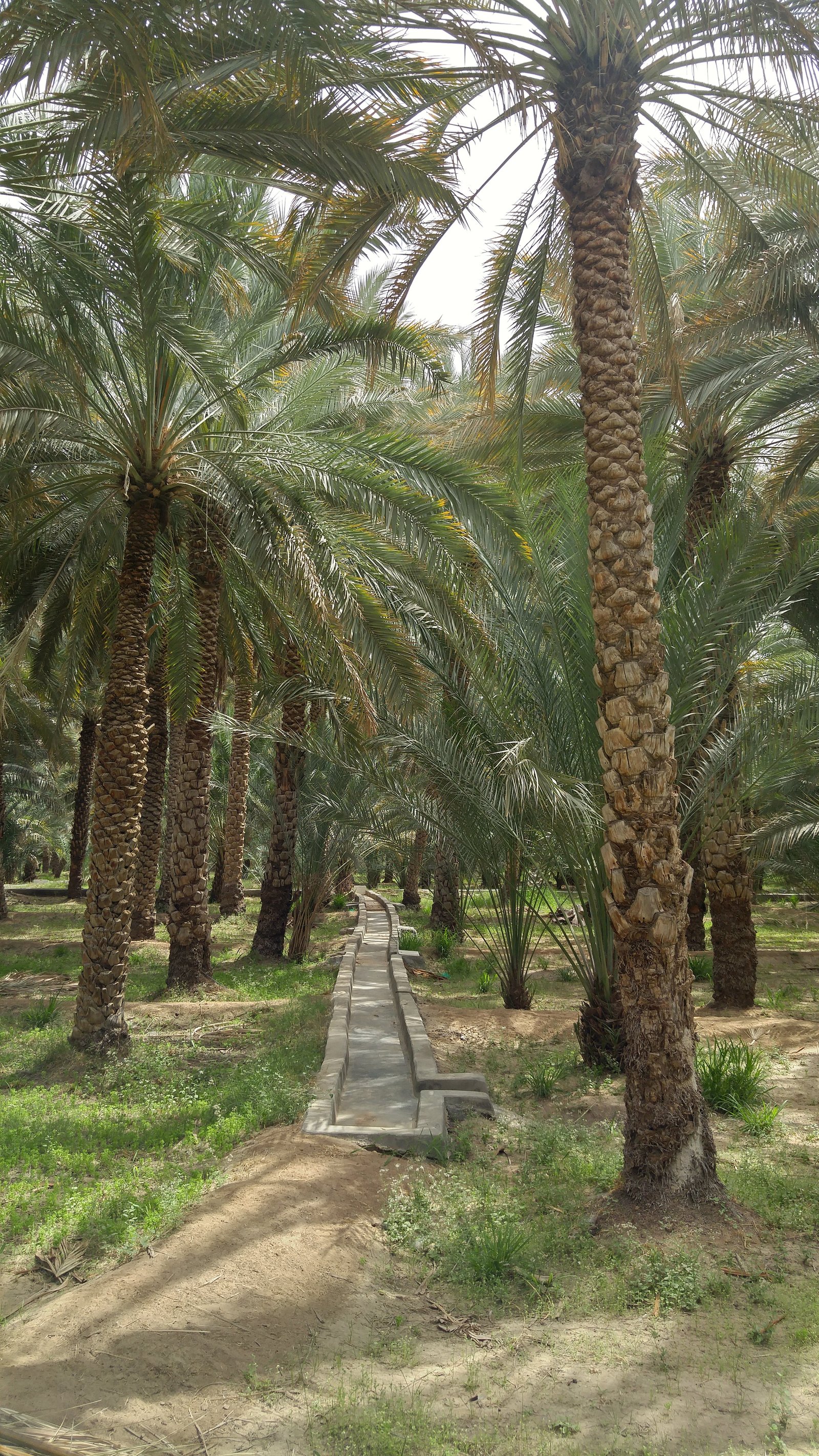
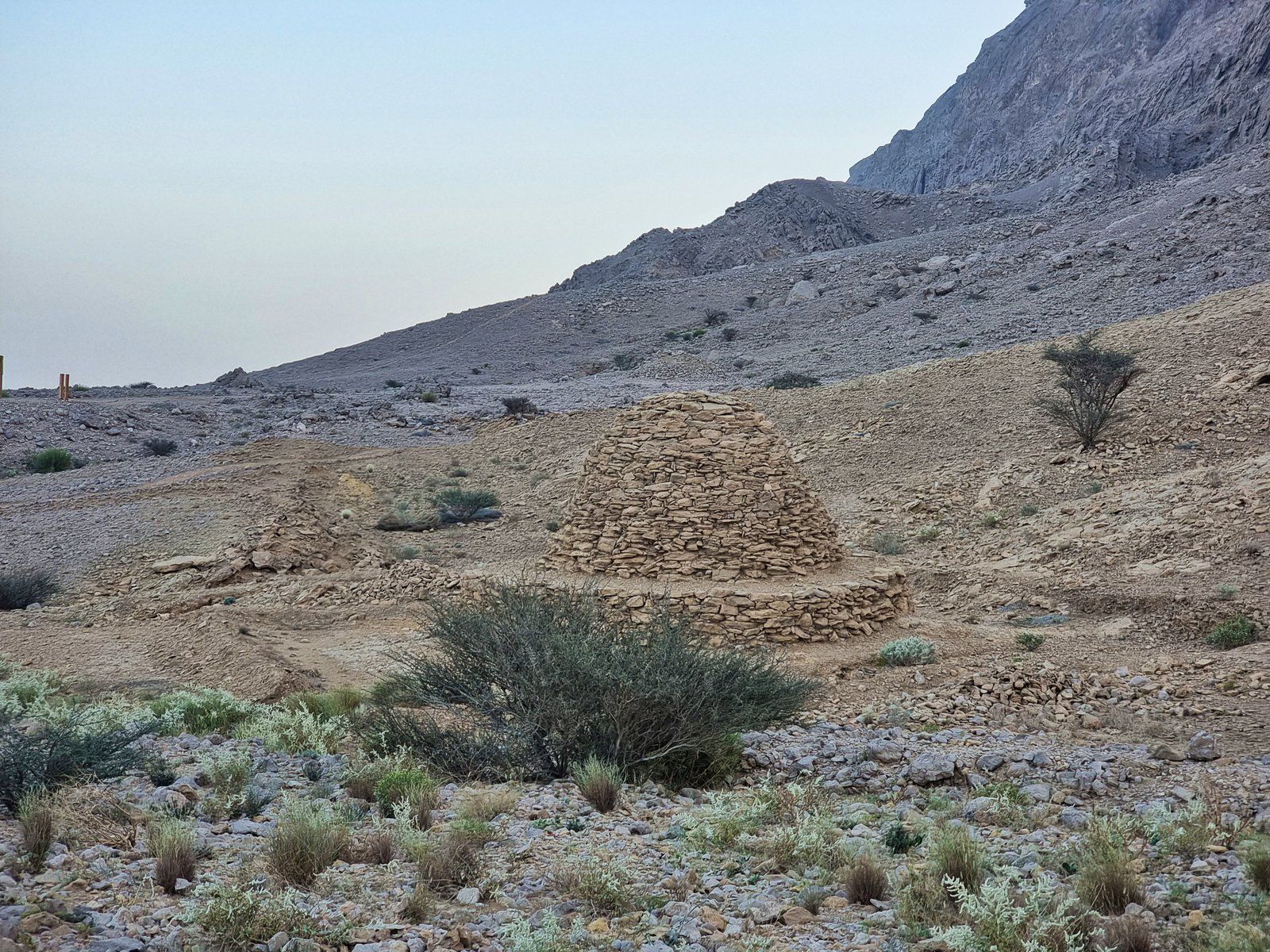
Start at Al Ain Oasis, where a working system of aflaj — hand-dug underground channels dating back 3,000 years — still delivers water from distant aquifers to the roots of roughly 147,000 date palms. Walking the shaded paths in the afternoon, you notice the quiet: the sound of running water in a place that receives under 100 mm of rain per year. The palms reach twelve metres above; the light comes down in thin vertical bars. Then drive south to Jebel Hafit, where the lower slopes hold more than 500 beehive tombs built between 3100 and 2700 BCE. The domes of rough limestone are dry-stacked without mortar, each chamber large enough to hold two or three bodies. Nobody knows who built them with certainty — the culture is called Hafit Period after the mountain itself.
Hili Archaeological Park, on the northern edge of Al Ain, contains the decorated Grand Tomb of Hili: a circular Bronze Age structure with carved relief panels showing human figures and oryx, still upright after 4,000 years. Allow a full day for Al Ain. The oasis, Jebel Hafit, and Hili can be visited in sequence with a car.
Getting there: Drive east on E22 from Abu Dhabi to Al Ain, approximately 160 km, 1.5 hours. Car hire available at Abu Dhabi International Airport. No direct public bus covers all sites. Allow: Full day (8–9 hours) for oasis, tombs, and Hili. Best for: Archaeology enthusiasts, families, those interested in ancient water engineering.
Falconry as Living Heritage Abu Dhabi city · year-round

UNESCO inscribed falconry as Intangible Cultural Heritage of Humanity in 2016, recognising a practice shared across 18 nations — but Abu Dhabi is its global centre. Falconry was the means by which Bedouin communities hunted for food across the Arabian desert for millennia. Today it functions as living culture rather than subsistence: the birds are trained, bred, and cared for within families, passed between generations as both skill and relationship.
The Abu Dhabi Falconers’ Club maintains the tradition actively, and the annual Abu Dhabi International Hunting and Equestrian Exhibition (ADIHEX), typically held in late September, brings together falconers from across Central Asia, Europe, and the Arab world. The Falcon Hospital in Abu Dhabi — treating some 11,000 birds a year — offers guided tours by appointment; standing in a room of hooded peregrines and sakers, each bird’s feathers at a different stage of moult, you get a clear sense of how seriously the craft is taken. A GPS chip is implanted in competition birds. Passports exist for falcons.
Unlike the other sites in this guide, falconry heritage does not require a day trip. It is present in the city — in the falcon souk near the central market, in the patience of handlers at ADIHEX, and in the unmistakable silhouette of a saker riding a forearm above Abu Dhabi’s waterfront.
Getting there: Abu Dhabi Falcon Hospital is approximately 20 minutes by taxi from the city centre. ADIHEX runs at the Abu Dhabi National Exhibition Centre (ADNEC). Allow: 2–3 hours for the Falcon Hospital tour; half a day for ADIHEX. Best for: Cultural travellers, photographers, those interested in the relationship between humans and animals across centuries.
Al-Ahsa Oasis, Saudi Arabia 400 km west · 4–5 hr by road · Saudi visa required
Inscribed by UNESCO in 2018, Al-Ahsa is the largest oasis in the world by area: around 85 square kilometres of date palms — approximately three million trees — in the Eastern Province of Saudi Arabia, near the city of Hofuf. The inscription covers not just the palms but a dense layering of human geography: prehistoric settlements, Ottomon-era mosques, the caravanserai of Ibrahim Palace, traditional souqs, and an agricultural system fed by artesian springs that have flowed without interruption for thousands of years.
The scale is genuinely hard to process from the road. Date palms fill the horizon in every direction. The Ibrahim Palace, built in the eighteenth century under Ottoman influence, covers several hectares; its courtyard is one of the largest enclosed spaces in the Arabian Peninsula. Al-Qarah Mountain, hollowed by caves used as cool-season retreats for centuries, sits at the edge of the oasis and can be walked through in an hour. The traditional Al-Ahsa souq, still active on the same site as its predecessors, sells dates in dozens of varieties — the Khuneizi and Shalabi types are grown nowhere else.
The drive from Abu Dhabi crosses the King Fahd Causeway into Bahrain or, alternatively, takes the direct land border crossing at Al Ghuwaifat. Both routes require a valid Saudi visa, obtainable in advance via the Saudi eVisa portal. The road journey is four to five hours each way, making an overnight stay in Hofuf practical rather than optional.
Getting there: Drive west on E11 to the Saudi border at Al Ghuwaifat, then continue to Hofuf (Eastern Province). Total approximately 400 km, 4–5 hours. Saudi tourist eVisa required — apply online before travel. Allow: Minimum 2 days; 3 days to cover palace, souq, Al-Qarah, and oasis trails. Best for: Travellers combining Gulf itineraries, agricultural and Islamic heritage specialists, those with existing Saudi visa access.
Frequently Asked Questions
How many UNESCO World Heritage Sites are near Abu Dhabi?
The UAE has one UNESCO World Heritage Site: the Cultural Sites of Al Ain, inscribed in 2011. This encompasses four components — Al Ain Oasis, the Hafit prehistoric tombs on Jebel Hafit, the Hill Archaeological Park, and Hili Archaeological Park with Bidaa Bint Saud. Falconry is separately inscribed as Intangible Cultural Heritage of Humanity (2016), with Abu Dhabi as one of the global centres of the practice. The Al-Ahsa Oasis in neighbouring Saudi Arabia, inscribed in 2018, is reachable by road in four to five hours.
What is the best way to visit the Cultural Sites of Al Ain from Abu Dhabi?
Hire a car from Abu Dhabi and drive east on the E22 highway. Al Ain is 160 km away — about 1.5 hours. Start at Al Ain Oasis in the morning before heat peaks; the shaded palm groves are cooler than open sites. Drive south to the Hafit tombs on Jebel Hafit mid-morning, then end at Hili Archaeological Park. The National Museum of Al Ain, adjacent to the oasis, provides good contextual exhibits if you want historical background before walking the sites. Allow a full eight to nine hours.
Can I combine Al Ain and Al-Ahsa in one trip?
Not comfortably in a single day. Al Ain is 160 km east of Abu Dhabi; Al-Ahsa is 400 km west in Saudi Arabia — they are in opposite directions and roughly 550 km apart by road. The practical approach is two separate excursions. Al Ain suits a day trip from Abu Dhabi. Al-Ahsa requires a Saudi eVisa and at least one overnight stay in Hofuf to do the oasis, Ibrahim Palace, and Al-Qarah Mountain justice.
What makes the aflaj irrigation system at Al Ain Oasis historically significant?
Aflaj (singular: falaj) are gravity-fed underground channels that carry water from inland aquifers to agricultural land without pumping. The system at Al Ain dates back approximately 3,000 years, making it one of the oldest continuously operating irrigation networks in the Arabian Peninsula. UNESCO recognised aflaj irrigation systems as Intangible Cultural Heritage in 2006, and the Al Ain examples formed a central part of the 2011 World Heritage inscription. The technique allowed permanent settlement in an environment receiving under 100 mm of annual rainfall, and variants of the same engineering principle appear across Oman, Iran, and North Africa under different names.



.jpg)
