Two UNESCO World Heritage Sites are reachable from Dakar in a single day: Gorée Island, a small island of pink-ochre colonial buildings that served as one of West Africa’s principal slave-trading posts, and the Stone Circles of Senegambia, an extraordinary field of 28,000 laterite pillars stretching across the Sahel some 200 kilometres southeast. Both carry the weight of deep history — one across a narrow harbour, the other across an open savanna. From Cultural Heritage Online.
Island of Gorée 3 km off Dakar — 20-min ferry
Gorée was inscribed in 1978 — among the earliest African sites on the UNESCO list — as a memorial to the Atlantic slave trade and its dehumanising effects. The island, barely 900 metres long, was controlled at different points by the Portuguese, Dutch, British, and French from the fifteenth to the nineteenth centuries. At its peak it held thousands of enslaved people in transit before the Middle Passage to the Americas and Caribbean.
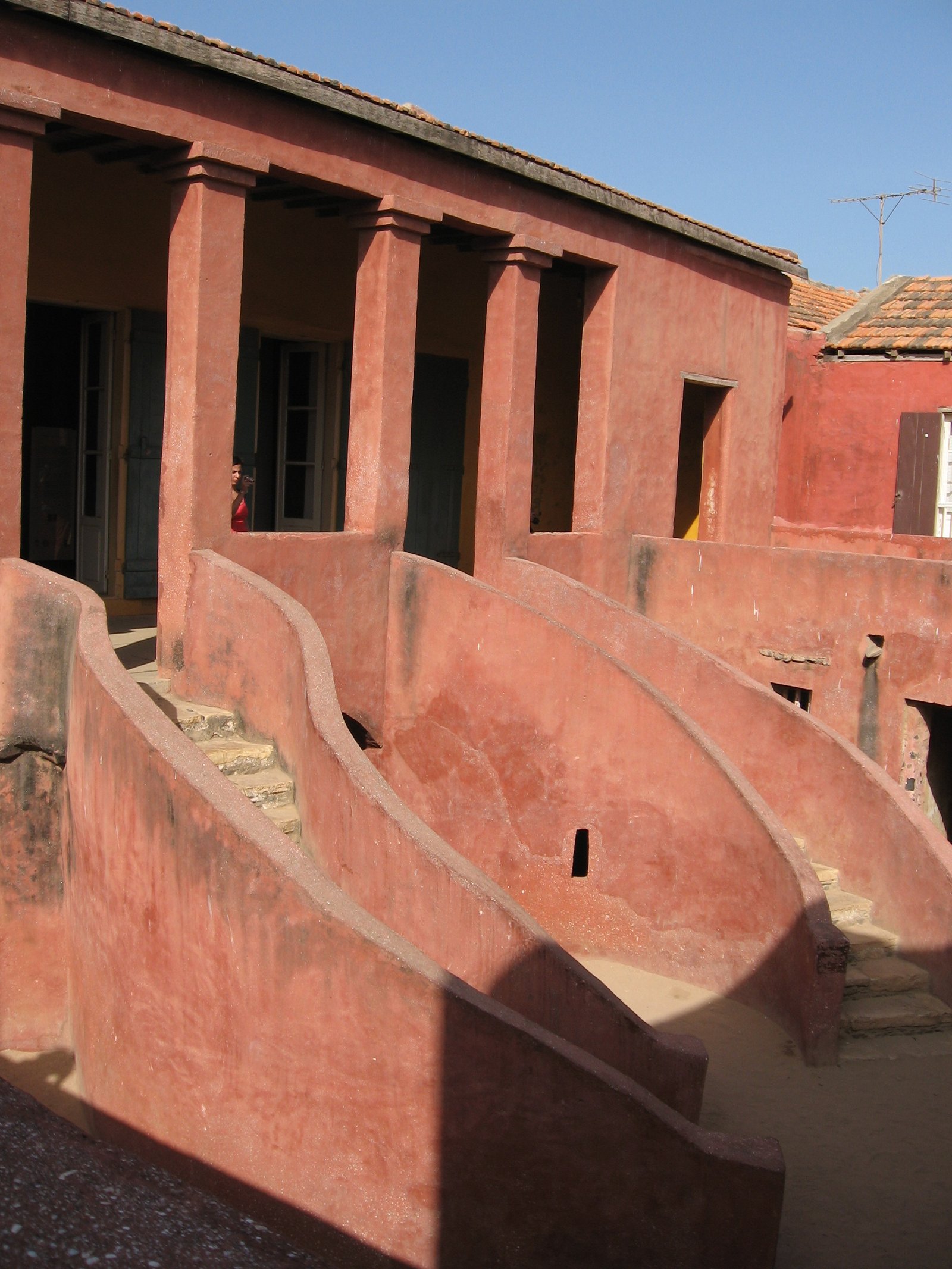
The Maison des Esclaves (House of Slaves), built around 1776, is the site that draws most visitors. Its two-storey pink facade opens onto a cobbled courtyard where men, women, and children were once separated and assessed. At ground level, a narrow doorway framed in ochre plaster leads straight to the water’s edge — the “Door of No Return.” Standing in that doorway, the Atlantic fills the entire frame. The light off the harbour is blinding. The scale of the door is domestic, almost modest, which makes its purpose harder, not easier, to absorb.
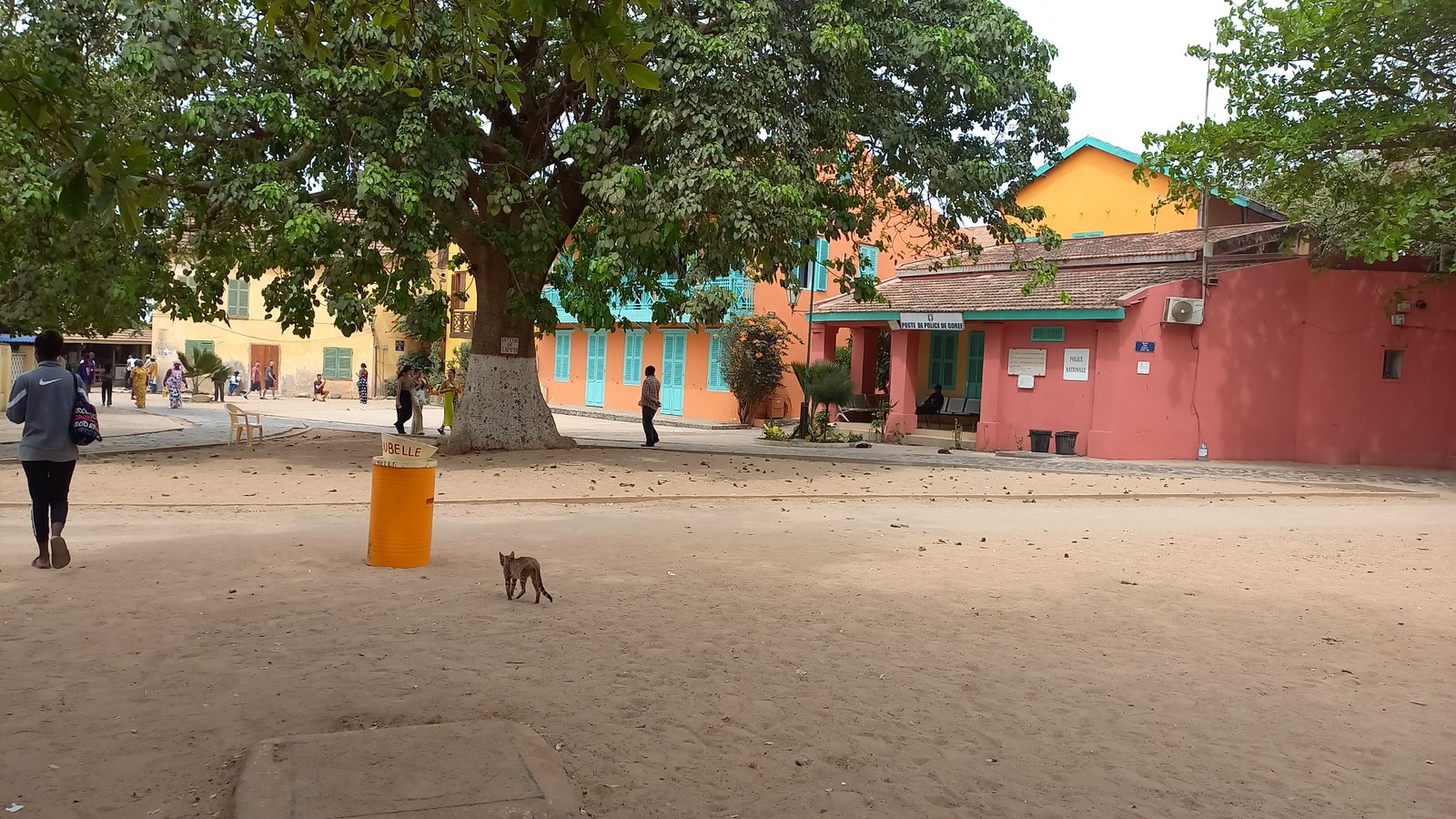
Beyond the Maison, Gorée is a quiet island of bougainvillea-draped streets, a fortified hilltop, and open-air restaurants under shade trees. The architecture is a layered document: Portuguese cisterns, Dutch walls, French plantation houses with their signature external staircases. The island has no cars. The sound is sea wind and the creak of ferry lines.
Getting there: Ferry from Dakar’s port (Gare Maritime), approximately 20 minutes; ferries run throughout the day and tickets are purchased at the dock. Allow: Half a day — three to four hours is enough to visit the Maison des Esclaves, the Historical Museum, and walk the full island. Best for: Travellers with an interest in colonial history, Atlantic slavery, and memorial sites; also suitable for those wanting a car-free afternoon close to the city.
Stone Circles of Senegambia 200+ km southeast of Dakar — 3 to 4 hours by road
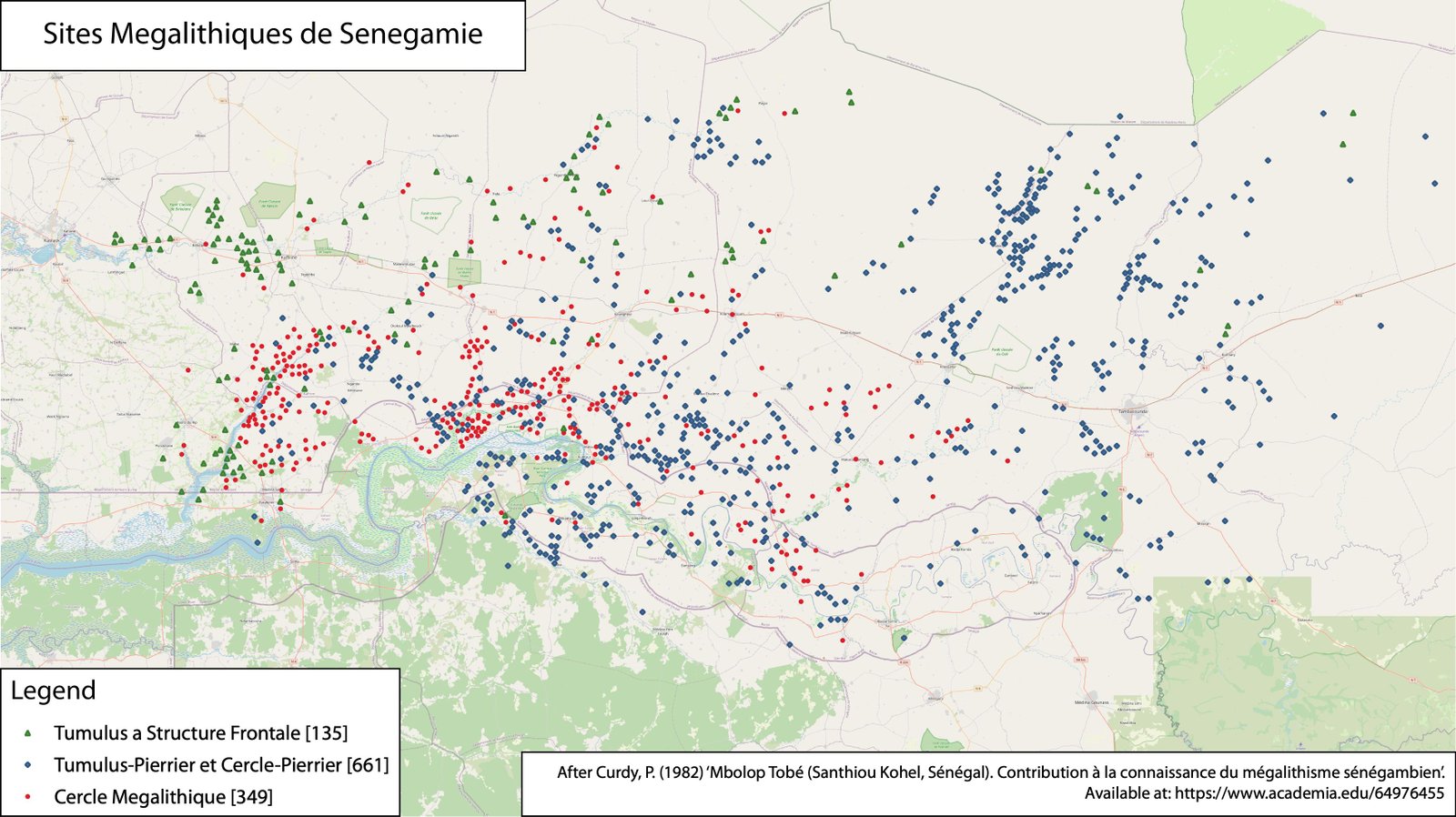
Inscribed in 2006 and shared between Senegal and The Gambia, the Stone Circles of Senegambia encompass 1,053 individual monuments — burial mounds surrounded by rings of cut laterite pillars — spread across a corridor roughly 350 kilometres long and 100 kilometres wide between the Gambia River and the Saloum Delta. The UNESCO property focuses on four principal groups: Sine Ngayène and Wanar in Senegal, and Wassu and Kerbatch in Gambia. Together they contain more than 28,000 dressed stone pillars, making this one of the most concentrated megalithic landscapes on Earth.
The circles were built between the third century BCE and the sixteenth century CE by populations who left no written record, only these monuments. Each pillar was quarried from laterite — a rust-red iron-rich stone that weathers to a rough, granular surface — then shaped and stood upright. The tallest reach over two metres. At Sine Ngayène, the largest of the Senegalese sites, more than 1,000 pillars stand across a flat savanna dotted with baobabs. The silence is structural: the circles define space, turning a featureless plain into a series of rooms without walls or roofs.
The burial mounds at the centre of each circle have yielded iron weapons, ceramics, and gold and copper ornaments, now held at the regional museum in Kaolack. The people who raised them traded across the Saharan routes and were in contact with North African societies. Their identity and the full significance of the circles remain matters of ongoing research.
Getting there: By road from Dakar toward Kaolack, then south to Sine Ngayène (approximately 220 km, 3–4 hours); a car or minibus is the practical option as public transport reaches only as far as Kaolack. Crossing into Gambia to include Wassu requires a border crossing and is best done on a two-day itinerary. Allow: A full day minimum for Sine Ngayène and Wanar; two days to cover all four groups including the Gambian sites. Best for: Travellers interested in prehistoric archaeology, sub-Saharan African history, and landscapes with very few other visitors.
Frequently Asked Questions
How many UNESCO World Heritage Sites are near Dakar?
Two UNESCO World Heritage Sites are within practical day-trip reach of Dakar: the Island of Gorée (inscribed 1978), located 3 km offshore and reachable by a 20-minute ferry, and the Stone Circles of Senegambia (inscribed 2006), approximately 200 km southeast of the city by road. Senegal has seven UNESCO sites in total; the others — Niokolo-Koba National Park, Djoudj National Bird Sanctuary, the Saloum Delta, Bassari Country, and the island city of Saint-Louis — are considerably further from Dakar.
What can you see at the Maison des Esclaves on Gorée Island?
The Maison des Esclaves (House of Slaves) is an eighteenth-century merchant’s house built around 1776. Visitors walk through the holding cells where enslaved people were separated by gender and age before sale, and pass through the ground-floor doorway known as the Door of No Return — a small opening that looks directly out to sea. A curator is usually present to explain the building’s history. Entry costs a small fee separate from the ferry ticket. The visit takes 30–45 minutes. The island’s Historical Museum, housed in a former fort, provides additional context on the Atlantic slave trade and the island’s colonial sequence.
Can you visit Gorée Island and the Stone Circles in one trip?
Not comfortably in a single day. Gorée Island is a half-day excursion from Dakar and pairs well with a morning or afternoon in the city. The Stone Circles of Senegambia require a 3–4 hour drive each way; a same-day return is feasible but long. The more rewarding approach is to dedicate separate days to each: Gorée as a short standalone trip, and the Stone Circles as part of an overnight journey that also allows time at Wanar and, with an additional day, the Gambian sites of Wassu and Kerbatch across the border.
Who built the Stone Circles of Senegambia, and when?
The circles were built across a long period — from roughly the third century BCE to the sixteenth century CE — by populations who inhabited the Senegambia region before the arrival of documented written records in the area. The builders were part of iron-age societies with trade links across the Sahara, and excavations have recovered iron tools, ceramics, and ornaments in gold and copper from the burial mounds at the centre of each circle. Their specific cultural identity is debated among archaeologists, and no single group has been confirmed as the builders across the full 1,800-year span of construction.