
Within a flight or an overnight train of Ho Chi Minh City lie four UNESCO World Heritage Sites that span Hindu empires, imperial dynasties, and cave systems of planetary scale. Each one rewards the detour with something no southern city can replicate. From Cultural Heritage Online.
Hoi An Ancient Town 850 km north — 1 hr 20 min flight to Da Nang + 30 min transfer
Hoi An was one of Southeast Asia’s great trading ports from the 15th to the 19th century. Japanese merchants, Chinese guild communities, and European traders each left a physical imprint on the same narrow grid of streets, and UNESCO inscribed the town in 1999 precisely because so little has been demolished. The core trading quarter retains around 1,100 timber-framed buildings in varying states of careful use.
Walking through the Ancient Town after dark, the smell of incense drifts from Chinese assembly halls whose lacquered beams glow amber under paper lanterns strung two or three storeys overhead. The Japanese Covered Bridge — built in 1593 and still spanning the canal at the western edge of the old town — is narrow enough that two people must turn sideways to pass each other. Merchants’ houses built on Chinese models open directly onto the street: shopfront, courtyard, living quarters, and canal landing all in sequence. Many are still owned and lived in by the same families.
Tailoring workshops line the streets near the market, a tradition that dates to the port’s commercial peak and continues today. The town is inhabited, not preserved behind glass, which is both its strength and its tension on crowded evenings.
Getting there: Fly Ho Chi Minh City (SGN) to Da Nang (DAD), roughly 1 hr 20 min; then taxi or shuttle south to Hoi An, around 30 min. Sleeper train is possible but takes 19 hours. Allow: 2–3 days minimum to see the town properly and make the day trip to My Son. Best for: Architectural history, craft culture, travellers interested in Asian maritime trade.
My Son Sanctuary 40 km from Hoi An — day trip by taxi or guided tour
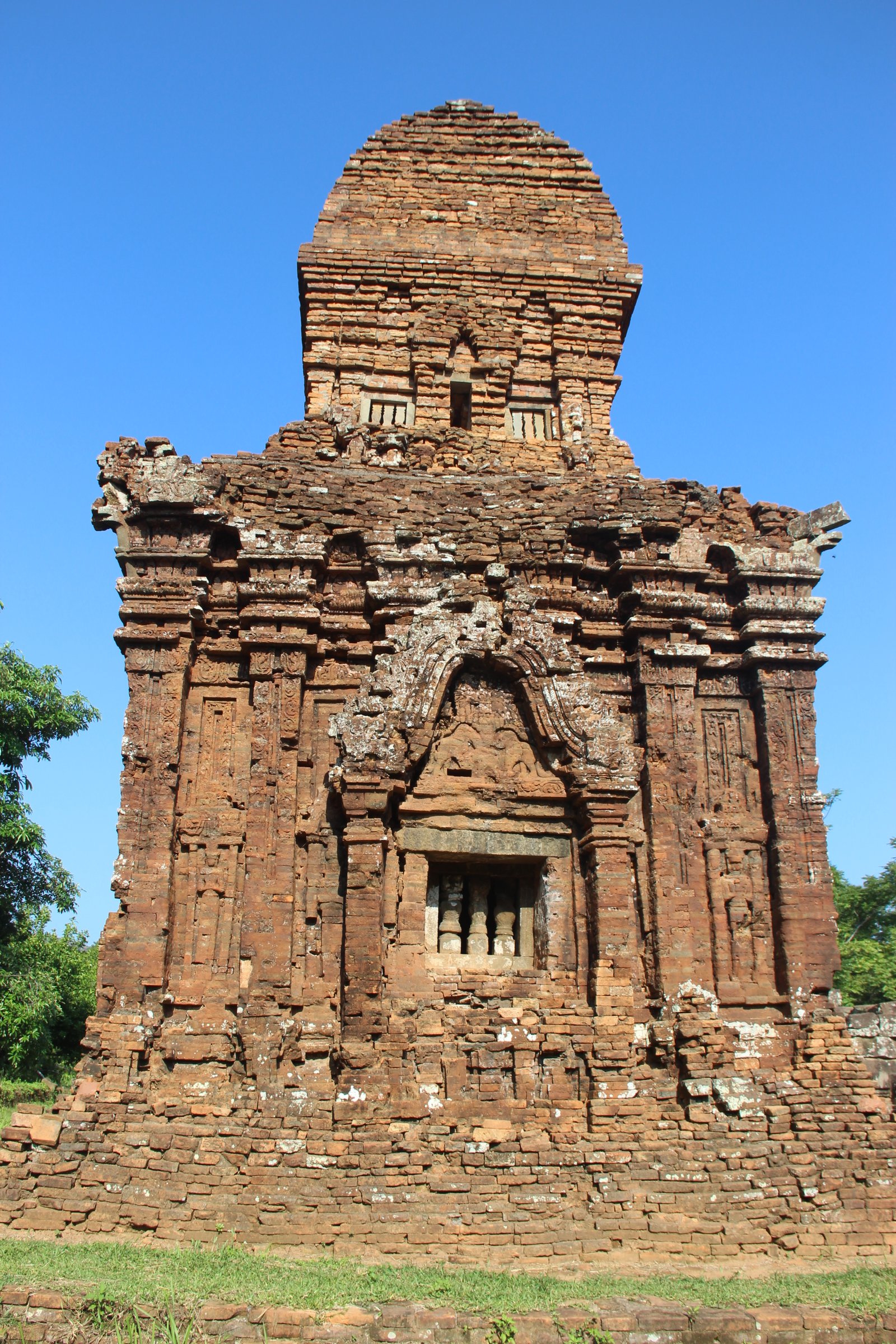
Forty kilometres west of Hoi An in a forested valley ringed by hills, My Son is the most significant site of Cham religious architecture in Southeast Asia. The Champa Kingdom built its first sanctuary here in the 4th century and continued adding monuments until the 14th. At its peak the valley held more than 70 brick and sandstone towers dedicated to the Hindu deity Shiva, whom the Cham kings venerated under his local name Bhadresvara.
Around 25 structures survive in varying condition, the result of centuries of abandonment, jungle encroachment, and heavy US bombing during the Vietnam War. Standing inside the main cluster of towers — Groups B, C and D — the scale becomes clear only once you step inside a doorway and look up: the interiors taper into darkness without any internal support, the brickwork bonded by a resin mortar that French archaeologists spent decades trying to identify. The towers are not large, but they are dense with carved surface detail: kala faces, lotus panels, and dancing apsara figures in sandstone worn smooth by humidity.
UNESCO inscribed My Son in 1999 as an outstanding example of cultural exchange between Indian subcontinent civilisations and the indigenous peoples of Southeast Asia. Visiting at opening time avoids the main tour-bus crowd and gives you an hour when birdsong from the surrounding jungle is the loudest sound in the valley.
Getting there: Day trip from Hoi An by taxi (around 90 min round trip) or organised tour. Most tours depart early morning and return by early afternoon. Allow: Half day including travel from Hoi An. Best for: South and Southeast Asian history, religious architecture, travellers combining with Hoi An.
Complex of Hue Monuments 1,000 km north — fly to Da Nang, then 30 min road transfer north
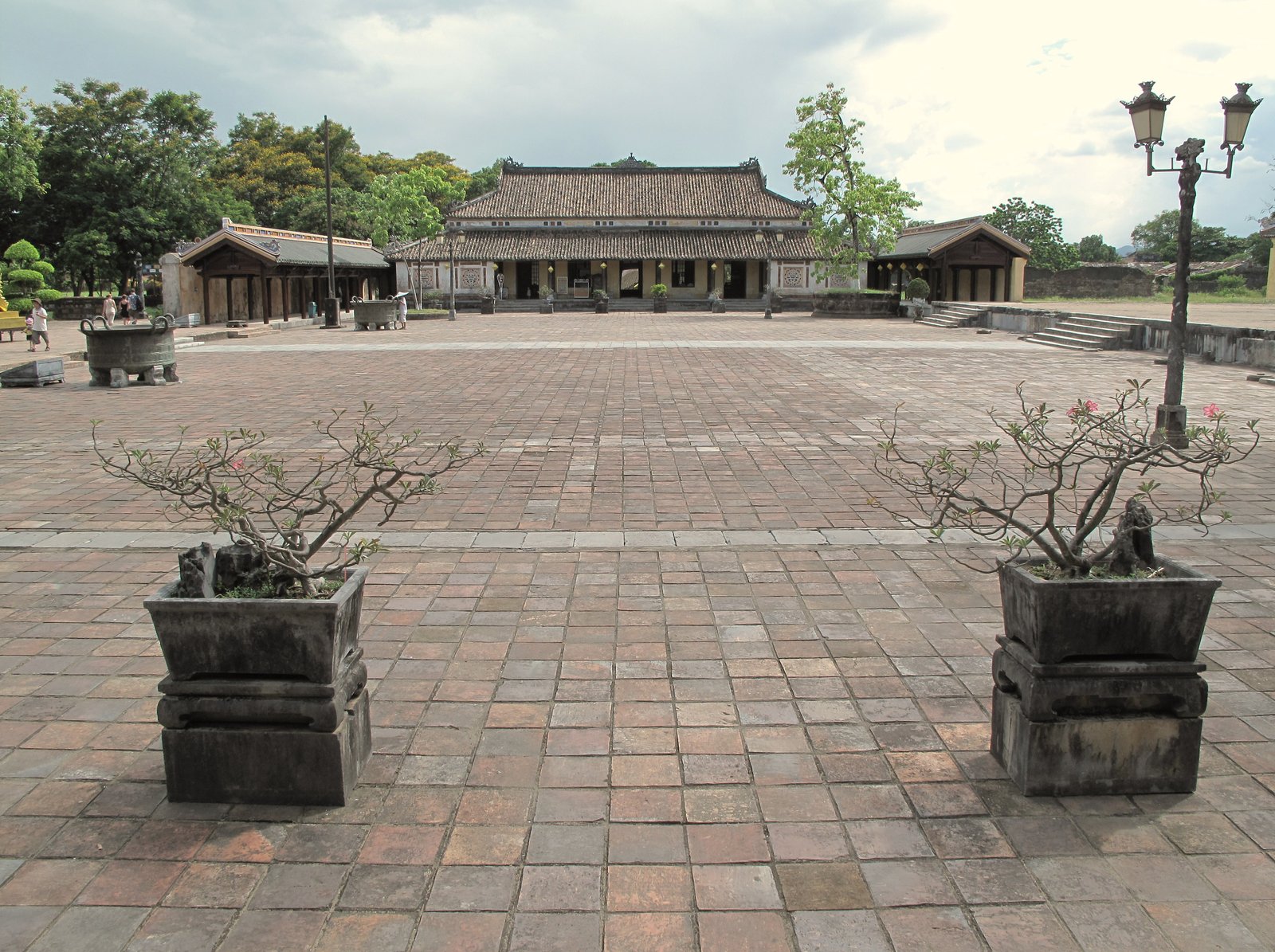
Hue served as the imperial capital of unified Vietnam from 1802 to 1945 under the Nguyen Dynasty. UNESCO inscribed its monumental complex in 1993, covering the Imperial Citadel, the Forbidden Purple City at its core, and a scatter of royal tombs along the Perfume River south of the city. The Citadel walls — built from 1805 onwards — run more than two kilometres on each side, enclosing a city-within-a-city modelled on the Forbidden City in Beijing but adapted to Vietnamese spatial conventions.
Inside the Citadel, the Thai Hoa Palace stands at the ceremonial heart: a long hall of red and gold lacquerwork where the Nguyen emperors held audience, its 80 ironwood columns painted with gilded dragons spiralling toward the ceiling. The smell of old timber and incense lingers. To the south, the royal tombs of Minh Mang, Khai Dinh, and Tu Duc each express a different personality — Minh Mang’s tomb is formal and Confucian in its axial symmetry; Khai Dinh’s, completed in 1931, fuses Vietnamese imperial form with European Art Deco in an almost jarring combination of mosaic glass and concrete.
Significant sections of the Citadel were destroyed during the 1968 Tet Offensive and the subsequent fighting. Restoration work by UNESCO and the Vietnamese government has been ongoing since the 1990s, and the site reads simultaneously as a functioning heritage project and as a monument to what was lost.
Getting there: Fly Ho Chi Minh City to Da Nang (DAD), then take a taxi or bus north to Hue, around 2.5 hrs by road or 45 min by express train. Alternatively, fly direct to Hue (HUI). Allow: Full day for Citadel alone; 2 days to cover the tombs as well. Best for: Imperial history, architecture, travellers with a Da Nang base.
Phong Nha-Ke Bang National Park 550 km north — 1.5 hr flight to Dong Hoi + 45 min transfer
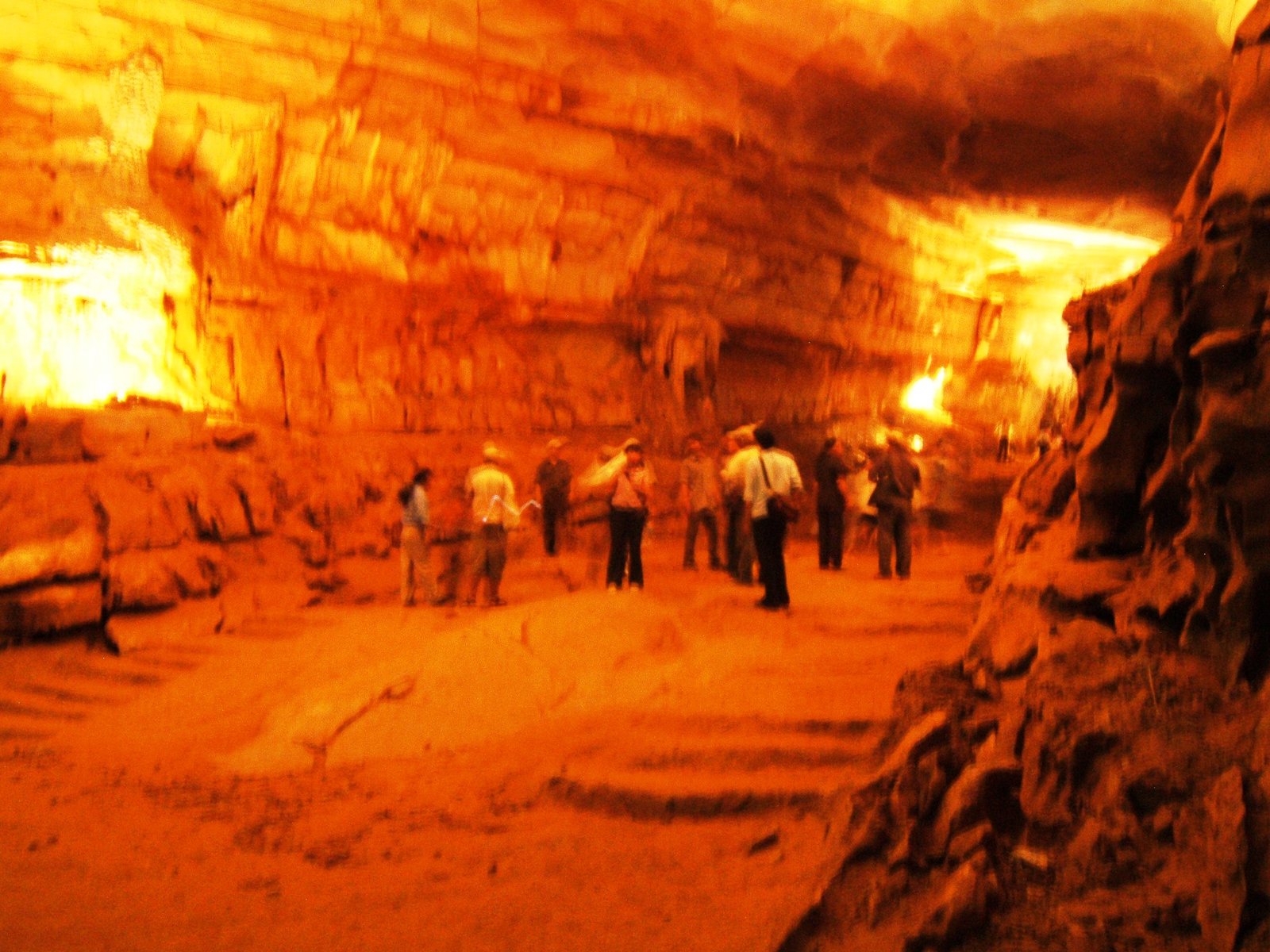
Phong Nha-Ke Bang is a karst limestone plateau running along the Laos border, and it contains the most extensive cave system on earth. UNESCO first inscribed the park in 2003 for its outstanding geological values, then extended the listing in 2015 to cover additional zones of biodiversity. The numbers are difficult to absorb: more than 300 cave systems surveyed, the oldest karst formation in Asia at around 400 million years, and inside Son Doong — discovered in 2009 — a single cave passage large enough to contain a city block with room for clouds to form above it.
Most visitors reach Phong Nha Cave, accessible by boat along an underground river. The approach is quiet: the long wooden boats cut the dark water while stalactite formations appear and recede in the lamplight overhead, the drip of water amplified by chambers that rise 30 metres above. Son Doong itself requires a multi-day expedition booked far in advance; the number of permits issued each year is strictly capped. Paradise Cave and Dark Cave are the next tier — significant cave systems in their own right, accessible without specialist equipment.
The park’s jungle canopy above ground shelters gibbons, langurs, and several species found nowhere else. The combination of geological and ecological significance is what pushed UNESCO to extend the listing.
Getting there: Fly Ho Chi Minh City to Dong Hoi (VDH), around 1.5 hrs; then taxi to Phong Nha village, about 45 min. Allow: 2 days minimum; 4–5 days for Son Doong expedition (permit required, very limited availability). Best for: Geology, adventure travel, nature; Son Doong for serious cave explorers.
Frequently Asked Questions
How many UNESCO World Heritage Sites are near Ho Chi Minh City?
Four UNESCO World Heritage Sites are within reasonable travel distance of Ho Chi Minh City: Hoi An Ancient Town (inscribed 1999), My Son Sanctuary (1999), the Complex of Hue Monuments (1993), and Phong Nha-Ke Bang National Park (2003, extended 2015). All four are accessible by domestic flight, with travel times ranging from 1.5 to 2 hours in the air plus ground transfers.
How do you visit Hoi An Ancient Town from Ho Chi Minh City, and what should you prioritise?
Fly from Ho Chi Minh City (SGN) to Da Nang (DAD) — flights run multiple times daily and take about 1 hr 20 min — then transfer by taxi or shuttle 30 km south to Hoi An. Plan at least two days: the first for the Ancient Town itself (Japanese Covered Bridge, Chinese assembly halls such as the Fujian Assembly Hall, and the merchant house at 80 Tran Phu), the second for a day trip west to My Son Sanctuary. Evening in Hoi An is its own attraction — the trading quarter is partly pedestrianised after dark and lit by hundreds of silk lanterns.
Can you combine Hoi An, My Son, and Hue in one trip?
Yes, and most travellers do. A practical route: fly into Da Nang, spend two nights in Hoi An (with My Son as a day trip on the second day), then transfer north to Hue for two more nights to cover the Citadel and at least two of the royal tombs. The road from Da Nang to Hue via the Hai Van Pass takes around two hours and is scenic enough to justify the surface journey over an internal flight. Allow five to six days total for this loop before returning to Ho Chi Minh City.
What is the historical significance of the Cham Kingdom temples at My Son?
The Champa Kingdom was an Indianised polity that controlled central Vietnam from roughly the 2nd century CE to the 15th century, when it was gradually absorbed by the Vietnamese Dai Viet state expanding southward. My Son served as the kingdom’s primary religious centre — a place of consecration for Cham kings who were identified with Shiva — across nearly a millennium of continuous use. The temples are significant not only for their architectural quality but because they document the transmission of Hindu religious ideas from the Indian subcontinent into mainland Southeast Asia, a process that also shaped Angkor in Cambodia and the temples of Java. My Son represents the northernmost major expression of that transmission.



.jpg)
.jpg)
