
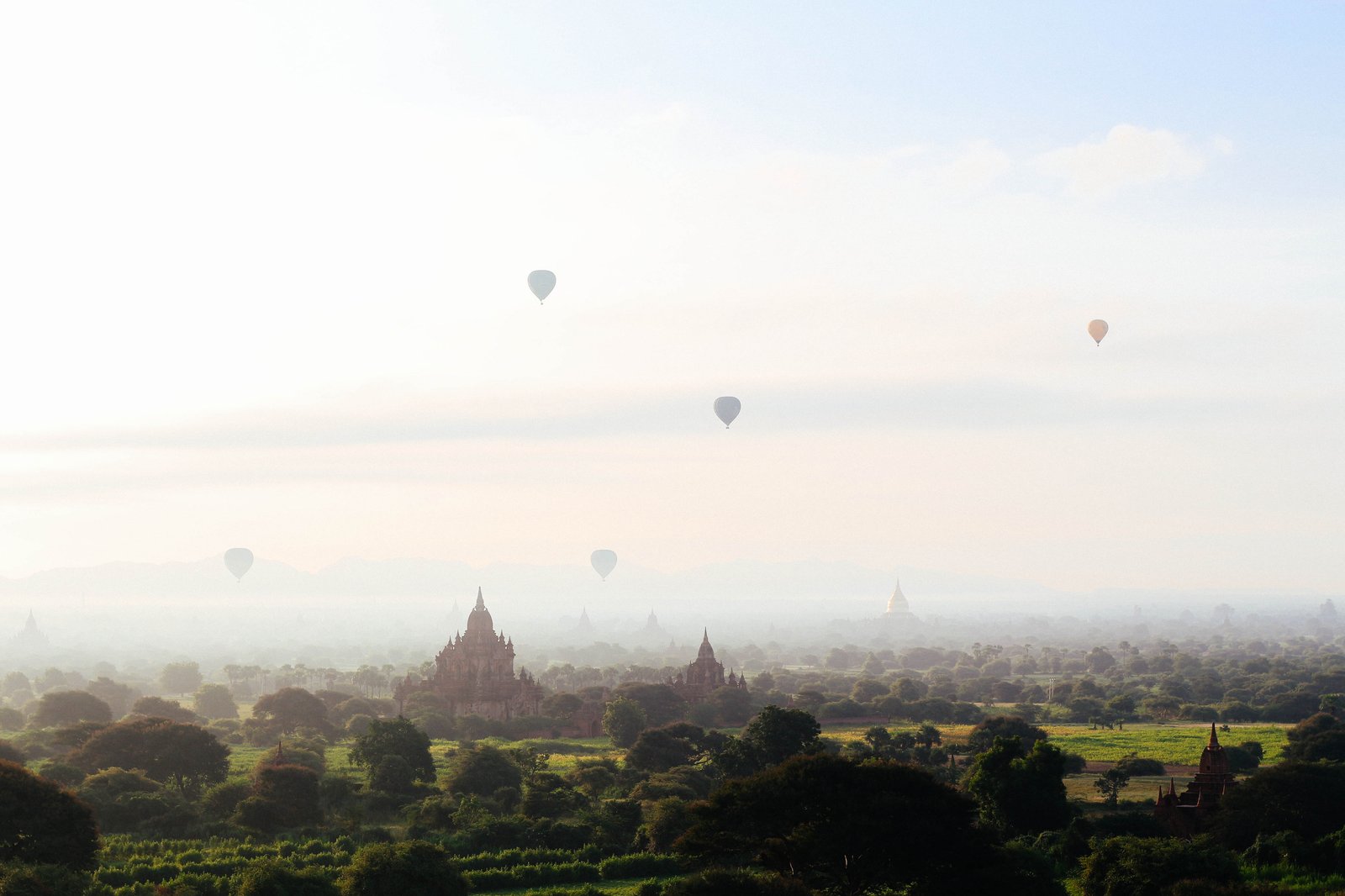
Myanmar holds two UNESCO World Heritage Sites, and both are reachable from Yangon: the ancient Pyu walled cities to the north, and the vast Buddhist archaeological plain of Bagan further still. Each rewards the journey in a different register — one intimate and scholarly, the other genuinely overwhelming in scale. From Cultural Heritage Online.
Pyu Ancient Cities Sri Ksetra: 260 km north, ~5 hr by road or domestic flight to Pyay
Myanmar’s first UNESCO inscription, awarded in 2014, recognized three Pyu city-states that shaped mainland Southeast Asia long before the better-known kingdoms that followed. The designation covers Sri Ksetra (near Pyay), Beikthano, and Halin — brick-walled urban centres occupied between roughly 200 BCE and 900 CE. Together they represent a civilisation of considerable sophistication: planned cities with moated walls, sophisticated hydraulic systems, royal palace compounds, and burial grounds where cremated remains were placed in silver and gold urns.
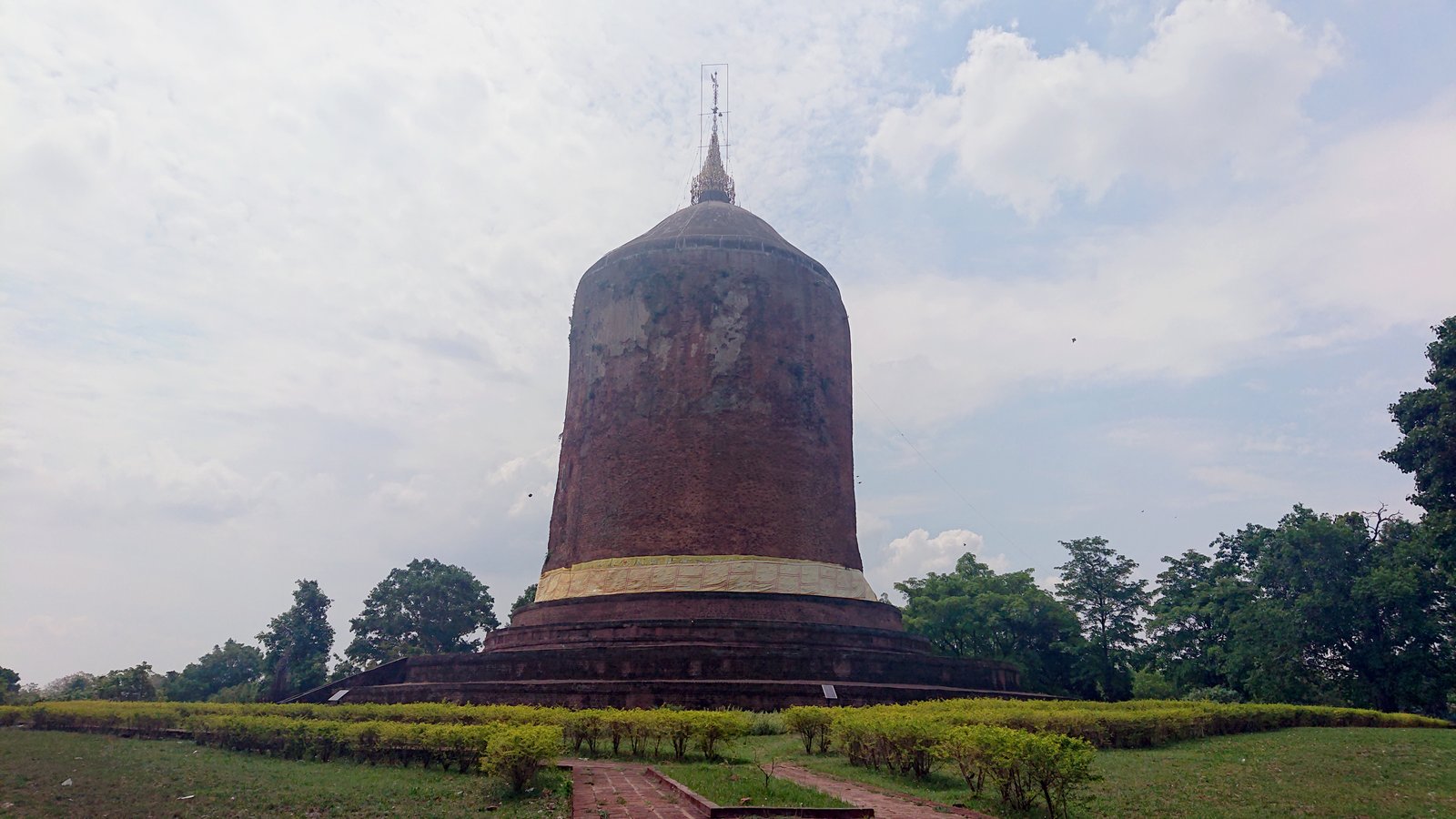
Sri Ksetra is the most accessible and the most studied. Walking its grounds, you pass the cylindrical Bawbawgyi Stupa — its proportions are unlike anything the later Bamar builders produced, closer to the early stupas of Sri Lanka than to the tapering spires of Bagan. The surface is warm sandstone-coloured brick, rough under the hand, the mortar joints worn smooth by centuries of rain. Around it, the plain stretches flat in every direction, scattered with mounds that have never been fully excavated. The scale of the original city is not immediately legible; it requires imagination to read the low ridgelines as the remains of a wall circuit that once enclosed some 1,400 hectares.
Beikthano, further north, is older still — possibly dating to the 1st century BCE — and yielded evidence of iron tools, glass beads, and trade connections reaching India. Halin, near Shwebo some 700 km north of Yangon, is the least visited of the three but preserves substantial wall sections and a royal cemetery. The Pyu people left no enduring literature but built durably in brick, and what survives tells a story of urban life, religious exchange, and political organisation that predates the Pagan Kingdom by nearly a millennium.
Getting there: Sri Ksetra lies 8 km from Pyay town. From Yangon, take a domestic flight to Pyay (around 40 min) or travel by road via Highway 2 (5 hr). Local transport from Pyay by taxi or trishaw. Halin requires separate planning from Mandalay or Shwebo. Allow: Half a day for Sri Ksetra; a full day if combining with Pyay town and Shwesandaw Pagoda. Best for: Travellers drawn to early urban archaeology and pre-Buddhist mainland Southeast Asian history.
Bagan 680 km north, ~1 hr 15 min by domestic flight to Nyaung-U; or 9 hr night bus
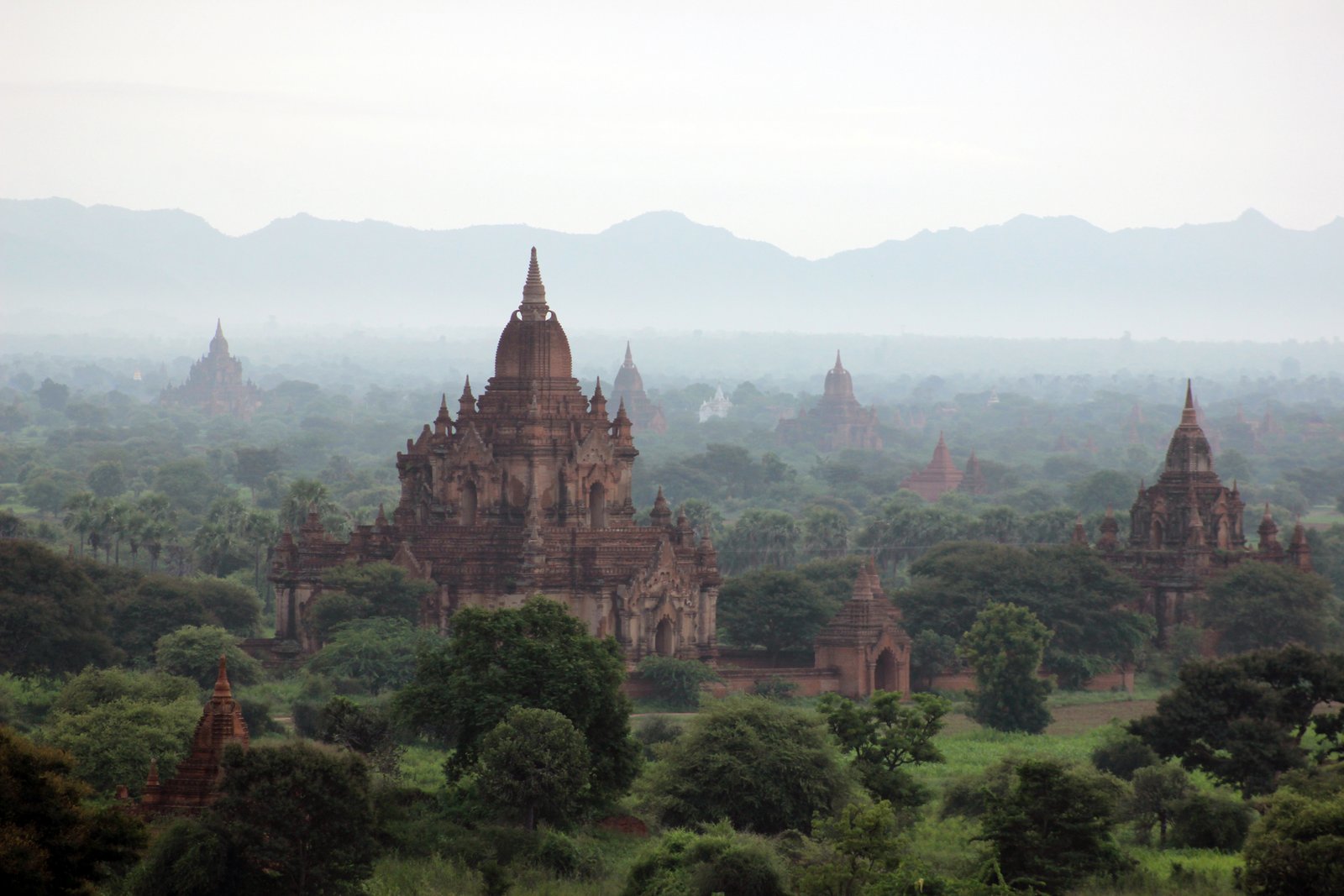
Bagan received its UNESCO listing in 2019, and the inscription felt long overdue. The archaeological zone stretches across 50 square kilometres of flat alluvial plain above the Irrawaddy River, and it holds more than 3,500 surviving Buddhist religious structures — temples, pagodas, monasteries, and ordination halls — built between the 9th and 13th centuries during the Pagan Kingdom. No single description of scale captures what the plain looks like from a temple terrace at first light: brick towers receding into morning haze in every direction, the river a silver band to the west. It is not subtle.
The Pagan Kingdom’s builders worked in red brick, developing a vocabulary of architectural forms that evolved rapidly across three centuries. The Ananda Temple, completed around 1105 under King Kyansittha, represents the tradition at its most refined — a Greek-cross plan crowned by a central spire, its corridors housing four gilded standing Buddhas of extraordinary height. Ananda’s interior is dim and cool, the white-plastered walls absorbing the sound of footsteps. The Dhammayangyi Temple, begun in the 12th century by King Narathu and the largest single structure on the plain, was never completed; its inner passages were bricked up, their purpose still debated. Shwezigon Pagoda, initiated by King Anawrahta and finished under Kyansittha, set the prototype for the bulbous gilded stupa form that defines Burmese religious architecture to this day.
Bagan fell to a Mongol invasion in 1287, and the kingdom did not recover. The temples were left largely intact — not because of reverence but because the region’s later inhabitants lacked the resources and population to dismantle them. Earthquakes, most recently in 2016, have caused ongoing damage, and restoration work continues under UNESCO supervision. The plain is still active as a religious landscape: monks walk the paths between temples each morning, offerings accumulate at shrines inside structures a thousand years old. The sunrise balloon flights, which lift passengers above the rooftops as light breaks across the plain, remain among the more considered ways to read the full extent of what was built here.
Getting there: Domestic flights from Yangon to Nyaung-U Airport (the gateway for Bagan) run multiple times daily; journey time around 1 hr 15 min. Night buses depart Yangon’s Aung Mingalar Highway Bus Terminal and reach Nyaung-U in 9 hr. Allow: Minimum 2 full days to cover the main temple zones; 3 days is more comfortable. Best for: Travellers interested in Buddhist art and architecture, medieval Asian history, and landscape photography.
Frequently Asked Questions
How many UNESCO World Heritage Sites are near Yangon?
Myanmar has two UNESCO World Heritage Sites, and both are accessible from Yangon. The Pyu Ancient Cities (inscribed 2014) encompasses three early walled cities — Sri Ksetra, Beikthano, and Halin — representing Pyu urban civilisation from around 200 BCE to 900 CE. Bagan (inscribed 2019) is the country’s second inscription and its most visited archaeological zone, with over 3,500 Buddhist structures built during the Pagan Kingdom between the 9th and 13th centuries.
How do you visit Bagan from Yangon, and what should you prioritise?
The fastest option is a domestic flight from Yangon to Nyaung-U Airport, taking around 1 hour 15 minutes; several airlines serve the route daily. Night buses are the budget alternative, reaching Nyaung-U in approximately 9 hours. On arrival, the Ananda Temple is the single most important structure architecturally — its 1105 construction, Greek-cross plan, and four giant gilded Buddhas set the standard for the entire tradition. Dhammayangyi Temple impresses through sheer mass. Sunrise from a temple terrace, when mist still sits between the towers, is the experience most visitors remember longest.
Can you combine Bagan and the Pyu Ancient Cities in one trip from Yangon?
Technically yes, though the two sites sit in different directions from Yangon and the distances are considerable. Sri Ksetra (the most accessible Pyu city) is 260 km north via Pyay; Bagan is 680 km north via Nyaung-U. A practical itinerary would be: fly to Pyay, spend half a day at Sri Ksetra, then continue north by road or air to Bagan for 2–3 days. Allow at least 5–6 days total. Halin, the third Pyu city, lies near Shwebo and requires a separate excursion from Mandalay; most visitors skip it on a first trip.
What is distinctive about the Pyu people and their cities compared to later Burmese kingdoms?
The Pyu pre-date the Bamar people who built Bagan by roughly a thousand years, and their cities show a different set of influences — closer to the early Buddhist and Hindu traditions of Sri Lanka and eastern India than to the distinctly Burmese forms that came later. Their stupas are cylindrical rather than tapering, their urban plans show advanced hydraulic engineering, and their burial practices — cremation with remains placed in precious metal urns — differ from anything in the later archaeological record of the region. The Pyu cities were not conquered so much as gradually absorbed; the Bamar settlers who replaced them inherited brick-building techniques and Buddhist practice, but the Pyu language and material culture faded from the record by around 900 CE.
.jpg)

.jpg)