
Kenya rewards the traveller who uses Nairobi as a base rather than a transit point. Within a half-day’s journey by road or a single short flight, three UNESCO World Heritage Sites open up: the glaciated equatorial summit of Mount Kenya, the coral-stone streets of Lamu Old Town, and the soda lakes of the Great Rift Valley that turn pink each season under the weight of a million flamingos. This guide covers transport, timing, and what makes each site worth the effort. From Cultural Heritage Online.
Mount Kenya National Park and Natural Forest 3 hrs 30 min by road
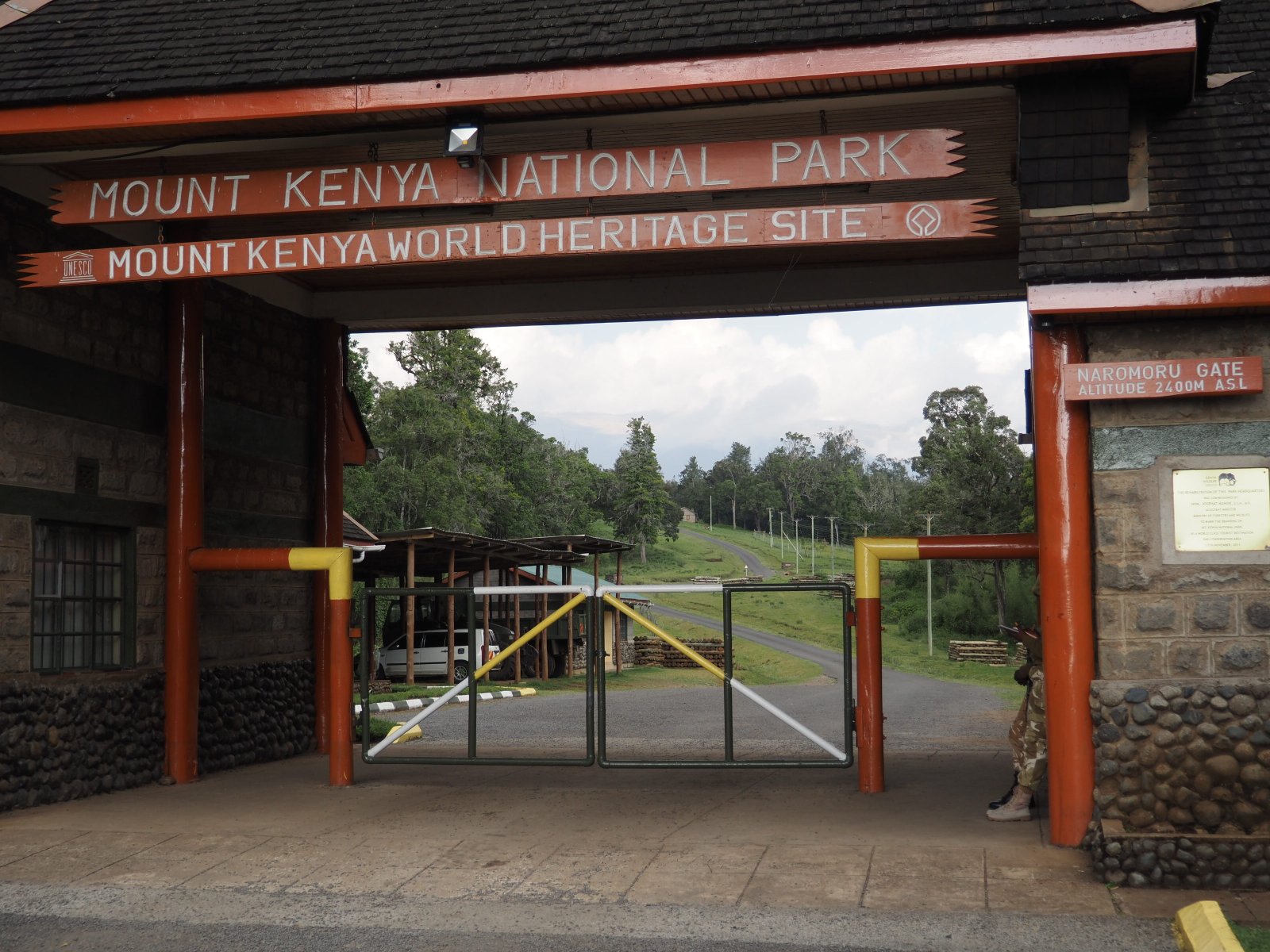
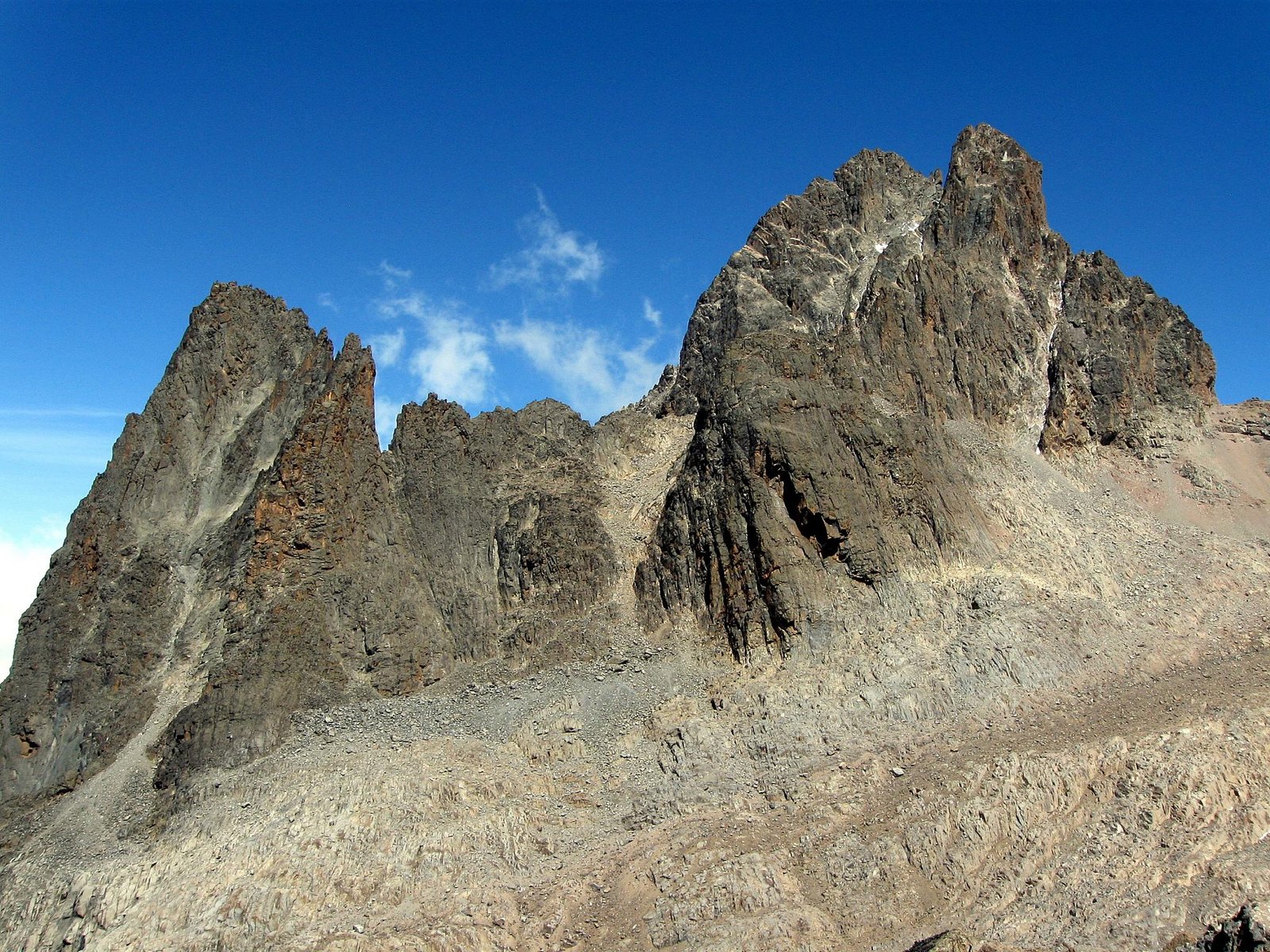
Africa’s second-highest mountain was inscribed as a UNESCO World Heritage Site in 1997 and covers 1,420 km² when the national park and surrounding forest reserve are taken together. The mountain’s three main summits rise from the equatorial plain in a series of distinct ecological bands: montane forest gives way to African alpine bamboo, then heathland and Afro-alpine moorland where giant groundsels and lobelias grow in forms found nowhere else on earth. At the top, Batian reaches 5,199 m, Nelion 5,188 m, and the trekking summit of Point Lenana stands at 4,985 m. Eleven glaciers cling to the upper slopes, though glaciologists project they will be gone within three decades as warming accelerates. On a clear dawn approach through the Naro Moru route, the twin peaks rise above cloud in near-silence, the cold air carrying only the sound of volcanic rock underfoot. The park shelters black-and-white colobus monkeys, Cape buffalo, African elephants, and lions at lower elevations, making the forest belt on the ascent as rewarding as the summit zone itself.
Getting there: 175 km north of Nairobi. Matatus and coaches depart OTC bus station on Landhies Road for Naro Moru (Naro Moru gate) or Chogoria (Chogoria gate); journey approximately 3 hrs 30 min. Organised day-and-overnight tours are available from operators in the city centre. Allow: 2 days minimum for a trekking itinerary to Point Lenana (the accessible summit); 3–4 days recommended for acclimatisation. A full technical climb of Batian or Nelion requires prior mountaineering experience. Best for: High-altitude trekking, equatorial ecology, photography of Afro-alpine vegetation and glaciers.
Lamu Old Town 1 hr by flight
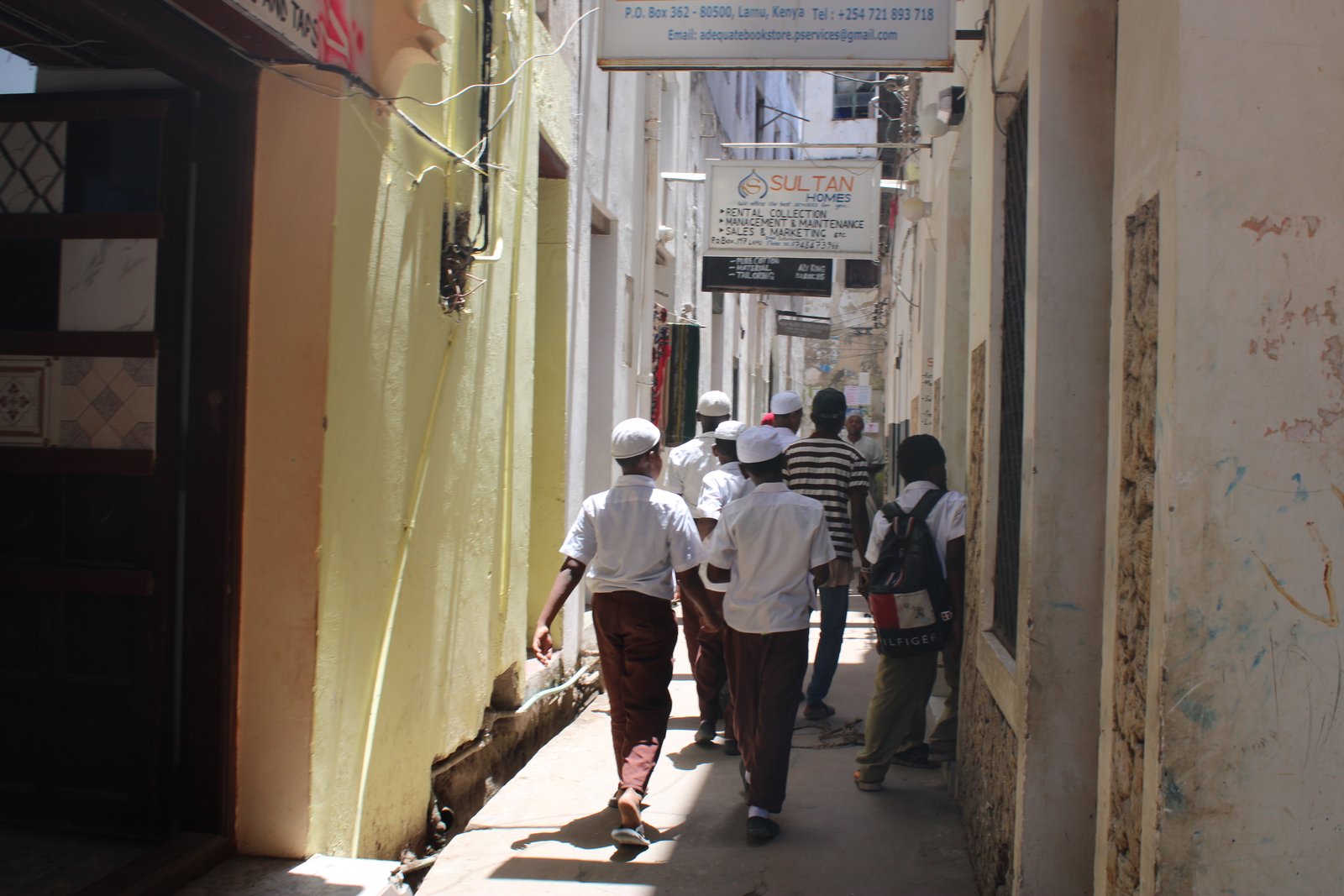
Lamu Old Town is Kenya’s oldest continuously inhabited settlement, established around 1370 CE and inscribed as a UNESCO World Heritage Site in 2001. It occupies 15.6 hectares at the north end of Lamu Island and is accessible only by sea, a quality that has shielded it from the road-driven development that has altered much of the East African coast. The architecture layers seven centuries of Swahili, Arab, Indian, and Portuguese influence into buildings of coral rag and lime plaster: heavy ornately carved wooden doors set in recessed frames are the signature motif, each door a family statement worked in rosewood or mango. Lamu Fort, begun in the early 1800s during the period of Omani patronage, anchors the waterfront. Twenty-three mosques serve a predominantly Muslim community of roughly 25,000 residents, and the Riyadha Mosque (1892) draws pilgrims for the annual Maulidi festival celebrating the Prophet’s birth. No motor vehicles operate on the island; donkeys and dhows remain the primary transport, and the narrow lanes hold their medieval proportions in the late-afternoon salt air blowing off the channel.
Getting there: Kenya Airways and Fly540 operate daily flights from Nairobi Wilson Airport to Manda Island (Lamu), approximately 1 hour. From Manda airstrip, a 20-minute dhow or motorboat crossing reaches Lamu Town. No direct road connection exists. Allow: Half a day for a focused walking tour of the Old Town; a full day if you include Lamu Fort, the Swahili House Museum, and the waterfront. Overnight stays allow attendance at the fish market at dawn. Best for: Swahili architecture, Islamic cultural heritage, slow travel, photography of living street scenes.
Kenya Lake System in the Great Rift Valley 2 hrs by road
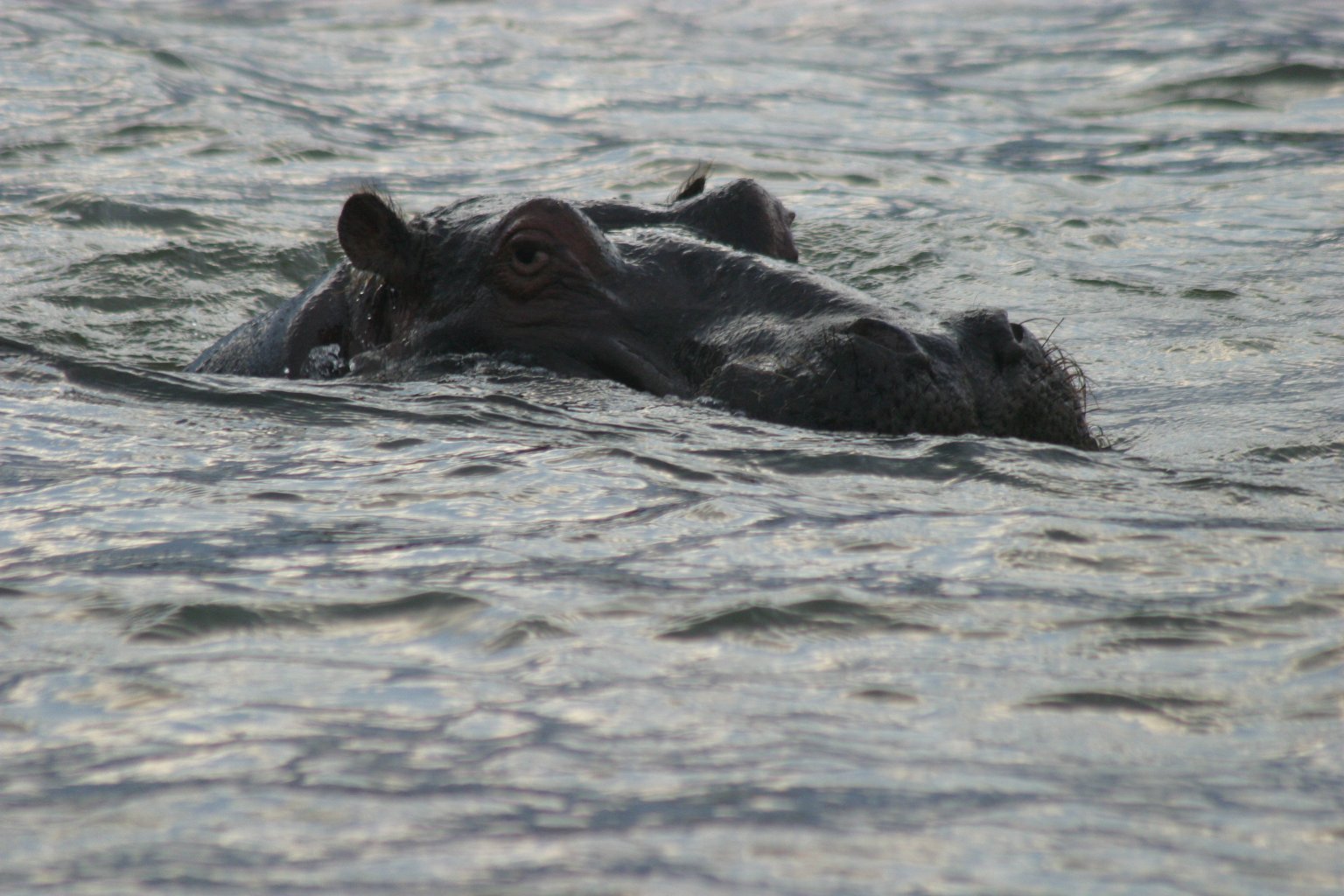
Three shallow alkaline lakes — Bogoria, Nakuru, and Elementaita — were inscribed together as a UNESCO World Heritage Site in 2011 in recognition of their extraordinary ornithological value. Together they form a critical link in the chain of Rift Valley soda lakes that stretches across East Africa. Lake Bogoria hosts Africa’s highest concentration of true geysers, with some 200 hot springs and at least 10 venting jets erupting up to 5 m along its western shore; up to 1.5 million lesser flamingos gather here when water levels at other lakes drop. Lake Nakuru, the most visited of the three and 130 km from Nairobi, supports a combined rhinoceros population of more than 25 eastern black rhinos and approximately 70 southern white rhinos within its fenced national park, alongside Rothschild’s giraffes and over 400 recorded bird species. Lake Elementaita is the smallest and most pristine, a Ramsar Wetland and important breeding site for the great white pelican. The soda lakes’ pink shorelines, visible from hillside viewpoints at dawn, are among the most photographed wildlife spectacles on the continent.
Getting there: Lake Nakuru is 130 km north-west of Nairobi, approximately 2 hours by car via the A104. Nakuru-bound coaches depart OTC terminal frequently throughout the day. Lake Bogoria is a further 55 km north, roughly 1 additional hour by road. Organised full-day safaris departing central Nairobi cover both lakes. Allow: A full day for a game drive at Lake Nakuru; combine with Lake Bogoria for an overnight trip. Best for: Flamingo concentrations (best October–March at Bogoria), rhinoceros sightings (Nakuru, year-round), geothermal landscape photography.
Frequently Asked Questions
How many UNESCO World Heritage Sites are near Nairobi?
Three UNESCO World Heritage Sites are within practical reach of Nairobi: Mount Kenya National Park and Natural Forest (3 hrs 30 min by road), Lamu Old Town (1 hour by flight), and the Kenya Lake System in the Great Rift Valley, which includes Lakes Bogoria, Nakuru, and Elementaita (2 hours by road). All three can be visited on separate day trips or short overnights from the city.
Which UNESCO site is closest to Nairobi?
The Kenya Lake System sites are the closest by road. Lake Nakuru, one of the three lakes in the inscribed property, is approximately 130 km north-west of Nairobi, reachable in around 2 hours by car. Coaches run frequently from OTC terminal in central Nairobi, making it the most accessible option for visitors without a private vehicle.
Do I need a visa to visit Kenya from most countries?
Kenya introduced an Electronic Travel Authorisation (eTA) system in January 2024, replacing the previous visa-on-arrival for most nationalities. Citizens of most countries can apply online before travel at the official immigration portal (immigration.ecitizen.go.ke). The eTA fee is USD 30 for most applicants. East African Community citizens (Uganda, Tanzania, Rwanda, Burundi, South Sudan, DRC) do not require a visa. Always verify requirements with the Kenya High Commission or embassy in your country before departure, as rules can change.
What is the best season to visit the Kenya Lake System and Mount Kenya?
For the Kenya Lake System, October to March is generally the best period for flamingo concentrations at Lake Bogoria and for dry conditions at Lake Nakuru. The long rains (March to May) and short rains (October to November) can make unpaved tracks difficult. For Mount Kenya, January–February and August–September are the clearest months for summit attempts, with lower cloud cover and drier conditions on the upper mountain. The Naro Moru route can be attempted year-round but is muddy and slippery during the rain seasons.
Sources
- UNESCO World Heritage List — Mount Kenya National Park / Natural Forest (inscribed 1997): whc.unesco.org/en/list/800
- UNESCO World Heritage List — Lamu Old Town (inscribed 2001): whc.unesco.org/en/list/1055
- UNESCO World Heritage List — Kenya Lake System in the Great Rift Valley (inscribed 2011): whc.unesco.org/en/list/1060
- Wikipedia — Mount Kenya: en.wikipedia.org/wiki/Mount_Kenya
- Wikipedia — Lake Bogoria: en.wikipedia.org/wiki/Lake_Bogoria
.jpg)


