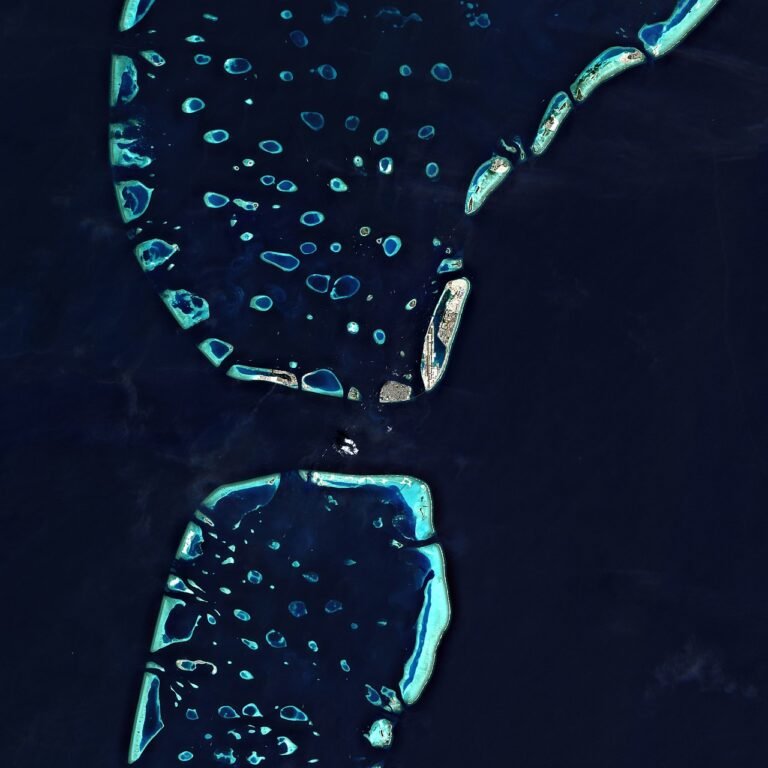
Osaka sits at the geographic centre of Japan’s most UNESCO-dense corridor. Five World Heritage inscriptions lie within 50 minutes by Shinkansen, covering feudal military architecture, two ancient imperial capitals, and the most sobering peace memorial on earth. No other city in Japan matches this density of inscribed sites within a single Icoca card’s reach. This guide covers four inscriptions accessible as day trips, with transport times, practical logistics, and the historical context that gives each site its weight. From Cultural Heritage Online.
Himeji Castle 30 min from Shin-Osaka
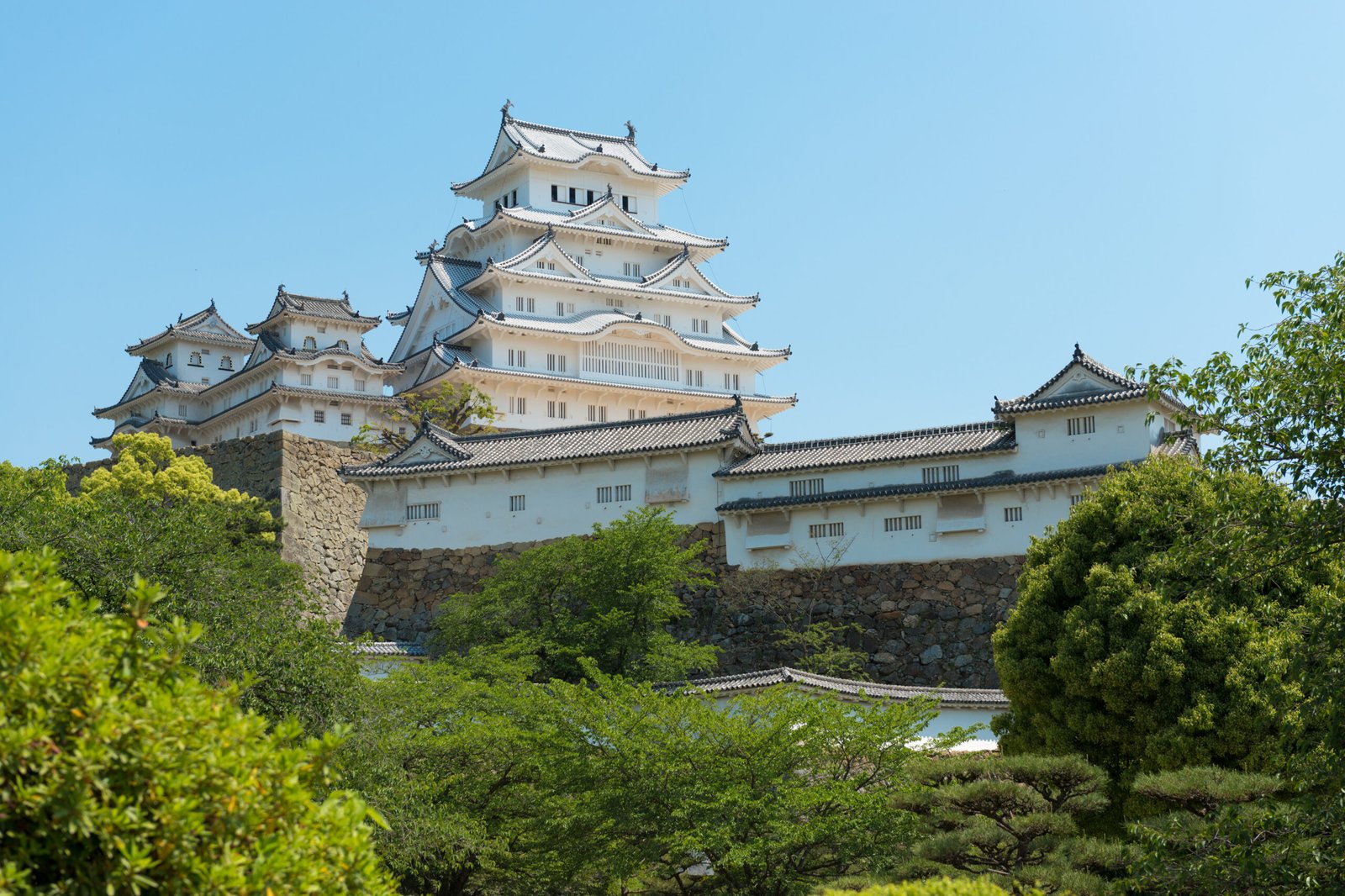
Himeji Castle earned its UNESCO inscription in 1993 as the finest surviving example of Japanese feudal architecture, a designation that holds up the moment the white keep comes into view above the city’s rooftops. The castle’s Japanese names — Hakuro-jō and Shirasagi-jō, both translating to “White Egret Castle” — point directly to its most arresting quality: the plastered white exterior that catches the light differently every hour, turning cream at midday and almost luminous at dusk. The complex comprises 83 structures linked by corridors, gates, and defensive passageways that still confuse visitors unfamiliar with the layout. Lord Ikeda Terumasa undertook the major reconstruction between 1601 and 1609, following the initial fort built by Akamatsu Norimura in 1333 and Toyotomi Hideyoshi’s expansion in 1581. What Ikeda built was not merely a military installation but a demonstration of political authority, a white mountain visible for kilometres across the Harima plain. The interior passages climb through seven floors of darkened wood, each level narrower than the last, until the uppermost room opens on an unrestricted view of Hyogo Prefecture.
Getting there: JR Shinkansen Nozomi from Shin-Osaka to Himeji station (30 min, reserved seat required); 1 km walk north or 5 min by bus to the castle entrance. Allow: 2–3 hours including the interior climb and Koko-en garden. Best for: Visitors who want Japan’s most photogenic castle with minimal crowds before 9 am.
Historic Monuments of Ancient Nara 45 min from Namba
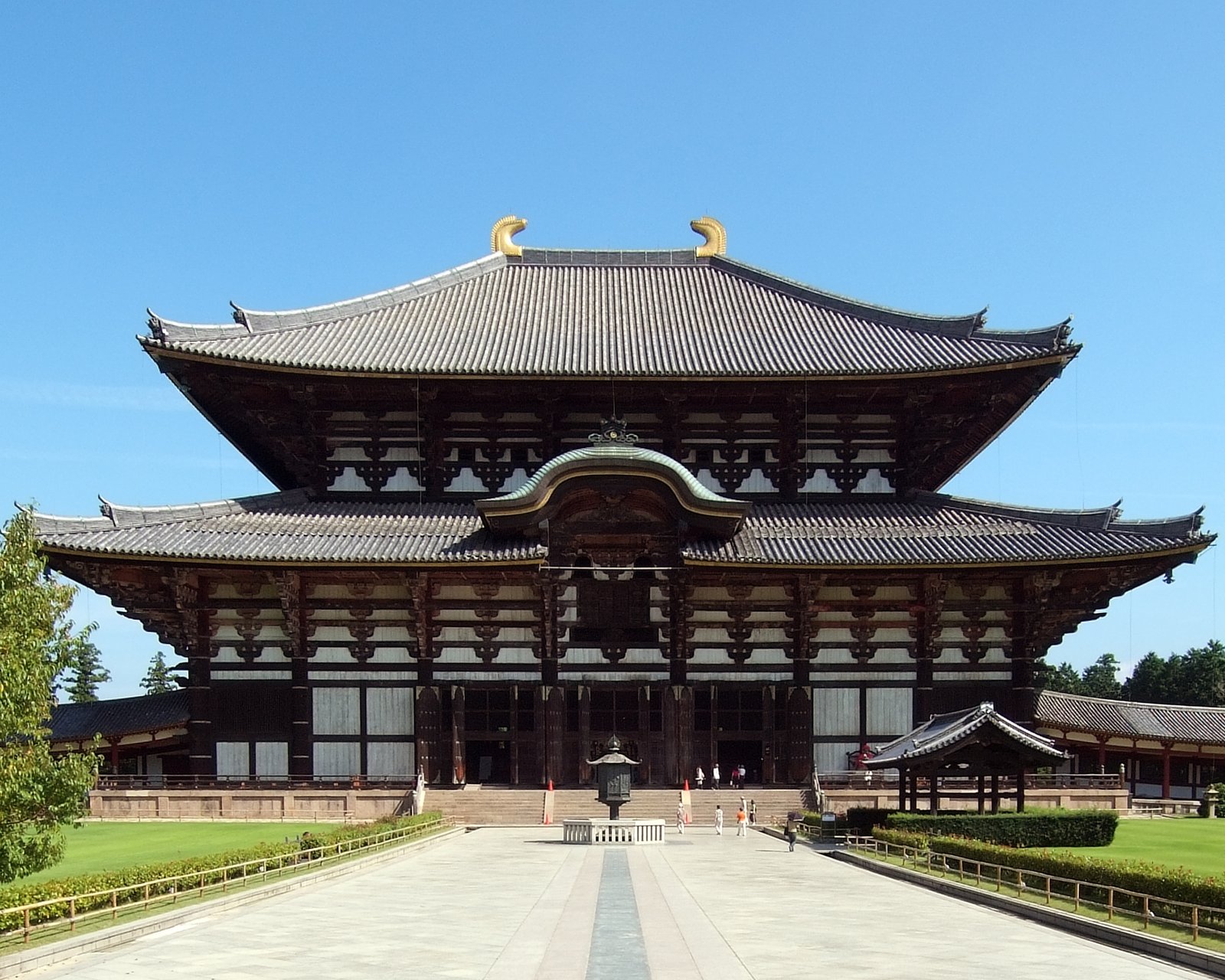
The Historic Monuments of Ancient Nara received UNESCO inscription in 1998, covering eight distinct properties in Japan’s first permanent capital: five Buddhist temples, one Shinto shrine, the Nara Palace Site, and the Kasugayama Primeval Forest. Together they encompass 26 National Treasures and 53 Important Cultural Properties. The anchor of any visit is Tōdai-ji, commissioned by Emperor Shōmu in 743 and opened to the public in 752. Its Daibutsuden — the Great Buddha Hall — measures 57 metres long, 50 metres wide, and 49 metres high, and remains the largest wooden structure on earth. The bronze Vairocana Buddha inside stands 14.98 metres tall, with a face 5.33 metres across. Forty-eight lacquered cinnabar pillars, each 1.5 metres in diameter, hold up a blue-tiled roof above a space so large that the statue’s 27-metre golden halo almost reads as decorative. Nearby, the Kasuga Grand Shrine and Kōfuku-ji five-storey pagoda add rhythm to a circuit best covered on foot through Nara Park, where deer wander freely among the monuments with a composure that suggests they know exactly who owns the place.
Getting there: Kintetsu Limited Express from Namba station to Kintetsu Nara station (45 min, no Shinkansen needed); Tōdai-ji is 20 min on foot or 5 min by bus. Allow: 4–5 hours to walk the full circuit: Tōdai-ji, Kōfuku-ji, Kasuga Grand Shrine, Isui-en garden. Best for: Travellers with a full morning who want the broadest range within a single inscribed site.
Historic Monuments of Ancient Kyoto 15 min from Shin-Osaka
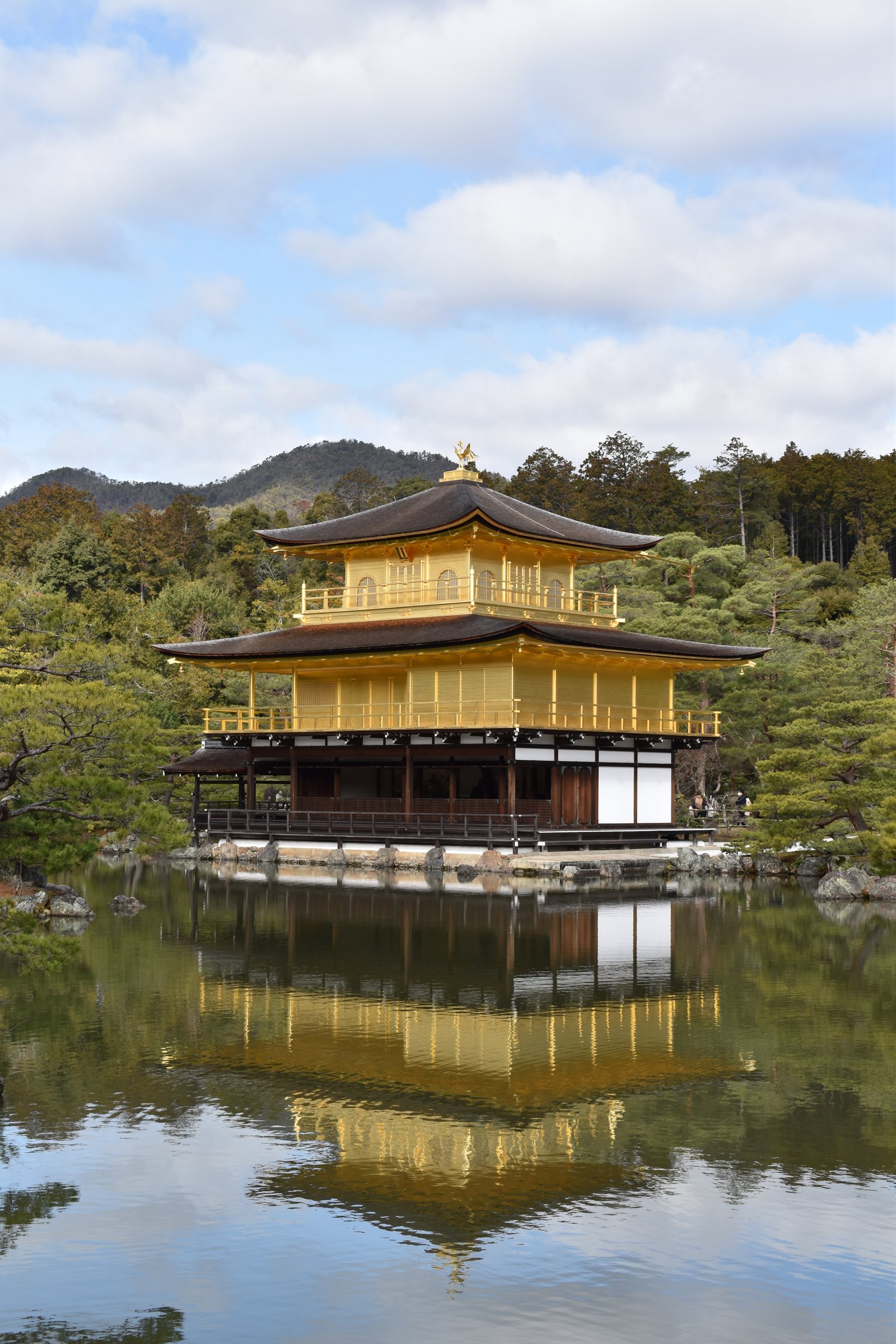
Kyoto’s UNESCO inscription, awarded in 1994, covers 17 locations spread across Kyoto, Uji, and Ōtsu: 13 Buddhist temples, 3 Shinto shrines, and Nijō Castle. The combined designations include 38 National Treasures and 160 Important Cultural Properties, making this the most architecturally layered of Japan’s World Heritage sites. Fifteen minutes by Shinkansen from Shin-Osaka, the city functions as a full-day itinerary in itself. Kinkaku-ji anchors the western circuit: Shogun Ashikaga Yoshimitsu (1358–1408) completed the pavilion as his retirement villa in 1397, covering the upper two floors in 0.5-micron gold leaf that turns the surrounding Kyōko-chi pond into a mirror. The current structure dates from 1955, rebuilt after arson, but the proportions and reflective surface read as Yoshimitsu intended. East of the city, Fushimi Inari Taisha runs 4 kilometres of vermilion torii gates up a forested hillside, while Ryōan-ji offers the opposite experience: 15 stones arranged in raked gravel, a composition that has been studied without consensus since the late 15th century. Nijō Castle in the city centre adds the political dimension of the Edo period, its uguisubari “nightingale floors” designed to chirp under the weight of any approaching assassin.
Getting there: JR Shinkansen Hikari or Nozomi from Shin-Osaka to Kyoto station (15 min); city buses and the Kyoto subway connect the major sites. A one-day bus pass (¥700) covers most of the western and eastern circuit. Allow: Full day minimum; two days to cover the Uji sites (Byōdō-in) and Arashiyama. Best for: First-time visitors to Japan who need a single high-density day, and travellers returning for the sites that demand a second look.
Hiroshima Peace Memorial (Genbaku Dome) 45 min from Shin-Osaka
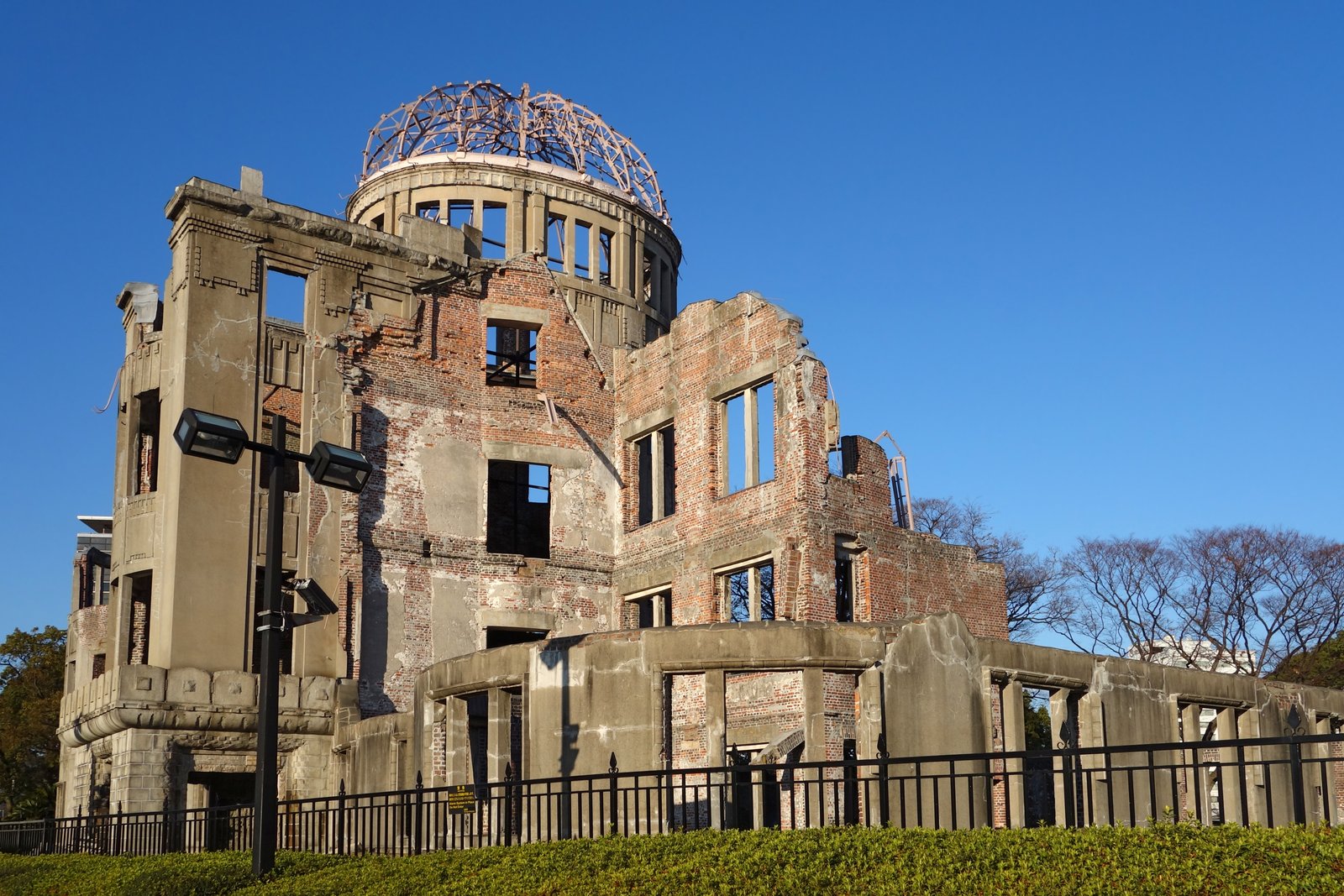
UNESCO inscribed the Hiroshima Peace Memorial in 1996, the only World Heritage Site in this guide that memorialises destruction rather than construction. The building was designed by Czech architect Jan Letzel (1880–1925) and completed in April 1915 as the Hiroshima Prefectural Industrial Promotion Hall — a confident, European-influenced structure with a copper dome above a five-storey exhibition centre. On 6 August 1945, the atomic bomb detonated approximately 600 metres overhead, killing over 140,000 people and levelling the city. The dome’s iron framework and outer walls survived because the downward force of the blast passed nearly vertically through the structure. The ruins were preserved by the city in their post-blast state and have remained in that condition ever since. Standing beside the Ōta River, the skeletal dome now sits directly across from the Peace Memorial Museum and the Children’s Peace Monument. The surrounding park is quiet in a way that requires adjustment — the scale of the landscaping, the sound of water, and the uncanny stillness of the ruin together produce a quality of attention that is different from any other heritage site in Japan. The museum requires around 90 minutes and is not recommended immediately before or after Himeji on the same day.
Getting there: JR Shinkansen Nozomi from Shin-Osaka to Hiroshima station (45 min); 15 min by tram (Line 2 or 6) to Genbaku Dome-mae stop. Allow: 2–3 hours including the Peace Memorial Museum (allow 90 min for the museum alone). Best for: Travellers who approach heritage as history rather than spectacle; not suitable as a quick stop between other sites.
Frequently Asked Questions
How many UNESCO World Heritage Sites are within day-trip distance of Osaka?
Five inscribed UNESCO sites lie within 50 minutes of Osaka by Shinkansen: Himeji Castle, the Historic Monuments of Ancient Nara, the Historic Monuments of Ancient Kyoto, the Hiroshima Peace Memorial, and — slightly further at around 70 minutes — the Buddhist Monuments in the Hōryū-ji Area in Nara Prefecture. This guide covers four of the five. No other city in Japan offers comparable density of World Heritage access from a single base.
Which UNESCO site is closest to Osaka?
The Historic Monuments of Ancient Kyoto is the closest, at 15 minutes from Shin-Osaka by JR Shinkansen Hikari or Nozomi. Kyoto station is also served by the JR Biwako and JR Tokaido lines, giving multiple connections from central Osaka without needing to transfer to Shin-Osaka first. Its 17 component sites mean the inscription covers more ground than any other entry in this guide.
Do visitors from outside Japan need a visa to travel to these sites?
Japan operates a visa-free arrangement with over 60 countries, including all EU member states, the United Kingdom, the United States, Canada, and Australia, for stays of up to 90 days. Visitors from countries not covered by the arrangement must apply for a tourist visa through the nearest Japanese embassy or consulate before travelling. Japan introduced a digital Visit Japan Web system for border registration; completing it before arrival reduces processing time on arrival at major airports.
What transport card covers trains between Osaka and these heritage sites?
The Icoca IC card (issued by JR West) covers local trains, subways, and buses across the Kansai region including Osaka, Kyoto, and Nara. It does not cover Shinkansen fares, which require separate reserved or unreserved tickets. Travellers planning to visit Himeji and Hiroshima should consider the JR Kansai-Hiroshima Area Pass or the broader JR Pass, which covers Shinkansen travel on JR lines across the itinerary. The Kintetsu Limited Express to Nara from Namba requires a separate Kintetsu line ticket not covered by JR passes.
Sources
- UNESCO World Heritage Centre — Himeji-jo (inscription 1993)
- UNESCO World Heritage Centre — Historic Monuments of Ancient Nara (inscription 1998)
- UNESCO World Heritage Centre — Historic Monuments of Ancient Kyoto (inscription 1994)
- UNESCO World Heritage Centre — Hiroshima Peace Memorial (inscription 1996)
- Wikipedia — Tōdai-ji (dimensions of Daibutsuden and Daibutsu statue)