
Overview & Significance
When UNESCO inscribed Thungyai–Huai Kha Khaeng in 1991, it created Southeast Asia’s first natural World Heritage property — a landmark recognition of a landscape spanning 622,200 hectares of pristine forest along the Thai-Myanmar border. Together, the two wildlife sanctuaries form the core of Thailand’s Western Forest Complex, the largest intact forest ecosystem in mainland Southeast Asia and one of the most important biodiversity refuges remaining in the Indo-Burma biodiversity hotspot.
Historical Background
Huai Kha Khaeng Wildlife Sanctuary was gazetted in 1974 following an international outcry over plans to dam its river valleys; Thungyai Naresuan to the north was gazetted in 1972. The sanctuaries owe their survival in part to the work of wildlife biologist Seub Nakhasathien, who spent years documenting their fauna and lobbying for their protection before his death in 1990 — a sacrifice that became a catalyst for Thailand’s conservation movement. His legacy is commemorated at the Seub Nakhasathien Foundation headquarters inside Huai Kha Khaeng.
Key Features & Nature
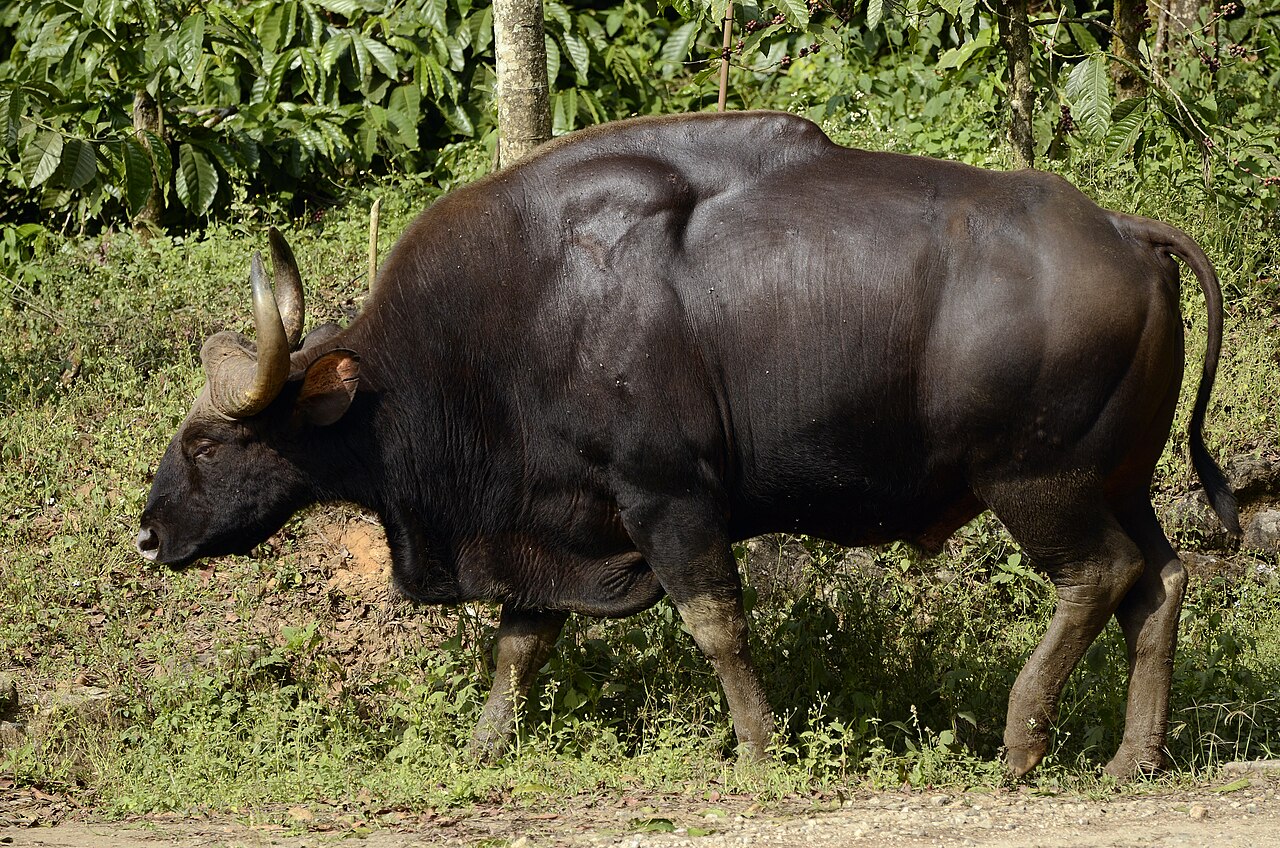
The sanctuaries harbour one of the continent’s most complete large-mammal assemblages. Tiger and clouded leopard stalk the dense forest interior. Asian elephant, gaur (the world’s largest wild bovine), and banteng maintain populations large enough to be genetically viable. The site was also one of the very last known habitats of the Indochinese rhinoceros (Rhinoceros sondaicus annamiticus) in Thailand before the subspecies is believed to have gone locally extinct in the early 21st century — a sobering reminder of the pressures even protected areas face. Green peafowl, Siamese fireback, and great hornbill are among the avian flagship species.
Cultural or Ecological Importance
The sanctuaries lie at the confluence of four biogeographical zones — Indochinese, Sundaic, Sino-Himalayan, and Indian — a convergence that explains their extraordinary species richness. The Huai Kha Khaeng river valley has been described by ecologists as the most important single valley for mammal diversity in Southeast Asia. Karen communities have lived in the buffer zones around both sanctuaries for centuries, maintaining traditional rotational farming systems (taungya) that created a patchwork of forest edge habitats valuable for many species now rare elsewhere in the region.
UNESCO Inscription Criteria
Thungyai–Huai Kha Khaeng was inscribed under all four natural criteria: (vii) outstanding natural beauty, (viii) geological significance, (ix) ongoing ecological processes, and (x) biodiversity conservation. This four-criterion inscription — rare in UNESCO’s natural heritage programme — reflects the site’s genuinely exceptional status across multiple dimensions of natural value. The biological diversity figures are staggering: more than 120 mammal species, over 400 bird species, 96 reptile species, and botanical diversity spanning five forest formation types.
Visitor Experience
The sanctuaries are strictly protected and largely closed to general tourism, a policy that has directly contributed to the survival of their wildlife. Researchers and conservation scientists with institutional affiliations can apply for access through the Department of National Parks, Wildlife and Plant Conservation. Limited specialist wildlife tours have been piloted in buffer zones around Huai Kha Khaeng. For most visitors, the experience is indirect — staying in the adjacent areas of Uthai Thani province and exploring the sanctuary’s periphery — but the knowledge of what lies beyond the boundary is itself deeply affecting.
Getting There & Practical Info
The gateway towns are Uthai Thani for Huai Kha Khaeng and Kanchanaburi for Thungyai. Uthai Thani is approximately 200 km north of Bangkok, accessible by bus from Mo Chit terminal (about 3 hours) or by train to Nakhon Sawan followed by a local connection. Kanchanaburi is about 130 km west of Bangkok and well connected by bus and train. Neither sanctuary has public visitor infrastructure; all access requires advance written permission from sanctuary authorities. The Erawan National Park, adjacent to Kanchanaburi, offers a publicly accessible taste of the western forest’s river and waterfall scenery.
Nearby Attractions & Context
Kanchanaburi Province, on the western boundary of the Thungyai complex, is historically significant as the site of the Death Railway and the Bridge over the River Kwai — sombre reminders of World War II forced labour under the Japanese occupation. The JEATH War Museum and the Allied War Cemetery in Kanchanaburi are deeply moving cultural counterpoints to the natural grandeur of the forests nearby. The Erawan National Park’s emerald pools and limestone waterfalls, 65 km from Kanchanaburi, are the most visited natural attraction in the province and an excellent introduction to western Thailand’s forest landscape.
Find it on the map
See this place and what’s around it →📷 Become a Cultural Heritage Online photographer
Share your photos of places: they stay published under your name as the author. The more they're seen, the more you get noticed — and soon a contest will reward the most appreciated photos.
Log in or sign up free to add a photo